
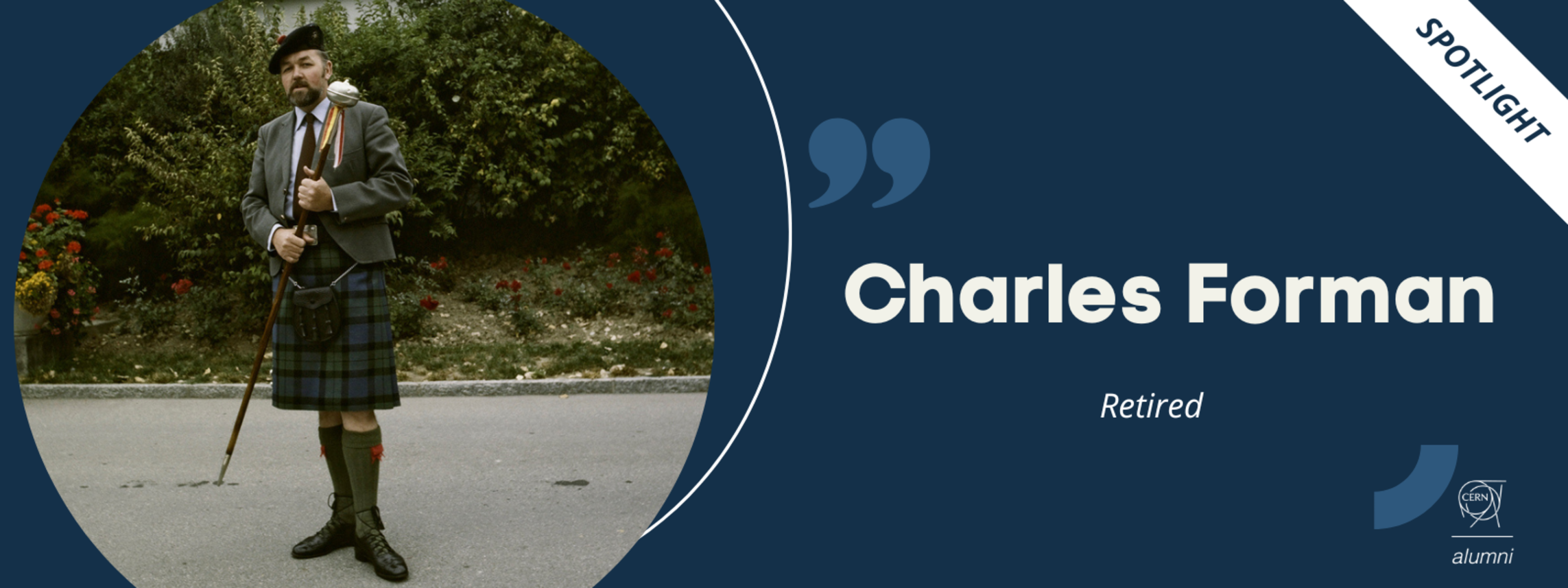
A Path from The Scotsman to CERN: Charles Forman’s 35 Years of Service
CERN Alum: Charles Forman
At CERN: STAFF, 1965 - 1998
Today: Retiree
A Leap into the Unknown
Charles Forman was 26 years old when he answered an advertisement in The Scotsman newspaper that would quietly reshape the course of his life. At the time, he was completing a university degree in commerce and an accounting diploma in Edinburgh. Together with what he describes as “a very apprehensive wife and a one-year-old baby boy,” he made a decision that was meant to last just two years: move to Switzerland for international experience and then return home.
“I didn’t know anything about CERN,” he recalls. The recruitment process was simple—letters exchanged, an interview in Geneva—and before committing, the family spent a week in the city to see whether it might suit them.
Their arrival, however, was far from smooth. The container carrying their furniture was dropped on the quay in Geneva, leaving much of it damaged. It was an inauspicious beginning, but one that would soon become part of a much larger adventure.
Discovering Geneva—and CERN
Switzerland initially felt strict, shaped by rules and regulations that seemed rigid at first glance. But Charles quickly came to see that most of them were “a matter of good sense and good manners.”
Life in an international environment also brought moments of humour.
He remembers four young Italian scientists who lived above him and were told an official would inspect their “stores.” Taking the word literally, they purchased kilos of rice, flour and sugar to prepare. Only later did they discover that stores in French meant window shutters—not emergency supplies. “We had to eat risotto for weeks and weeks,” one of them joked.
When Charles arrived, CERN was very different from today. Security was minimal; there was no sense of political tension. The first pensioner of the CERN Pension Fund was a retired gendarme who would stand in the middle of the Route de Meyrin at five in the evening, stopping traffic to allow CERN employees to leave.
“We’ve got no politics, but we’ve got all the fun,” the head of computing once told him. For Charles, that phrase still captures the spirit of the time.
Building the Foundations
Charles’ work was far removed from particle physics. He operated primarily in French and often outside the Laboratory, liaising with local authorities in Switzerland and France.
In the mid-1970s, he became secretary of a working group tasked with completely revising CERN’s staff conditions and pension arrangements. It was a complex challenge for an international organisation that did not fit neatly into Swiss or French systems.
For nearly three years, Charles worked closely with delegates, consulting actuaries and colleagues. He is quick to acknowledge the contribution of his colleague Siegfried Kolbig, a mathematician who, as Charles puts it, "reduced everything to formulae", while Charles rendered them into precise legal language in both English and French. He also credits Patrick Mollet, Head of the Translation and Minutes Service and principal investment manager for the Pension Fund, as an indispensable partner throughout this period. When the final text was ratified, it marked the culmination of an intense and deeply rewarding period.
From Offices to Farmland
Soon after, he faced another ambitious project: building an international real estate portfolio for the Pension Fund. The Fund had decided to invest 25% of its assets—around 500 million Swiss francs—into property across Europe.
Starting with a few buildings in Geneva, Charles gradually developed a diverse portfolio that eventually included hundreds of flats in Geneva, office and semi-industrial buildings in Paris, London, Lyon and Amsterdam, commercial forests in Scotland, England and France, and even an arable farm in Cambridgeshire.
The variety of the work was, he says, genuinely extraordinary. "If you make a mistake when you're in research, you try something else. If you make a mistake when you're in financial administration, you're either treated as negligent or fraudulent." It was a responsibility he took seriously, and it shaped the way he approached every transaction.
One day, he might be negotiating leases in a suit and tie or appearing in court over tenancy issues; the next, he would be in Wellington boots discussing the planting of trees or the sale of a thousand tons of potatoes.
“It was all a far cry from nuclear physics,” he reflects, “but it was also part of running an international research laboratory.”
A Life Beyond the Office
Charles’ engagement extended well beyond his formal role. Sworn in as an official translator for the Geneva Court Authorities, he spent two decades translating documents ranging from adoption papers to cryptic texts found in prison cells—sometimes delivered to him at CERN by police car.
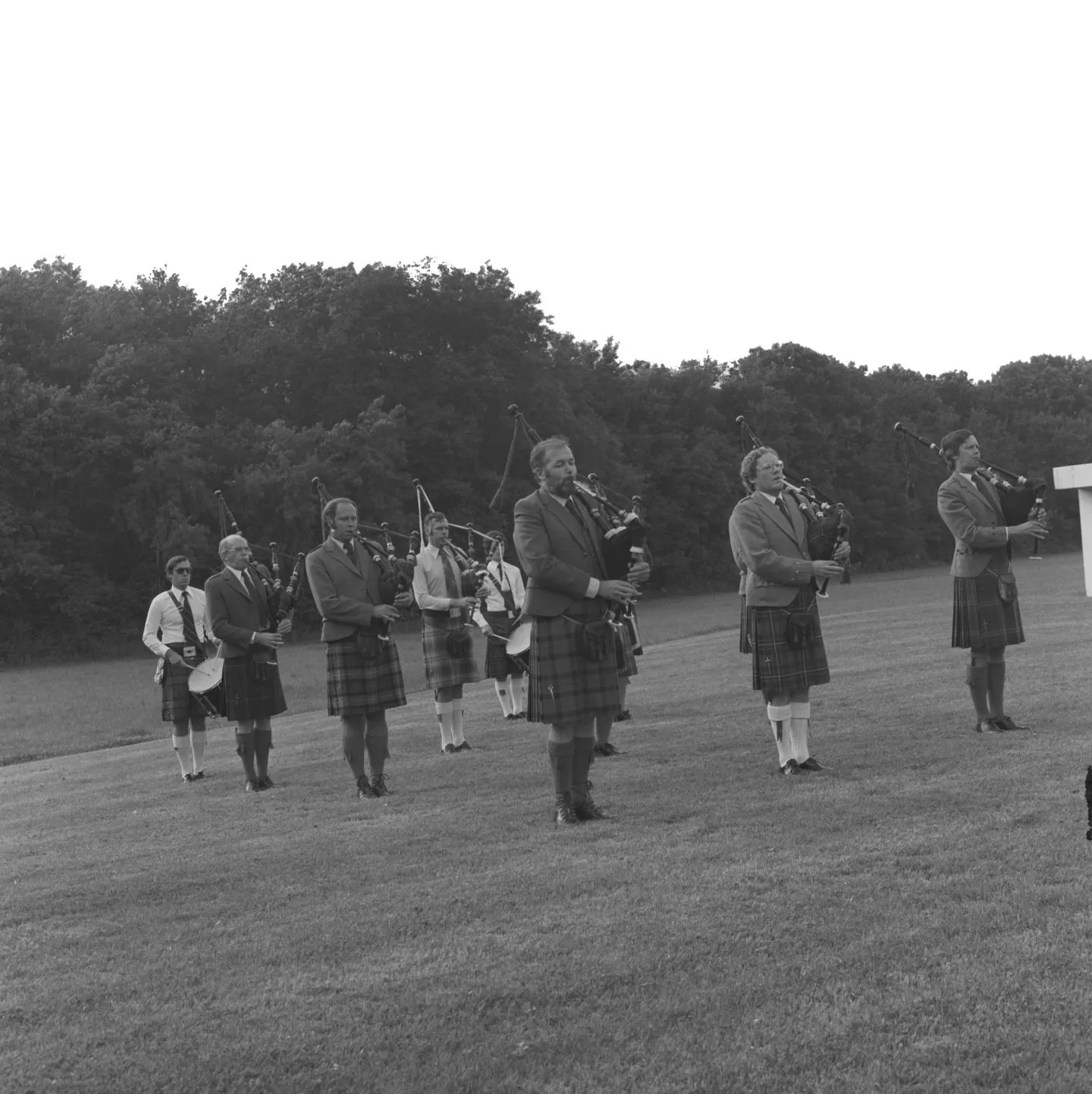
Music was another defining thread. A passionate bagpiper, he began by teaching a few CERN colleagues before founding the Pipes and Drums of Geneva, which will celebrate its 50th anniversary in 2026. The band became a cornerstone of his social life in Switzerland, forging friendships that have endured for decades.
Looking Back
Charles officially retired from CERN at 60, though he continued for a few years, unpaid, to oversee aspects of the Pension Fund’s agricultural and forestry investments. Eventually, he returned to Edinburgh.
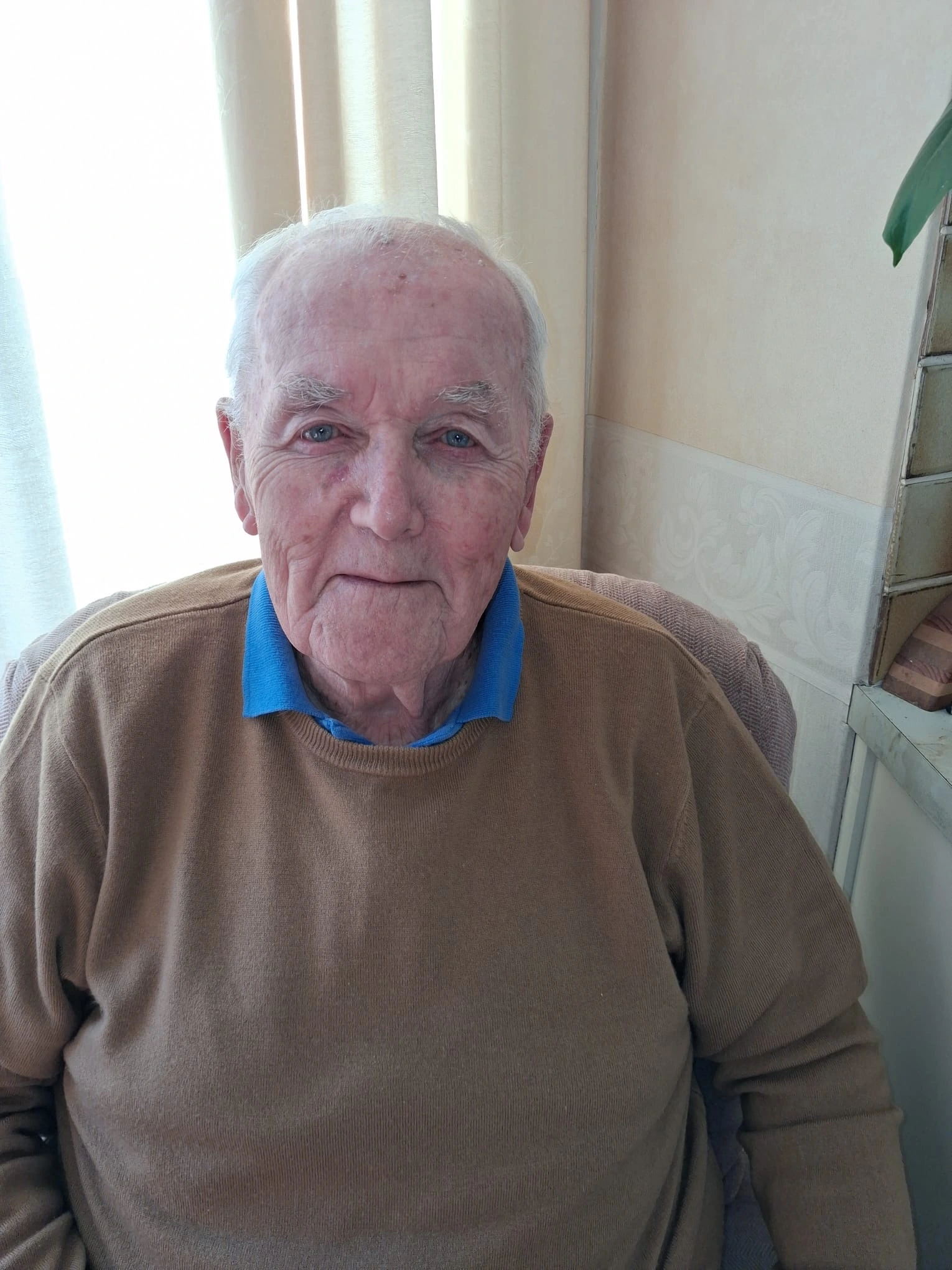
Now 87, he reflects on 35 years at CERN with humility. “I was very privileged to have been just one cog in that enormous wheel,” he says. And yet the breadth of what he learnt never left him. "Be curious in everything you do," he advises those starting out. "I came to CERN knowing nothing of science, really. But learning about other people's jobs, speaking to people about their jobs, you learn a lot—about life as well as about science."
He is also generous in his acknowledgements. He singles out Professor Kees Zilverschoon, Chairman of the Governing Board of the Pension Fund, who offered encouragement and support during what were often testing times. And he pays particular tribute to the five secretaries who served as his administrative backbone over 35 years—among them Catherine Barnett, who later became Catherine Ferger, and Yvette Fineau. It was Catherine, he says, who introduced him to French culture in the broadest sense, and "taught me not to see everything through the eyes of a Scotsman—she awoke my mind to being European."
Their son, who was one year old when the family moved to Geneva, is now retired himself. Many friends have passed on, but Charles remains connected to former colleagues and band members through messages and shared memories.
His story is a reminder that CERN’s history is not written solely in scientific discoveries. It is also built on the dedication of those working behind the scenes—in finance, administration, property, language and community life—who helped create the foundations on which discovery could flourish.