
Celebrating two historic, landmark discoveries - and the alumni who help our Community thrive
July marks the anniversaries of two important milestones in particle physics: the publication in July 1956 of the first conclusive experimental detection of the neutrino, and the announcement in July 2000 of the first direct observation of the tau neutrino. These two particles also lend their names to badges in CERN Alumni's award-winning CAN-doers engagement programme.
The neutrino was first proposed in 1930 by Wolfgang Pauli to explain the apparent violation of energy and angular-momentum conservation in beta decay. Because neutrinos have no electric charge, very little mass and interact only very weakly with matter, detecting them presented an extraordinary experimental challenge.
In 1956, Clyde Cowan and Frederick Reines conclusively detected electron antineutrinos produced by a nuclear reactor at the Savannah River Plant in South Carolina. Their findings were published in July of that year, establishing the existence of the particle that Pauli had postulated 26 years earlier.
This discovery introduced scientists to a particle that is now central to our understanding of the Universe. Neutrinos are produced in stars, nuclear reactions and some of the most energetic events in the cosmos. Their unusual properties - including their ability to change from one type, or "flavour", into another - continue to provide important avenues for research beyond the current Standard Model of particle physics.
More than four decades later, another major milestone was reached. In July 2000, the DONuT experiment at Fermilab in the United States announced the first direct observation of the tau neutrino. The experiment used data collected over several months in 1997 to identify interactions involving this particularly elusive particle.
The discovery confirmed the existence of the third known neutrino flavour, alongside the electron neutrino and the muon neutrino. It completed the direct experimental observation of the particles belonging to the third generation of the Standard Model and further strengthened our understanding of the fundamental constituents of matter.
From fundamental particles to alumni engagement
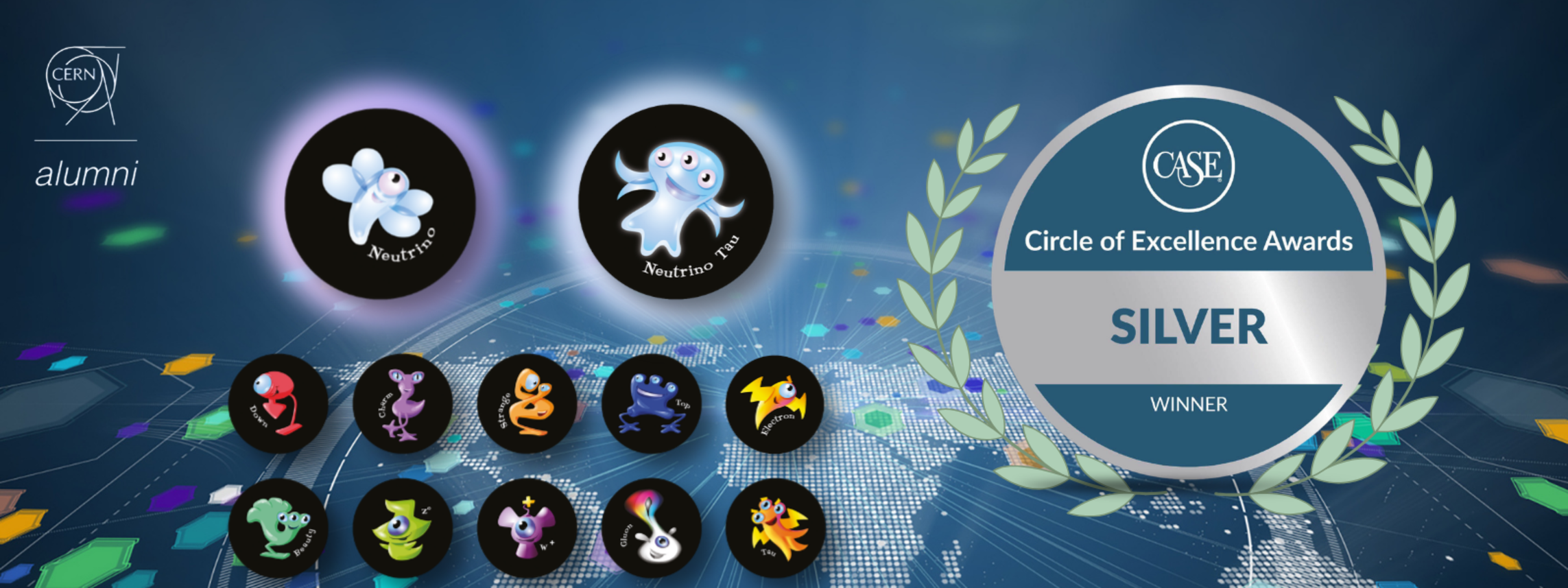
The neutrino and tau neutrino also provide the names and visual identities of two of the 16 digital badges in CERN Alumni's CAN-doers programme. Each badge represents a fundamental particle in the Standard Model and recognises a particular form of contribution to the CERN Alumni Network.
Displayed on alumni profiles, these badges acknowledge the many ways in which members help the Network to develop and thrive - from sharing their experience and expertise to volunteering, participating in activities and helping CERN Alumni reach wider audiences.
In 2026, the CAN-doers initiative received a Silver CASE Circle of Excellence Award. This international distinction recognised the programme's creative approach to alumni engagement and the tangible contributions made by CERN alumni around the world.
Recognising our Neutrino CAN-doers
The Neutrino badge recognises alumni who share job opportunities, career events or start-up news on the CERN Alumni platform. By drawing the Community's attention to relevant opportunities, these alumni support the professional development of fellow members and strengthen the culture of mutual support across the Network.
Among the alumni who have earned the Neutrino badge and have also been recognised as CAN-doers of the month are:
- Salvatore Aiola - recognised in May 2026 for sharing events on the CERN Alumni platform.
- Valerio Rossetti - recognised in June 2026 for sharing events, job opportunities and start-up news on the platform.
Recognising our Neutrino Tau CAN-doers
The Neutrino Tau badge recognises alumni who respond to CERN Alumni communication campaigns by completing a written contribution or taking part in an interview with the Alumni Relations team, and who subsequently share the published story through their social media channels.
By sharing their experiences, these alumni help former colleagues connect across generations, inspire other members of the Community and demonstrate the many different paths that can begin at CERN.
This anniversary provides an opportunity to celebrate several recipients of the Neutrino Tau badge who have also been recognised as CAN-doers of the month:
- Anna Merz - 10 Questions with Anna Merz
- Carole Weydert - CERN Alumni Advent Calendar Wishes 2023 - 9 December
- Charlotte Waltregny - A brief history of a high-energy physicist: from aeronautics to consumer goods
Each alumni story adds a distinctive perspective to CERN's history and demonstrates the enduring impact of a CERN experience far beyond the Laboratory. Whether highlighting scientific achievements, professional journeys or personal memories, these contributions strengthen connections across our international Community and help communicate CERN's value to society.
Make your contribution count
There are many ways to contribute to the CERN Alumni Network. Share a job opportunity, career event or start-up announcement on the platform to earn the Neutrino badge. Alternatively, respond to one of our communication campaigns or share your CERN journey through an interview or article to earn the Neutrino Tau badge.
Your contribution could help another alumnus take the next step in their career, inspire members of the Community and demonstrate the lasting impact of a CERN experience.
Share an opportunity or contact the CERN Alumni Relations team to tell your story - and become one of our next CAN-doers.