
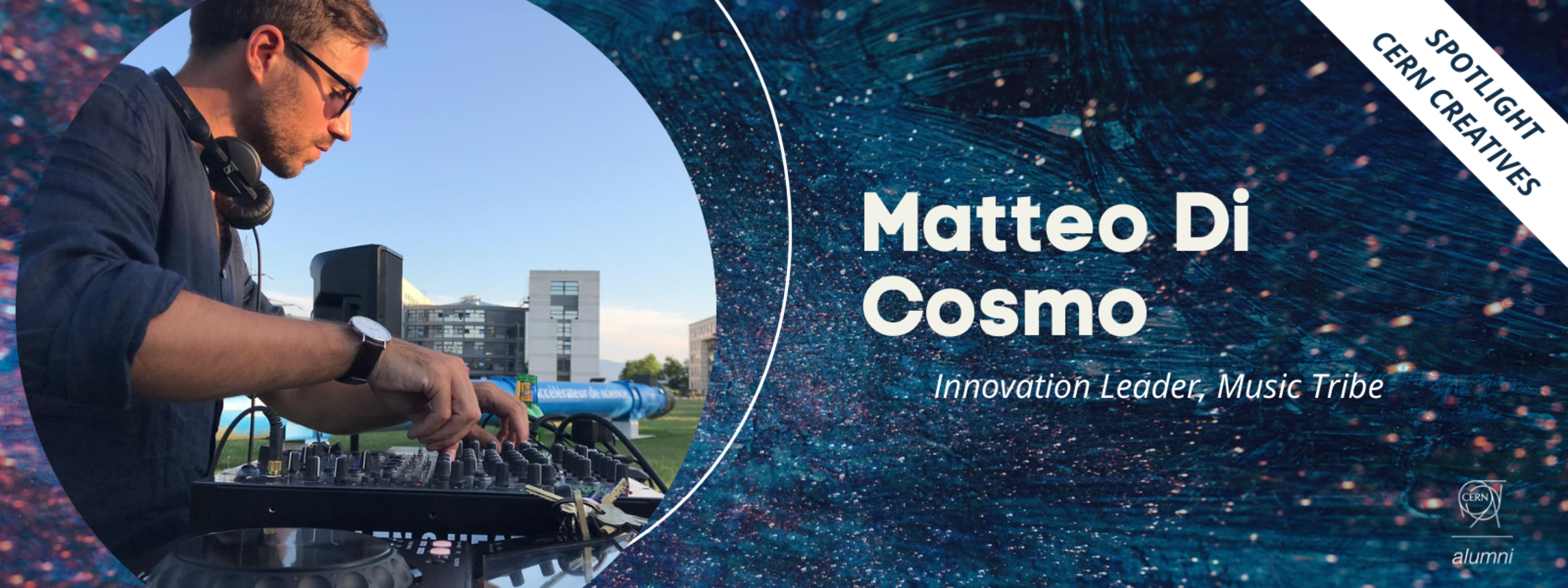
Matteo Di Cosmo- A passion for music transformed into an inspiring career
At CERN: 2012 – 2020: User in Physics Dept, Fellow and Staff in Technology Dept
Today: Innovation Leader | Music Tribe
Matteo discovered his passion for electronic music when he was 16 and decided that he wanted to build his own synthesiser. As a teenager, he studied science and started building his own keyboards, though he lacked the knowledge required to make his own synthesiser. This pushed him to study electronic engineering, as he needed to gain knowledge in this field to start his project.
“I used to be very passionate about electronic music when I was 16 or 17, also because I was listening to ‘Kraftwerk’, a German band who are pioneers in electronic music. I was listening to a track called “Radioactivity”, which starts with morse code of the word radioactivity; I fell in love with this, and decided I wanted to build electronic equipment to produce these sounds” Matteo recounts.
CERN- an unattainable ambition?
Matteo, an electronic engineer from Puglia in southern Italy, studied both in France and Italy, and obtained two masters’ degrees, one in mechatronics and one in electronic engineering.
As a student in Turin, Matteo had visited CERN and since that point had harboured a strong desire to work at the Organization, however he felt this was an unattainable ambition. Nevertheless, in 2011 he pursued his dream and applied for a position through the “Volontaires Internationaux” programme. Matteo’s application was successful: “When I was working in Italy in 2011, I applied to CERN, and to my surprise, I was selected! I said to my father: ‘Wait. This is unreal!’“ Matteo recalls jokingly.
Matteo then joined CERN in October 2012, just after the discovery of the Higgs Boson. His first position was working in the PH department (Physics Department), known today as EP (Experimental Physics): “I joined the section which manages the electronics for the backend of the experiments. My role was to test the commercial equipment being used for these experiments”, Matteo explains.
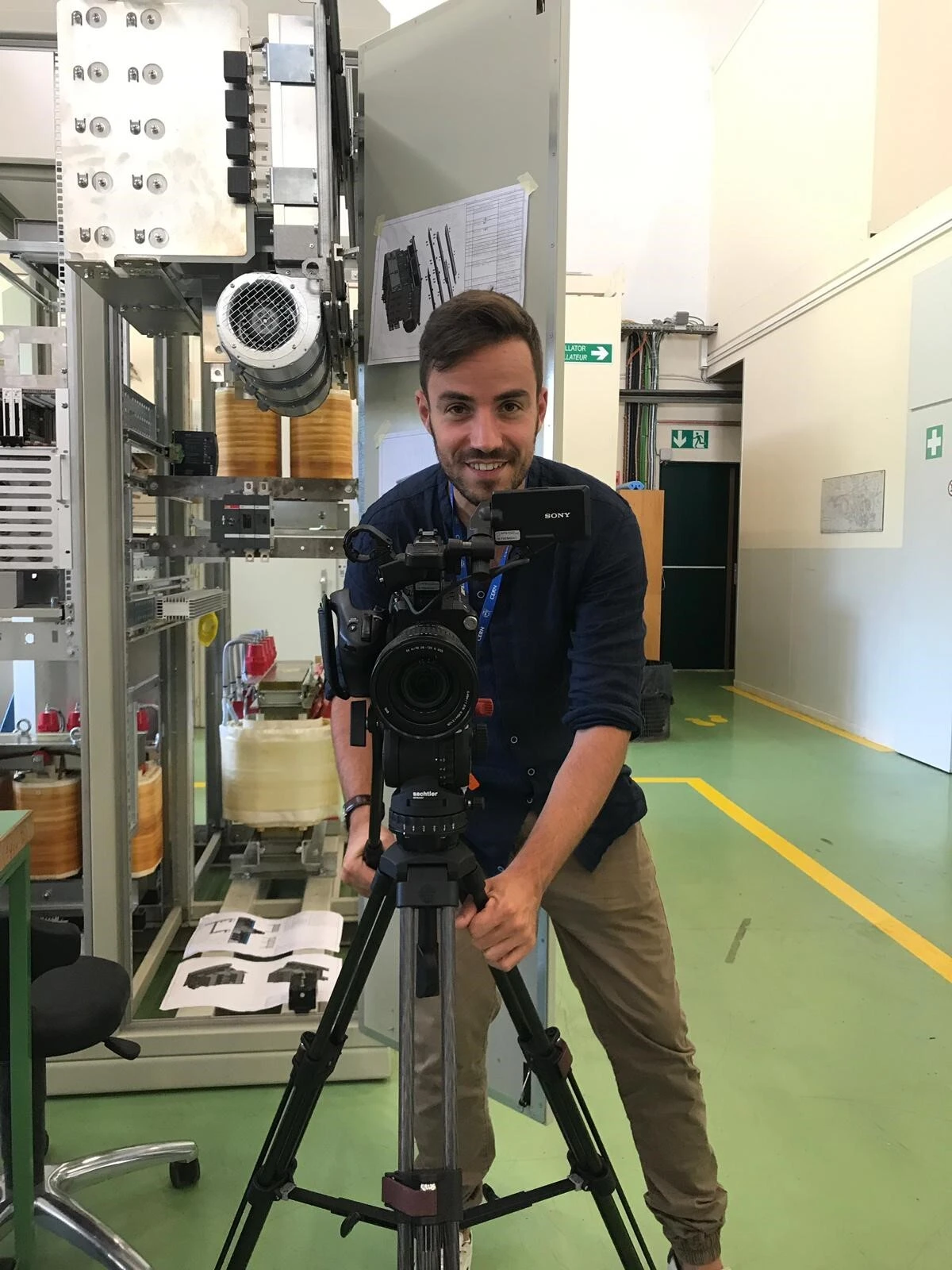
After 2 years, Matteo decided to move within CERN and spent the next six years in the Technology Department, where he joined the Electrical Power Converter group in the Converter Controls section. There, he thoroughly enjoyed working with a multicultural team of 15 people.
CERN- an enriching learning experience
After a one- year fellowship, Matteo obtained a staff contract, which meant increased responsibilities, including managing a team of around five people and hiring people, which was one of the tasks he enjoyed the most. He found it very interesting to have a ‘human resources’ role.
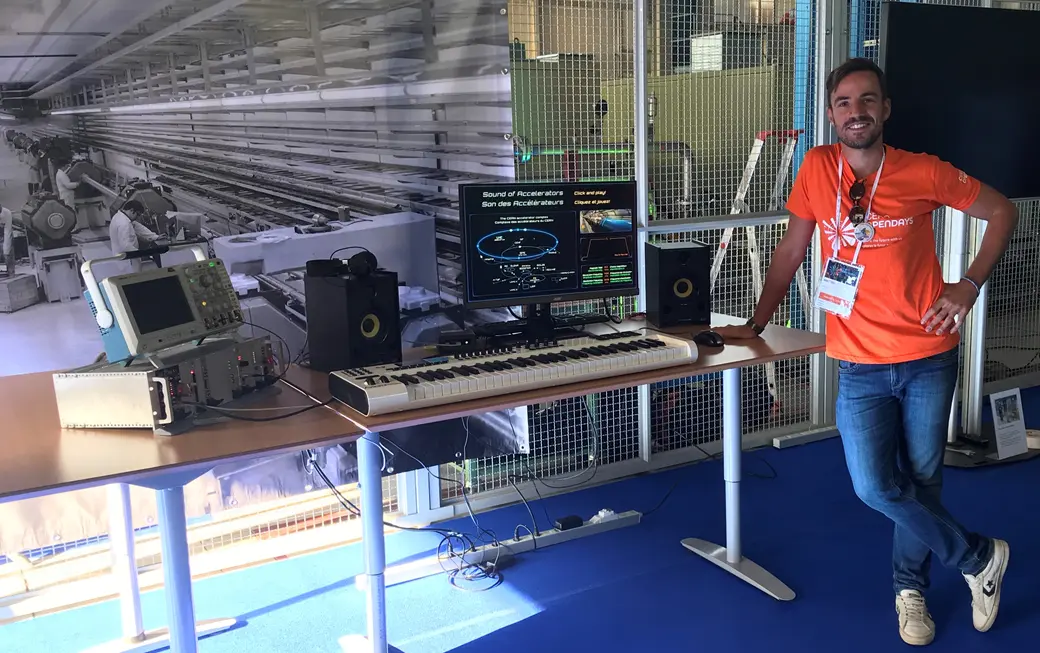
In addition, the knowledge Matteo acquired at CERN enabled him to build his own synthesiser in 2018,[1] when he employed the technology he had used in the Technology Department. At the time, there were no other products on the market using this technology. He created an FPGA-based ‘tiny synth’ which he presented on his website. Subsequently, he was contacted by the CEO of the organisation he works for today, who, in 2019, was looking for an engineer to work on building a synthesizer. He was not yet ready to leave CERN, therefore he asked Human Resources if he could work as a contractor for this company alongside his job at CERN, and the request was accepted, as there was no conflict of interest.
Matteo describes CERN as the “greatest example of a united Europe, as the incarnation of teamwork no matter what language or nationality.” Matteo says that his CERN experience has undoubtedly affected his personality, as he has the sensation he can no longer live in an environment that is not diverse.
However, four years into this job, Matteo began to question if this was the right place for him, a thought process which resulted in his leaving CERN after six satisfying years:
“By that time, I knew what I didn’t want but I didn’t know what I wanted. And what I didn’t want was to get stuck in a comfort zone where I knew exactly what to do in my daily life and during my working hours. I was very confident in my work, and I also appreciated my colleagues but the same time I think I reached a ‘plateau’ of knowledge, so I felt I was not able to move forward.” Matteo elaborates.
CERN Alumni- mentorship from experienced individuals
Initially, Matteo struggled with the decision whether to leave CERN. He turned to the alumni platform and searched for members who had CERN indefinite contracts but chose to leave and pursue a career elsewhere. Matteo met with three different alumni members, all of whom had renounced their indefinite contracts. They took the time to listen, shared their experience with Matteo and reassured him about his decision to leave.
Matteo left CERN forever grateful of what it taught him, but it was time for a new chapter in his life. He wished to have a job more centred on managing people, in the private sector and more focused on profitability.
Finding a balance and professional fulfilment
.After Matteo’s experience at CERN and in the private sector, we asked what advice he would share with other CERN alumni
“My general advice would be to invest time in acquiring the necessary skills relevant for your sector, which can be technical, HR, finance and so on, but I think sometimes we forget that we should also spend some time thinking about where we are going. Because that’s what I realised; I was working all the time, I was developing electronics, but I forgot to do a reality check and ask myself, “Am I in the right place doing the right thing?” We should spend some time not only working, but some time on introspection."
Matteo describes a conversation he had with a colleague which brought him to the realisation that he needed a change; “One of my best friends asked me ‘Are you happy?’ And I was not able to answer this question. I didn’t know if I was happy or not.”
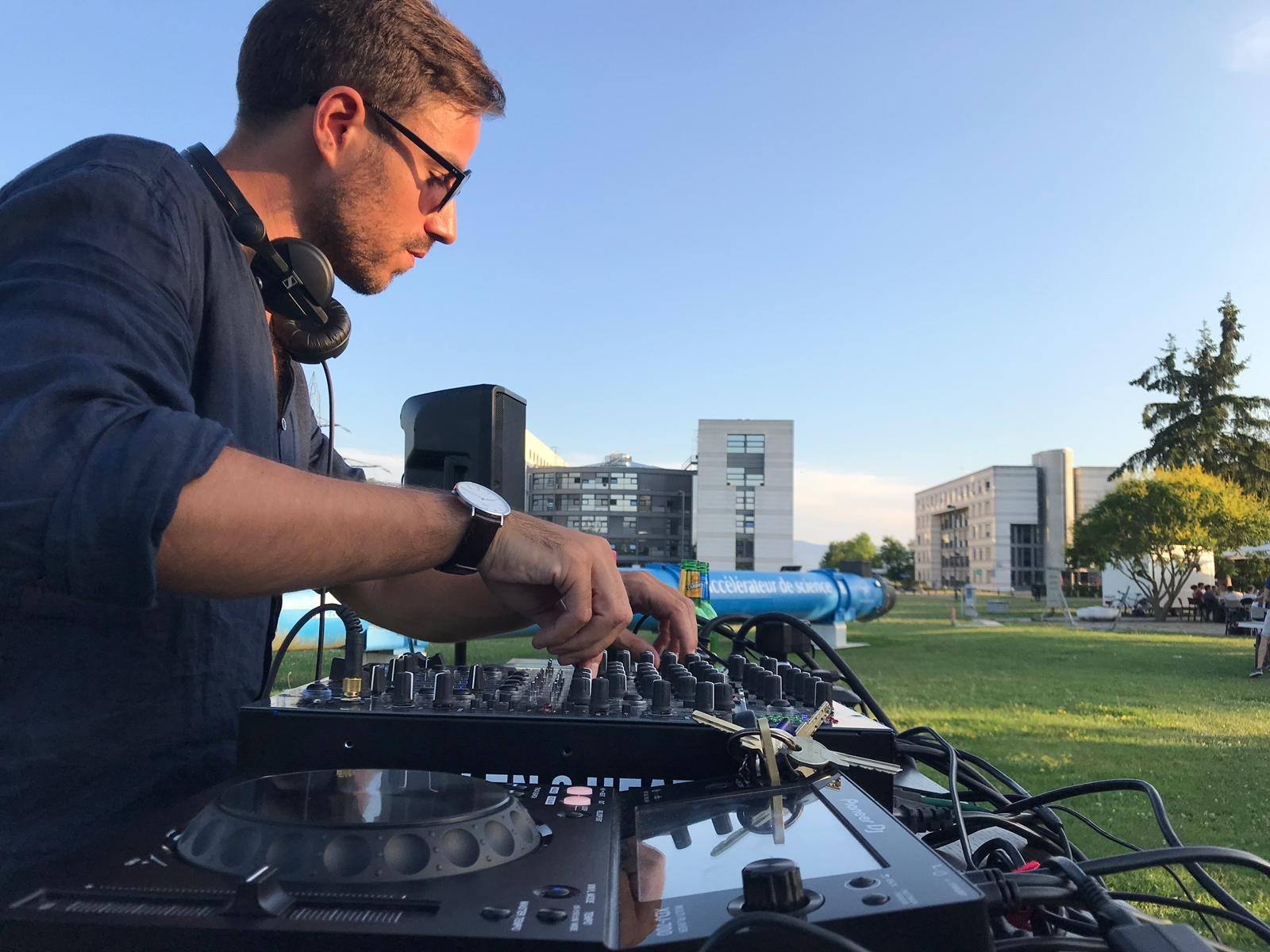
Today, Matteo is based in Bari, in Italy, where he works with people from around the world, as an R&D leader at Music Tribe. Most of his colleagues are from the Philippines, some developers are based in Manchester, the production takes place in China… He enjoys living by the sea, sailing and DJing in clubs. He has found the right balance and lifestyle for himself. Matteo has found his happy place!
***Update 2025*** Matteo's current role bridges music and engineering, as he designs musical instruments, specifically synthesizers. Notably, Matteo's first product was released in December 2024, which you can check out here. He is now working on a new product leveraging FPGA technology, a skillset he developed extensively during his time at CERN.
The CERN alumni network is a powerful tool which enables members to connect to anyone who has left CERN, or is currently working at CERN, and seek advice from people with a shared professional experience. Furthermore, a mentorship module on alumni.cern enables the connection between members seeking support for professional and personal development. To improve and to facilitate the connection with other alumni, it is essential to update your profile on the platform as demonstrated by Matteo’s interactions with the alumni.
[1]The Tiny Synth – Where CERN Meets Electronic Music https://audionewsroom.net/2018/11/the-tiny-synth-where-cern-meets-electronic-music.html.
**Article originally published on 3 September 2023 and updated on 28 March 2025**