
Enhancing nuclear safeguards: Making an impact after CERN
At CERN: USER 2012 - 2014, 2018 - 2020, 2022 - present
Now: Director of Research and Development, Cerium Labs; Affiliate Professor of Physics, The University of Dallas
In this interview, we sit down with Will Flanagan, a CERN alumnus whose journey through particle physics has been nothing short of fascinating.
First Impressions of CERN: A Movie-like Experience
Will recounts his first visit to CERN in 2011, where he had been working as a graduate student on the CMS experiment. His initial impressions of CERN were shaped by the facilities' security measures, a fact he amusingly relates to a scene from Dan Brown's novel 'Angels and Demons.'
"I had been working on the CMS experiment at CERN for a few years first with the University of Colorado, then Texas A&M, and then from Fermilab, but I hadn't been here before, and my first visit was in 2011.
It was only a couple of years after the Dan Brown novel and movie Angels & Demons had come out. In the movie, they kill a scientist and steal his eyeballs so that they can sneak into one of the CERN enclosures. And I thought, that's silly, I've been to several particle physics enclosures, and we never have such security measures. But when I came to CMS for the first time and went underground, I did indeed have to pass the retina scans every morning, so that part of the movie was not just a Hollywood fabrication.
For what it’s worth, you can't steal somebody's eyeballs because the scanner makes sure you have blood pulsing through your retinas, so the Hollywood interpretation would not have quite worked," he says, laughing at the Hollywood misconception of CERN's biosecurity measures.
Pivotal Memories: The Higgs announcement
Will's journey was filled with exciting experiences, as he spent multiple summers at CERN during his graduate school years, immersing himself in the world of particle physics. He vividly remembers being present during the historic Higgs announcement in 2012, a moment that left a lasting mark on his time at CERN.
"Summer of 2011 was my first year that I was at CERN in person. And then the next summer, in 2012, we had the Higgs announcement. A big memory in terms of my time here was being on campus during that announcement, going to R1 to celebrate right after the public announcement.
I didn't even try to fight my way into the auditorium, and I think that's one thing I regret. If I was to do it over again, I think I would have been one of the people sleeping in the hallway overnight to get a spot in the auditorium. But instead, I was just at my desk listening to a live broadcast of the announcement.”
A Career in Physics: From Astronomy to Particle Physics
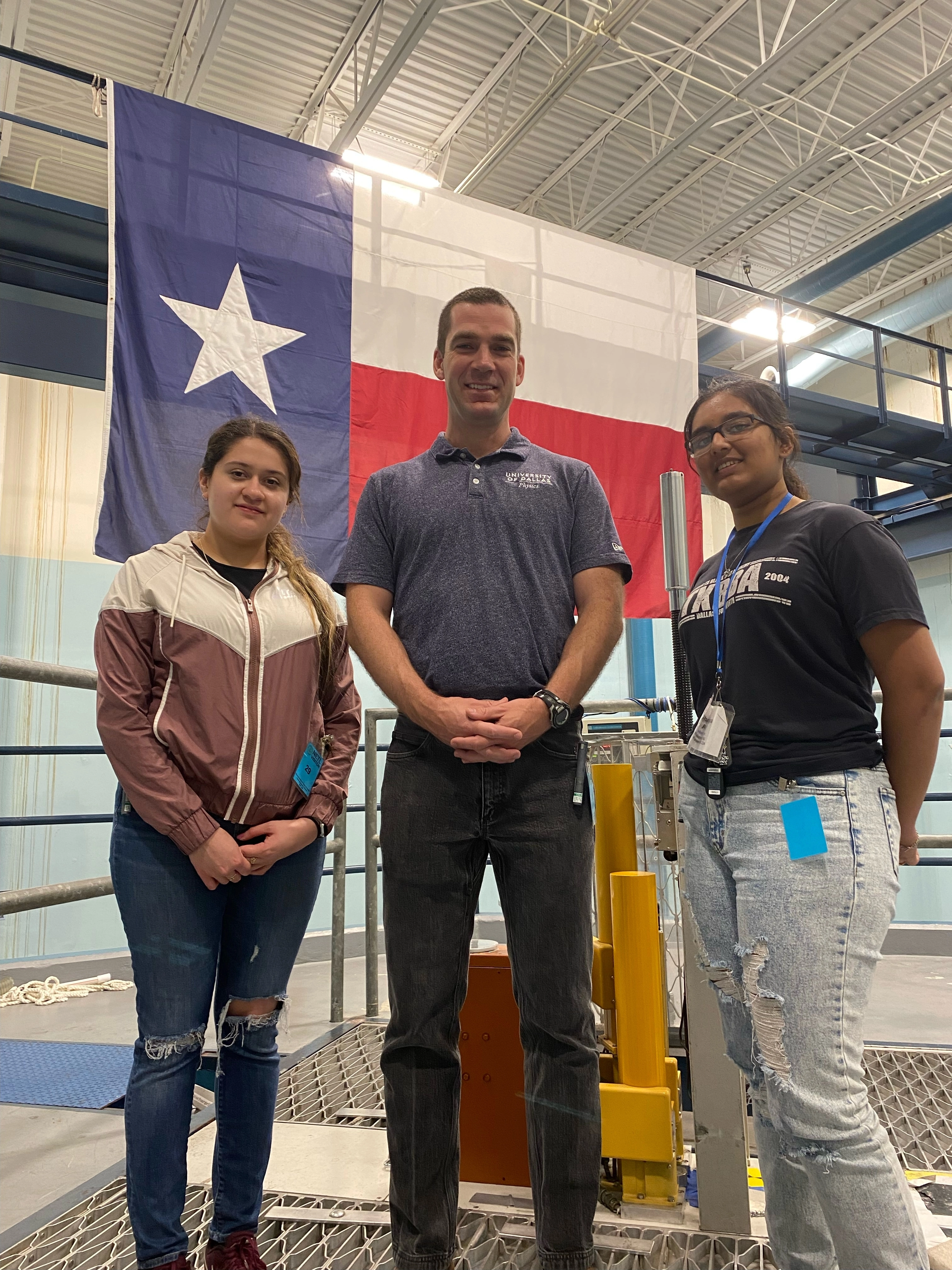
taking neutron data with NISoC devices at a nuclear reactor.
Before delving into particle physics, Will's interest was in astronomy. However, the turning on of the LHC in 2008 sparked a shift towards fundamental physics. With eagerness, he ventured into the quest for supersymmetry, believing he would change the world during his graduate school.
"At first, I was into astronomy, and initially in my studies, I worked at Cerro Tololo in Chile and was studying how stars are born. But I got more and more interested in fundamental physics, trying to understand how the universe worked. And I was lucky that at the time, the LHC was turning on, so it was absolutely a thrilling time to study fundamental physics.”
Will recounts why he fell in love with particle physics due to its demand for diverse skills and he shares valuable lessons he acquired during his time at CERN.
"I love particle physics because it requires a lot of different skills. Some days you are sitting with your notebook, drawing Feynman diagrams, some days you're using one of the world's fastest supercomputers to perform more detailed calculations and some days you're soldering or connecting some wires to build a physical detector.
I wouldn't say that you become expert in any of those, but you know enough to dabble in all those things. In such a large and international collaboration of proficient experts, you learn to work with a team where you can't do every piece of a CERN measurement. So, you get an appreciation for how long our author lists are, because this person needed to build this part of the experiment and this person needed to write the software and it makes you humbler to realise all the people whose shoulders you're standing on to make these measurements."
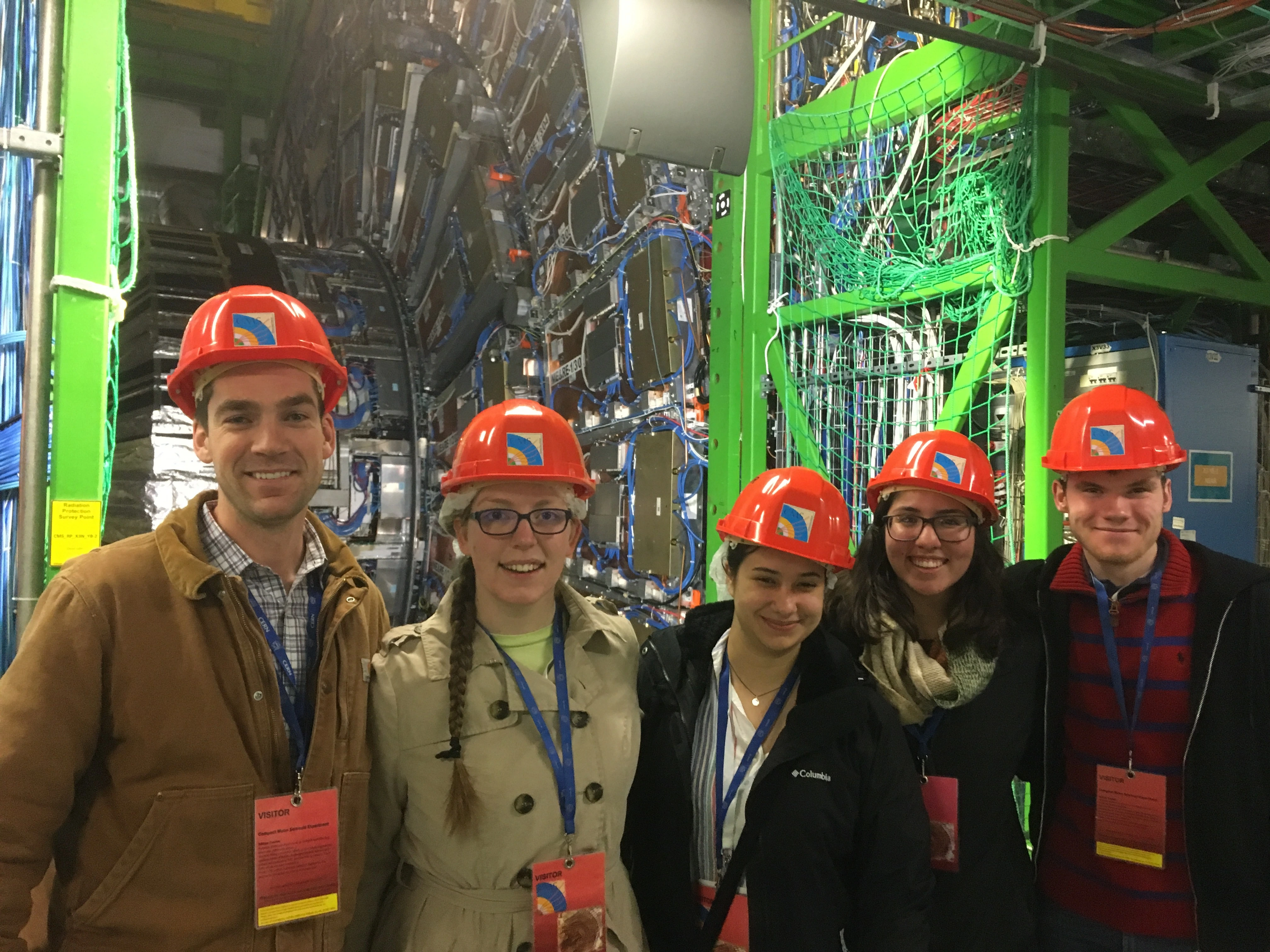
Will shares further his joy in facilitating CERN visits for his students during the summer, allowing them to witness the marvels of the facility firsthand:
“For me the most enjoyable part is reliving my first impressions of CERN through their eyes, because you can't do it justice. You can explain that the beam has world's highest energy or that such and such is world's largest type of this detector, all the superlatives, but to actually see it, is a different thing.”
Current Work: Making a Difference at Cerium Labs
Over time, Will’s passion for practical applications led him to work on nuclear safeguards, aiming to make the world a safer place.
At present, Will serves as the Director of Research and Development at Cerium Labs, a semiconductor company that specialises in analytical work. Their groundbreaking project involves the development of neutron detectors for nuclear safeguards and homeland security applications. With current prototypes in place, they are continuously striving to improve the efficiency and performance of these detectors through collaborations with leading institutions.
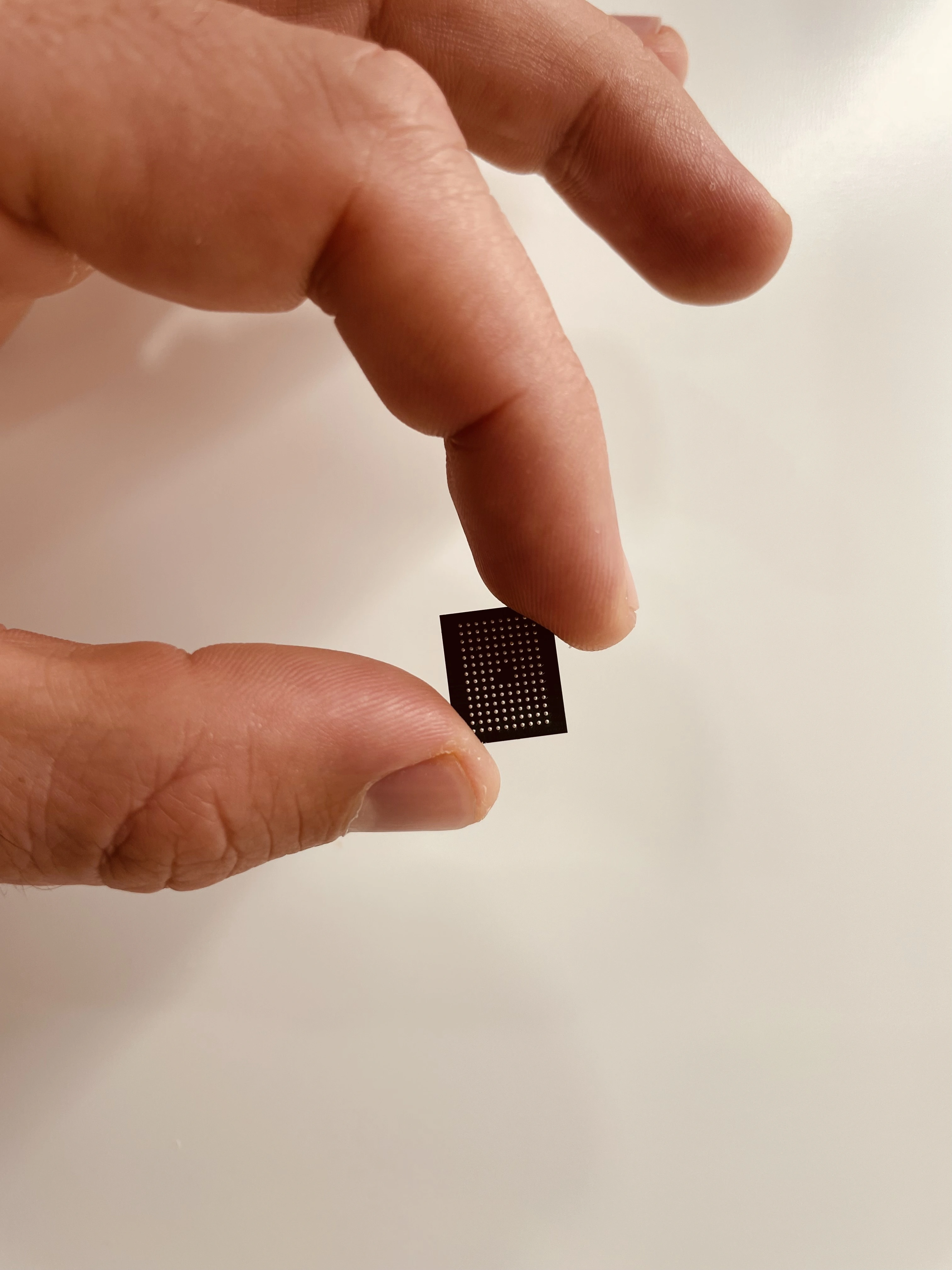
a miniature neutron detector which his company proposes as both a tool
for nuclear safeguards and radiographic imaging.
The Power of Networking: CERN Connections in the Professional Sphere
Despite moving on from CERN, Will remains deeply connected to the community. Two of Cerium Labs' recent hires are CERN alumni, which underscores the high calibre of the alumni and emphasises the importance of such networks in making professional connections.
Looking towards the future, Will envisions himself continuing his practical research and making advancements in detector technology. He also expresses his enthusiasm for nurturing the CERN alumni network in Texas, aiming to strengthen connections and create more opportunities for collaboration, in his role as CERN Alumni Texas group co-manager.