
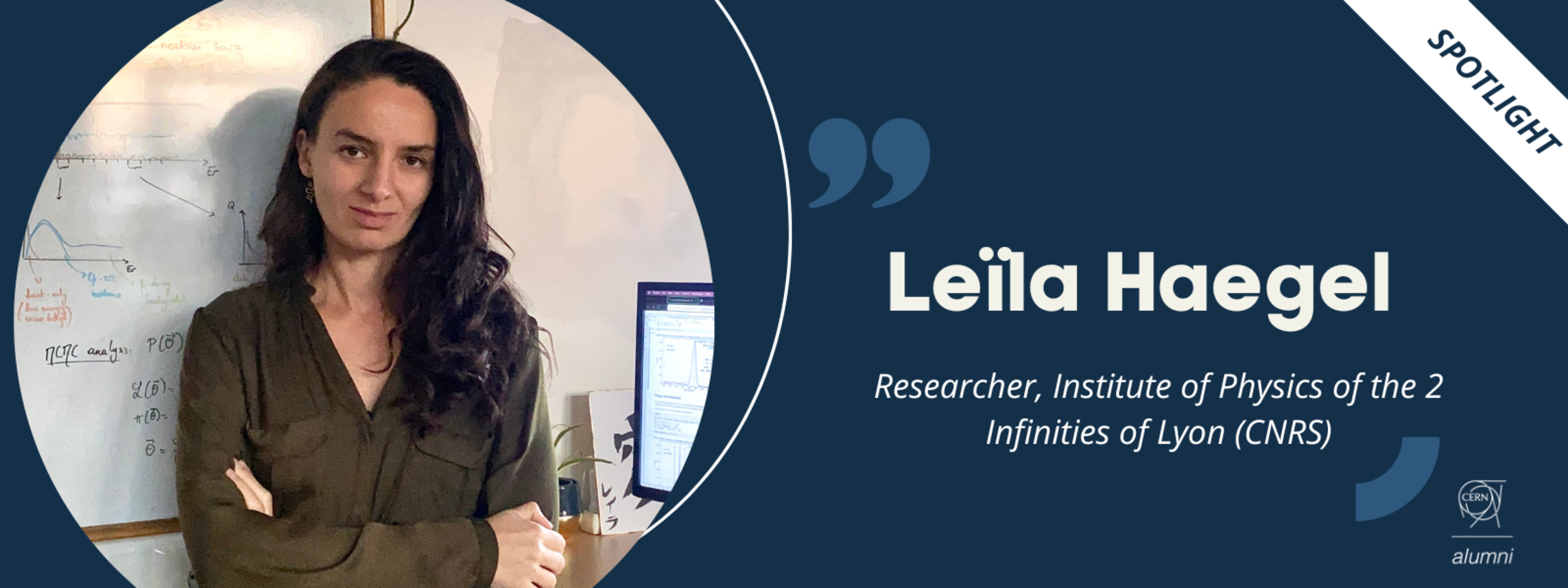
Alumni Spotlight: Leïla Haegel - Studying Nature Through the Lense of Science and Art
At CERN: User
Today: Researcher, Institute of Physics of the 2 Infinities of Lyon (CNRS)
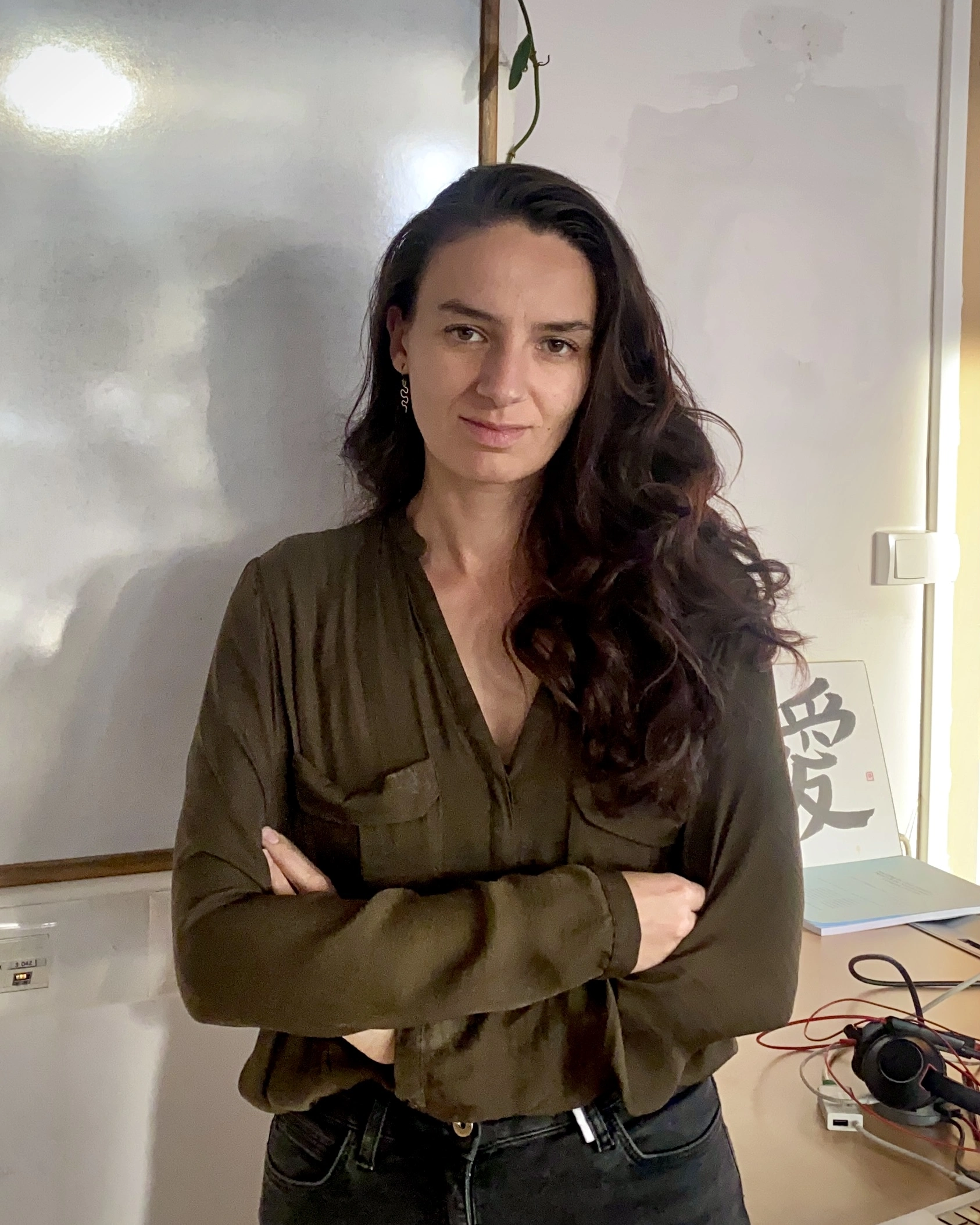
Leïla Haegel, a particle physicist focused on studying neutrinos, will be a panellist at the upcoming Danser avec l’Évolution event on 19th of November at CERN Science Gateway. Her passion for fundamental science, outreach, and the arts comes together in this event, where she will discuss the origins of the universe and human evolution. Based at the Institute of Physics of the 2 Infinities of Lyon (France), Leïla is also a user at CERN and member of the CERN Alumni Network. In this article, based on a recent interview with Leïla, we explore her journey, her research, and her passion for making science more accessible to all.
From Neutrinos to Gravitational Waves: CERN and Beyond
Leïla’s connection with CERN began in 2012, during her master's studies: “For me, the first time I came to CERN, I was a master's student. I knew I wanted to study something linked to particle physics or cosmology—fundamental science,” she recalls. She secured a four-month internship at the University of Geneva and was able to follow CERN’s summer student lectures: “CERN was always this place where you meet people from all over the world, who are passionate about the same questions.”
It was during this period that she witnessed the announcement of the Higgs boson discovery, which remains a cherished memory: “We watched the announcement from our office—some people woke up at 4 a.m. to queue for a spot in the auditorium. Everybody was so happy and joyful.” After completing her master's, Leïla pursued a PhD in neutrino physics, focusing on measuring the asymmetry between matter and antimatter. Her work led her to join the T2K collaboration, an international experiment based in Japan.
Following her PhD, she transitioned into gravitational wave research with the LIGO-Virgo collaboration: “It was a very exciting time—gravitational waves had just been directly detected. There were a lot of things to test and to try, including at interface of particle physics and gravitation.” Today, Leïla returned to neutrino physics for a staff position at CNRS, and is part of the DUNE and RICOCHET collaborations: “We’re now able to explore phenomena that were previously out of reach,” she says, noting that advances in detector technology have made these discoveries possible.
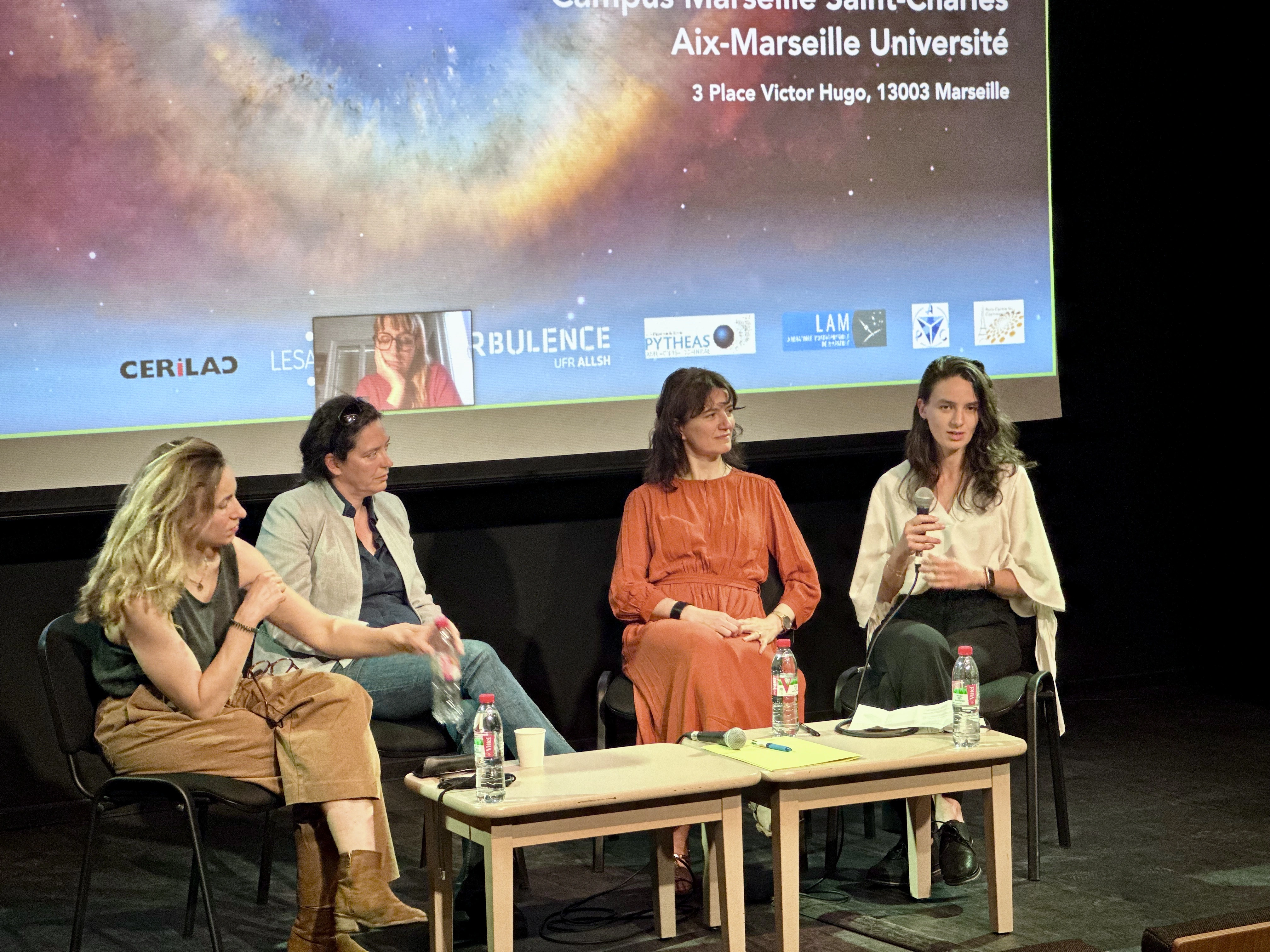
Bringing academic expertise to Innovation and Collaboration
Leïla’s contributions are not limited to academia. During her time at CERN, she participated in the first edition of the hackathon, where she helped design a cosmic ray detector for schools, now part of the Beamline for Schools (BL4S) competition: “That’s one of the things I like about CERN—having those open doors for how science can be diffused in society.” She also worked with a startup using machine learning and neural networks to improve learning, turning passive reading into an active learning experience: “Those were always very interesting experiences, but in the end, I chose to stay in academia because I think, deep inside, I’m very passionate about fundamental physics.”
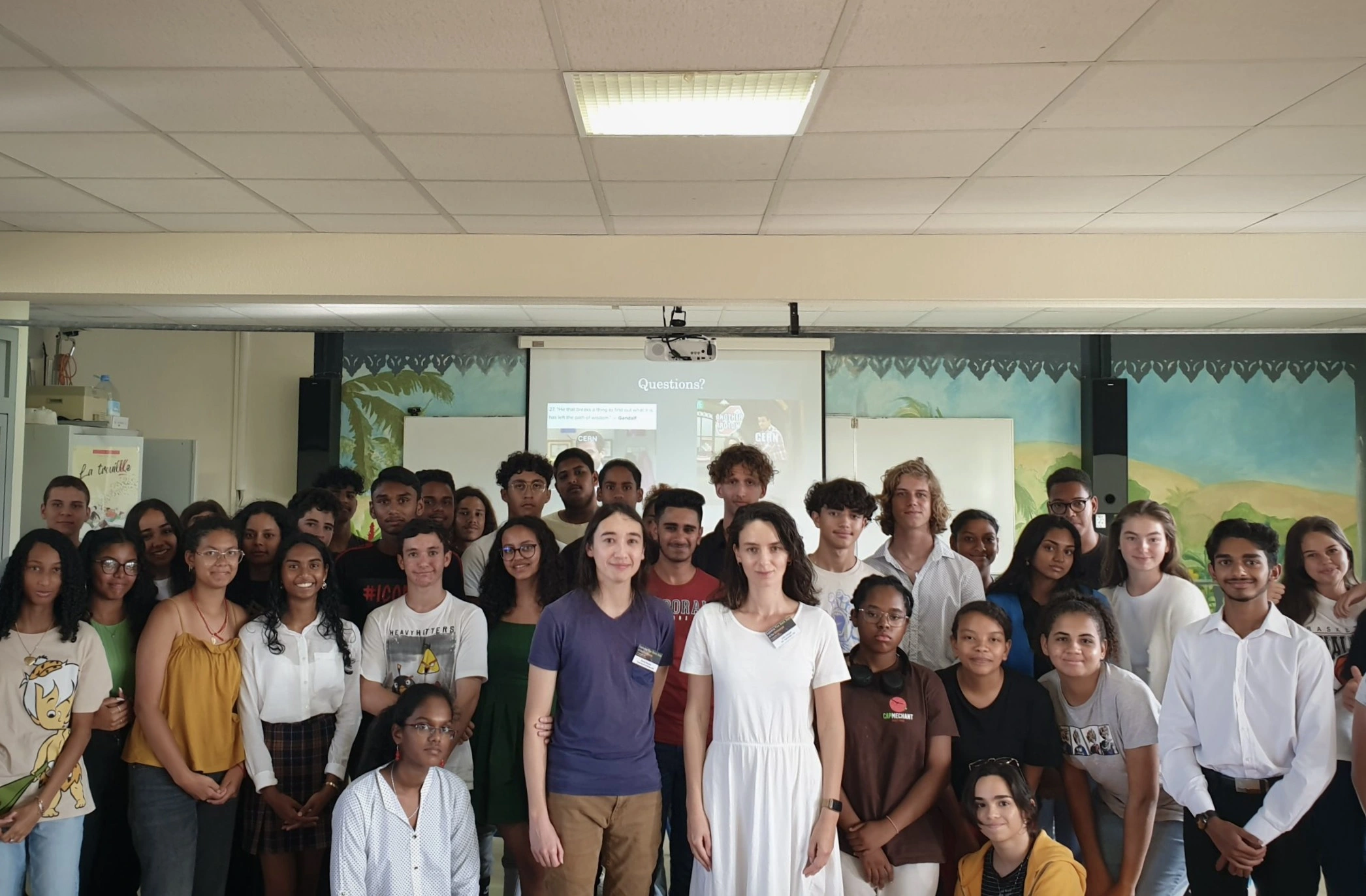
Mentoring is also central to Leïla’s work. “It’s important to me that academia becomes a more inclusive community. I’ve mentored female students from Morocco and India through The Supernova Foundation initiative, and I try to be there for others navigating early-career challenges.” She also co-organised the first-ever African Conference on High Energy Physics, a successful event that highlighted the global reach of scientific inquiry: “We wanted to show that it’s possible to host these events in places that haven’t been included before. The conference in Morocco was a great success, and it was inspiring to see what’s happening there in terms of research. We are studying questions that concern everyone, so it’s crucial that our community reflects that diversity.”
Art Meets Science: Danser avec l’Évolution
In the lead-up to the Danser avec l’Évolution event at CERN, we discussed with Leïla the importance of combining art and science. This unique event will feature a performance by choreographer Michel Hallet Eghayan’s dance academy and a narration by paleoanthropologist Pascal Picq, exploring the origins of the universe and human evolution. Following the performance, Leïla will join Pascal for a discussion on these topics, bringing a physicist’s perspective to the dialogue.
Reflecting on the intersection of art and science, Leïla believes that art can help communicate scientific concepts in a more accessible way: “When we describe our work, we are answering fundamental questions of humanity—what are we made of? How does the world behave? How does it work? Art allows us to communicate what we understand logically, but also in a way that touches the senses, so people can feel it.”
Staying Connected
Lastly, Leïla recognises the importance of the CERN alumni network in maintaining professional connections and finding inspiration from colleagues: “A lot of us go through CERN and aren’t users for life, but there is something we share from having been at CERN—an interest and curiosity. The alumni network helps us stay connected and see all the innovative areas others are working on.”
Leïla’s journey and her interest in combining art and science showcase the diverse trajectories and interconnectivity within research. If you have worked on any interesting projects or have taken part in similar collaborations, please share your experiences and insights in the comments, to inspire other alumni.