
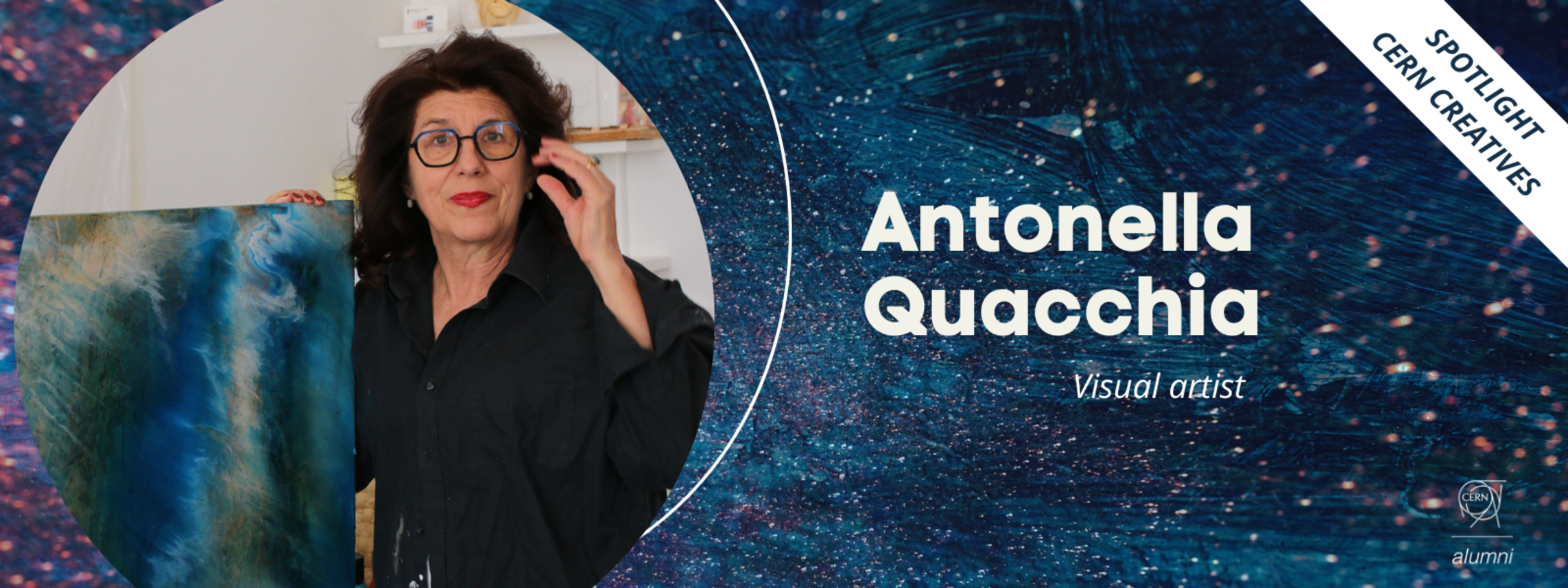
Code and Canvas: A Career in Two Acts
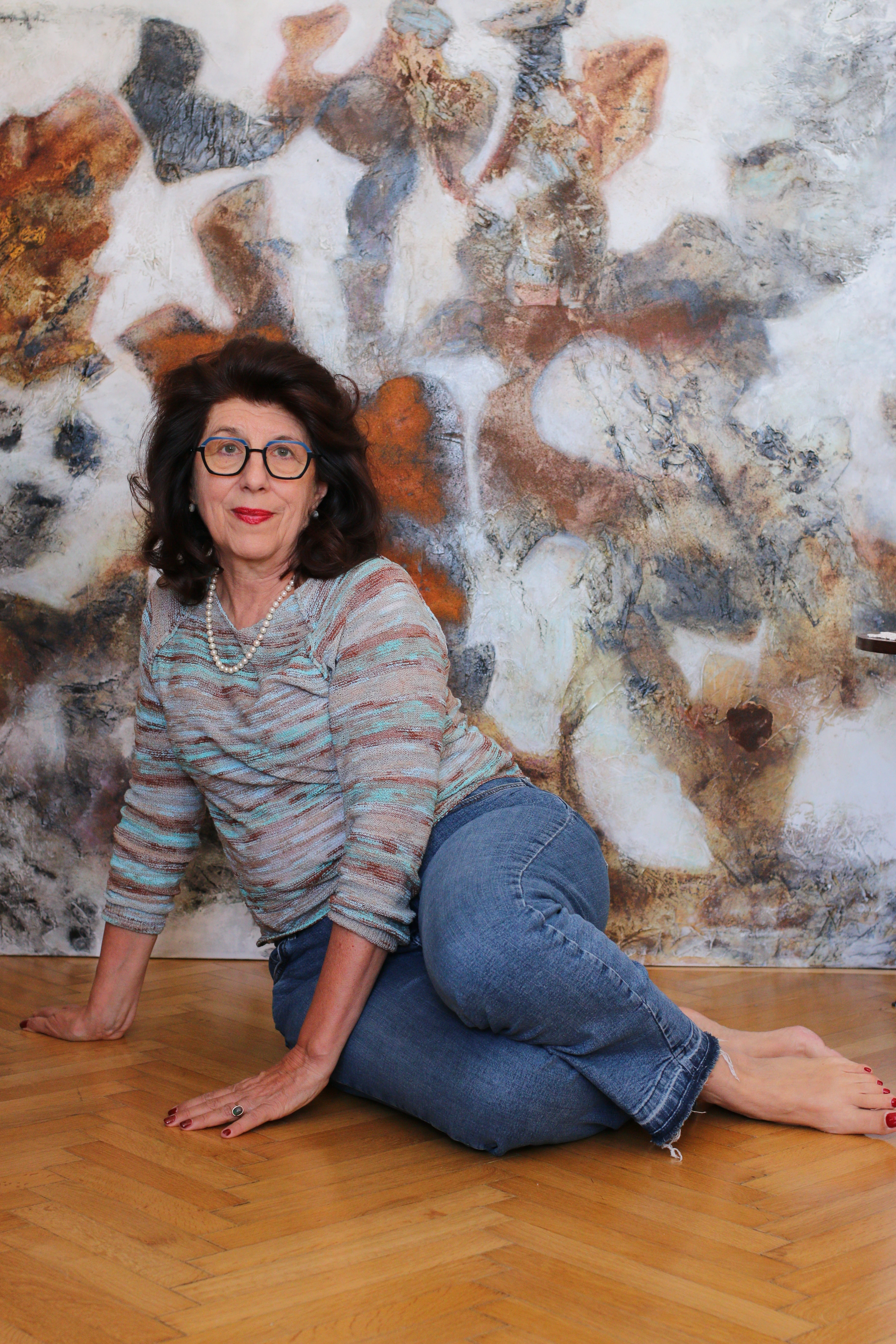
Name: Antonella Quacchia
At CERN: Summer student (1981), Staff member in the Data Handling Division (1982–1991)
Today: Visual artist, based in Vienna and Barcelona
Following a successful career in computing, CERN alumna Antonella Quacchia embarked on a second career in art. A former CERN computer scientist turned visual artist, she blends scientific curiosity with creative expression, using diverse materials to explore concepts of change, memory, and transformation.
In this interview, we delve into her early days at CERN, her work in computing, and how her artistic practice continues to be shaped by her time at the laboratory.
CERN in the 1980s: A world of discovery and innovation
Antonella first arrived at CERN in the summer of 1981 as a student from the University of Turin. “My thesis supervisor was an American professor who had ties to CERN. He was sending some of his students to the summer student programme, and I passed the national competition to be selected.”
Her first project involved programming for an experiment on the Intersecting Storage Rings, a particle accelerator that was dismantled in the mid-1980s, a predecessor to the SPS. “I worked on the Split Field Magnet detector, which had the first large application of MWPCs (about 70'000 wires). I developed software that provided real-time status of the collisions.” She pauses, laughing: “At that time, the Magnet was filled with wire chambers —technology that feels prehistoric now!”
That summer, she fell in love with CERN’s unique atmosphere. “It was so intellectually stimulating and deeply inspiring”, she says. “Working alongside the most brilliant minds in the world, in a very collaborative atmosphere, was just amazing.” But as a young Italian newcomer in her first professional job, there was one small hurdle—English. With a British boss whose accent sometimes baffled her, she occasionally needed her colleagues to step in and translate, ensuring she kept up with the fast-paced environment. Slowly but surely, she got the hang of it, picking up both technical terms and everyday conversation along the way.
In June 1982 Antonella returned to CERN as a staff member in the Data and Documents Division, working in Building 31. “At that time, the Computer Centre hosted huge mainframes—the IBM and Siemens machines. I remember when, in 1987, the CRAY X/MP-48 supercomputer was installed. It was elegant, ergonomically designed and the fastest computer of the 80’. CERN has always been at the forefront of technology”, she recalls. “The centre was equipped with several IBM 1316 disk drives, each one storing 150 megabytes of data, which seemed enormous at the time.”
Amongst other tasks, she was also responsible for managing CERN’s IBM Mass Storage System (MSS): “It was like a cupboard containing hundreds of data cartridges in the form of circular cylinders filled with a tape able to store 50 megabytes of data each. The cartridges were placed in hexagonal stack compartments—like a beehive—a robotic arm would fetch the cartridge and load the tape into a reading station. It was a revolutionary system for its times.”
In her final years at CERN, she joined a team working on what would become the World Wide Web. “I worked alongside Robert Cailliau and Tim Berners-Lee. The web wasn’t out yet, but it was clear something revolutionary was happening.”
The magic of CERN: Passion, collaboration, and an unforgettable smell
For Antonella, CERN wasn’t just about technology—it was about the people. “I remember the passion that permeated the Lab” she says. “During data analysis, people would put in long hours, driven by their passion for discovery. The energy and excitement were contagious.”
One of her most cherished moments was the discovery of the W and Z bosons in 1983. “I remember when Carlo Rubbia presented the results in the auditorium. It was packed. I didn’t understand all the physics, but the energy in the room—the feeling that we had all contributed to something historic—was something I will always remember.”
She also shares an unexpected but vivid memory: “There’s a smell that stays with me. A mix of electronics, plastic, and underground tunnels. That, to me, is the smell of CERN.”
Leaving the Lab: When Life Takes You Elsewhere
At the beginning of 1991, Antonella made the decision to leave CERN for family reasons. “It was challenging,” she admits. “I had just received the permanent contract. I loved my work, and I greatly appreciated the colleagues I was working with.”
She moved to Italy but later returned to Geneva, where she joined the International Labour Organization (ILO), working in IT for nearly three decades. “What I learned at CERN helped me throughout my career,” she says. “Above all, the scientific mindset—looking beyond first impressions and understanding that knowledge is never absolute. Even the most established theories can be reshaped by new discoveries.”
Despite her long career in computing, Antonella never let go of her love for art. “Art was always part of me, although as a hobby” she explains. “At the end of my career, I took art courses in Geneva and France.”
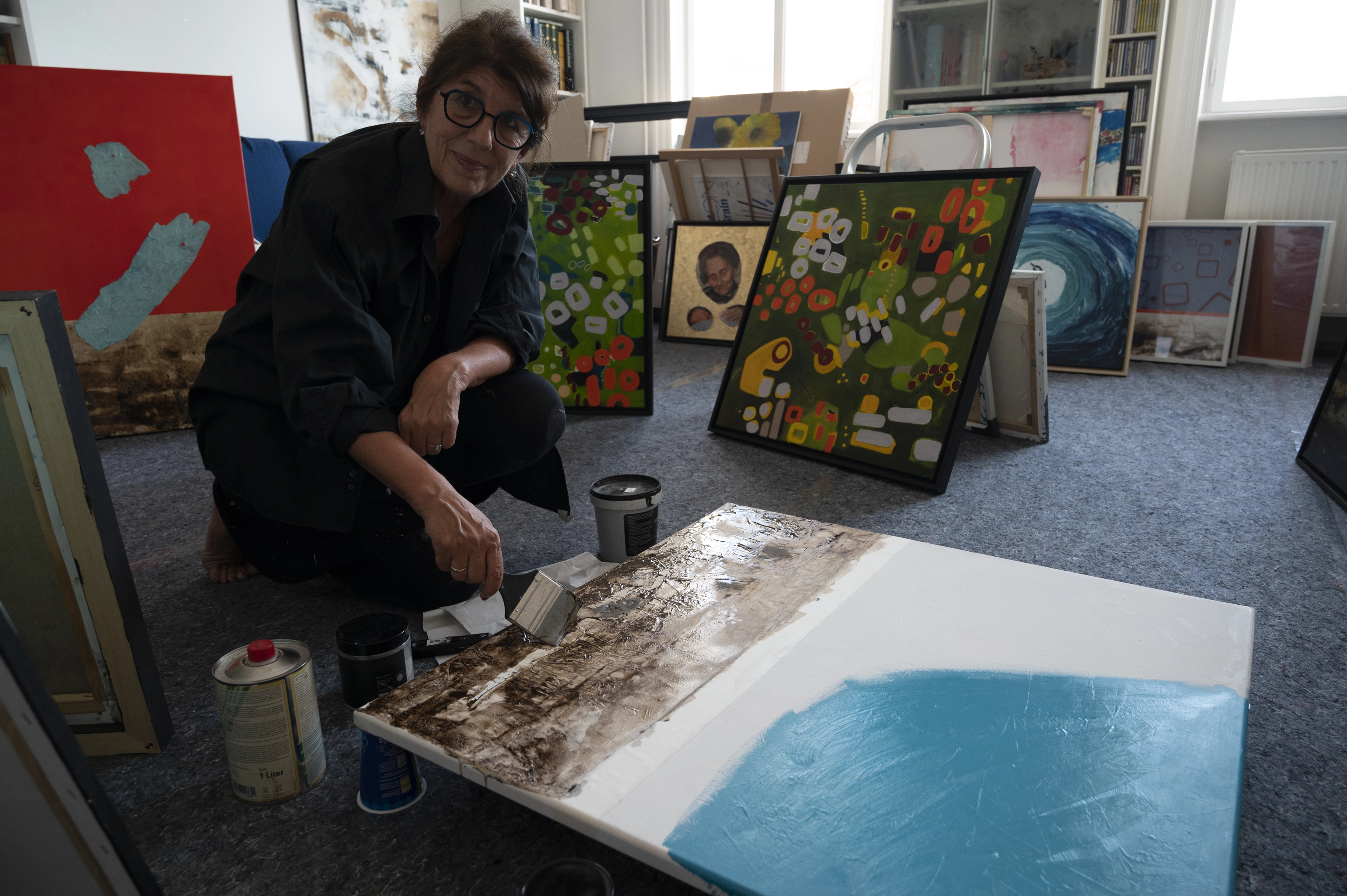
Her transition into art became serious when she moved to Vienna, a city rich in artistic heritage. “I started experimenting with materials—oil, acrylic, recuperated material, stone and metal powders. My scientific side pushed me to keep testing new things. At CERN, I worked with logic and numbers. In art, I work with intuition and emotion. But the two worlds are not as different as they seem.”
Now, her work is deeply abstract and rooted in exploration. “I want to create an emotion. I want to spark curiosity. The attitude towards a deep curiosity certainly comes from CERN.”
Art Without Borders: Showcasing Work Around the World
Antonella’s art career has taken her across the world, with exhibitions in New York, Tokyo, Milan, Rome, Venice, and Vienna. “One of my most memorable showcases took place at Milan's Myowngallery, Superstudio Più. For an entire month, I had the privilege of occupying the whole venue, presenting approximately 70 of my artworks—it truly felt like a dream come true."
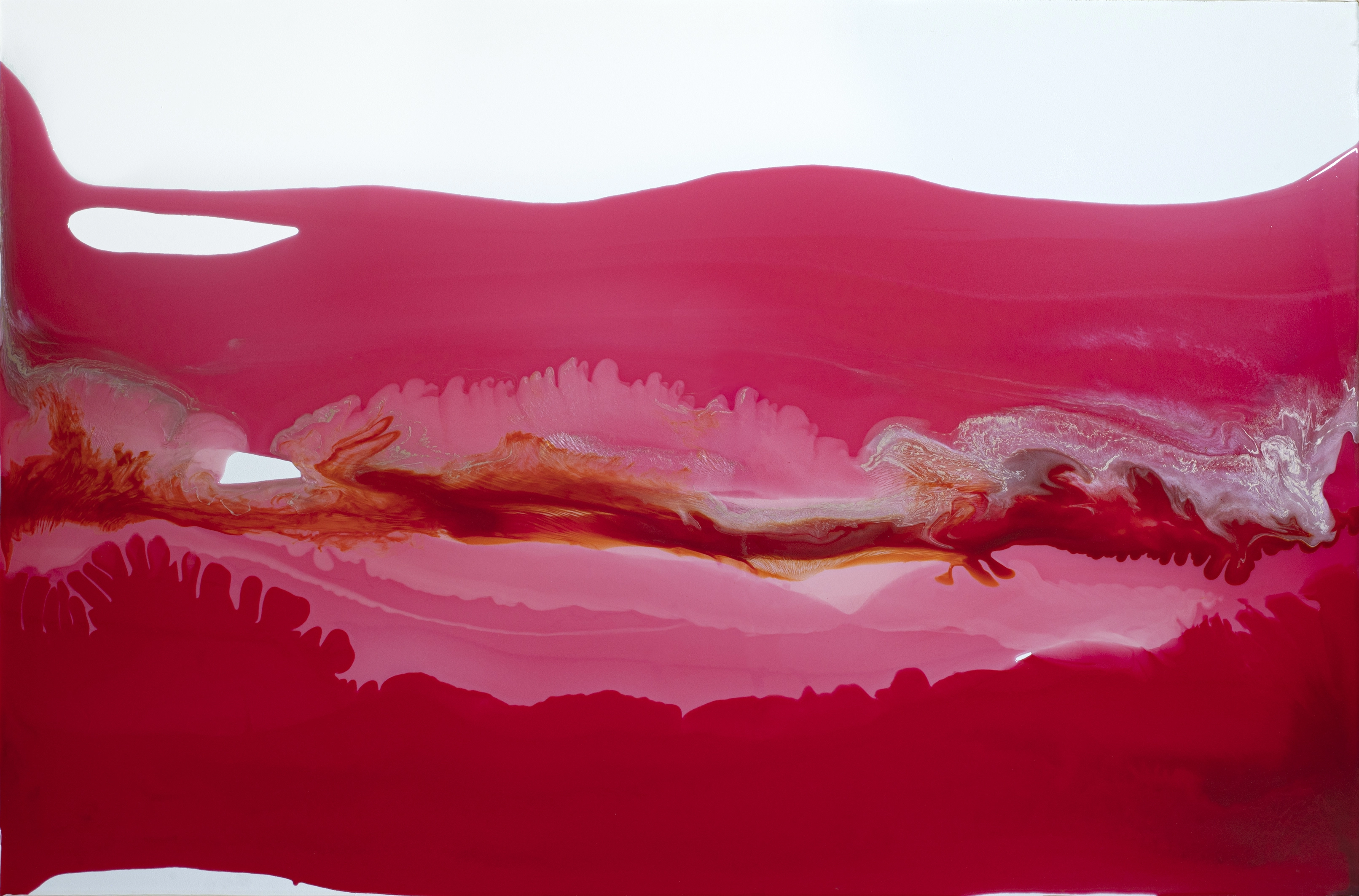
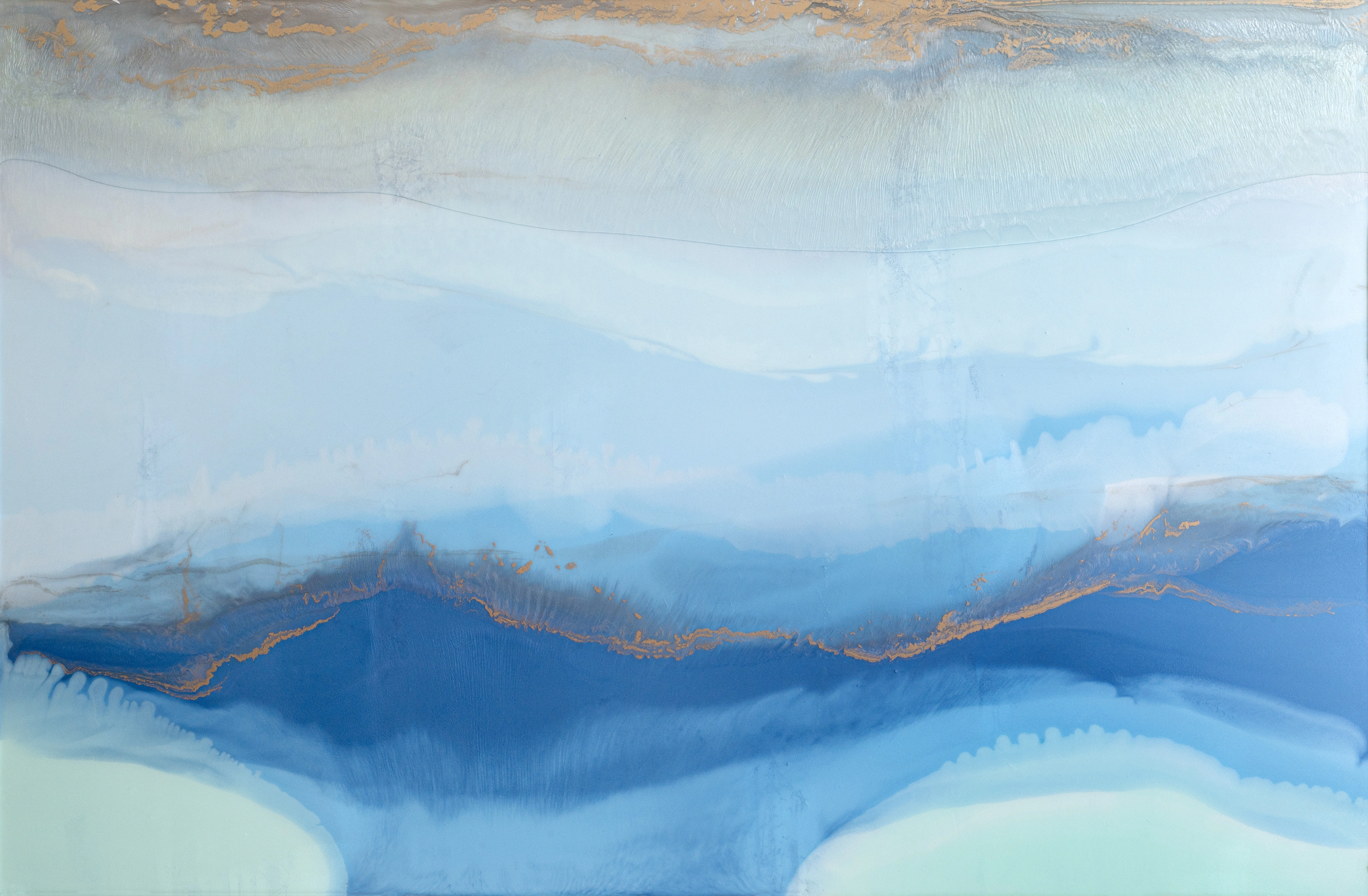
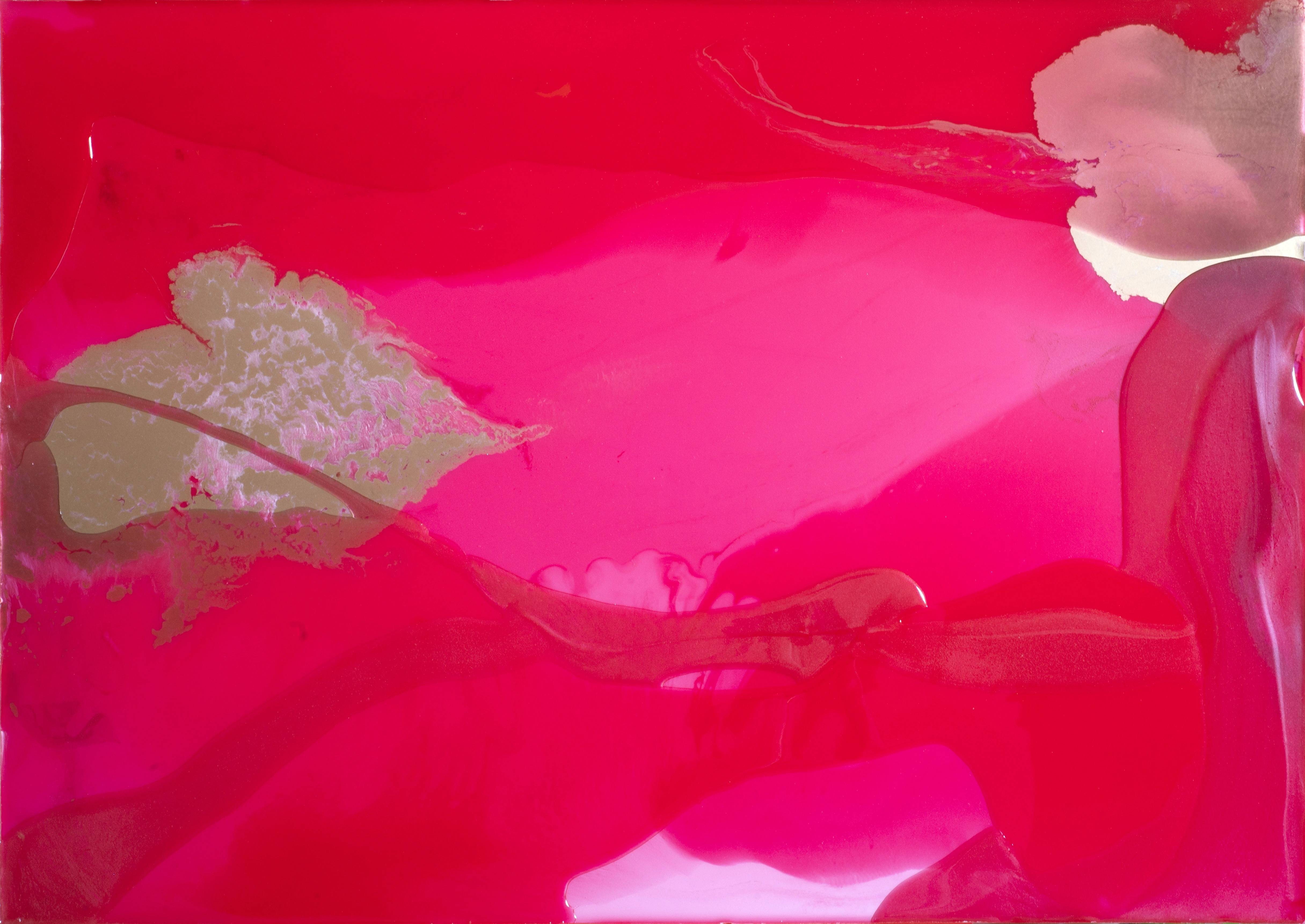
One of her latest series, Serendipity, explores the fragility and beauty of the natural world. “Working at CERN made me deeply aware of how interconnected everything is.”
The series incorporates epoxy resin, a material that shifts from liquid to solid, symbolising change and impermanence. “It reminds me of CERN’s approach—always evolving, always questioning.”
She hopes her work sparks reflection on sustainability and our relationship with the planet. “Much like physics, art has the power to transform our perspective on the world. It invites us to pause, reflect, and see things in an entirely new light.”
 |
 |
 |
Thinking Creatively? A CERN Alumna’s Advice on Taking the Leap
For those at CERN who feel drawn to the arts but hesitate to take the leap, Antonella has clear advice: “If you have a passion, follow it. Life is short, and opportunities won't wait forever.”
She acknowledges that the transition from science to art can feel daunting. ”Sometimes we are blocked by the idea of performance, with the fear of not being ‘good enough’. But perfection isn’t the goal—expression is. Take that first step, let go of the pressure, and let your creativity flow.”
Antonella remains connected to CERN and is now looking to contribute to the launch of a CERN Alumni Art Group. “We have a shared history, a common mindset. I think there are many alumni who have followed creative paths—why not bring them together?”
She also continues to explore the intersection of science and art, proving that a career at CERN can lead to unexpected and extraordinary places.
If you’d like to help shape this exciting new group and take on a group manager role, we’d love to hear from you!
Get in touch at [email protected].
📍Upcoming Exhibition in Milan – May 2025 She donated an artwork towards a fundraising initiative of the Fondazione Italiana Ricerca Reumatologia
🖼 Auction & Exhibition: 7–8 May, Spazio BIG Santa Marta, Milan
🎟 Gala Dinner: 20 May, Leonardo da Vinci Museum of Science and Technology, Milan