
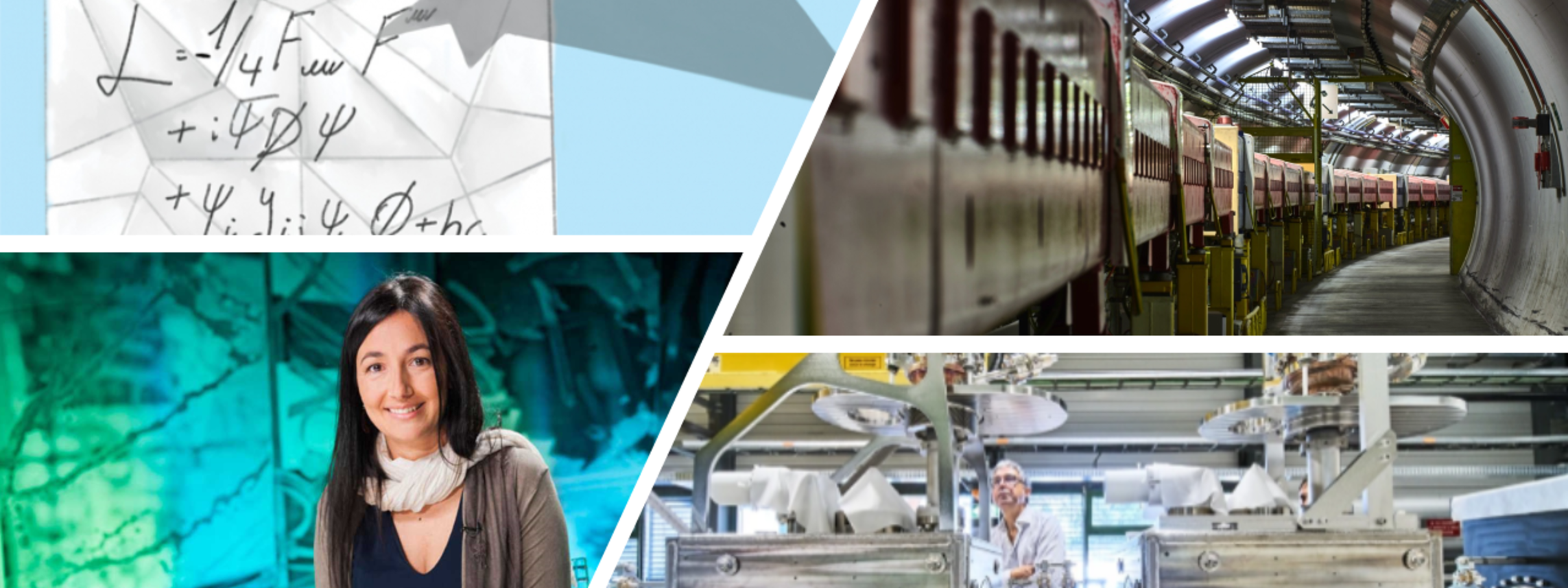
CERN Alumni Weekly News | Spotlight Sonia Fernández-Vidal, Communications on alumni.cern, News from the Lab with Hi-Lumi LHC, Virtual Company Showroom with Pix4D, Virtual CERN Relay Race, Accelerators back in action
This week, we continue our CERN Alumni Creatives series with Sonia Fernández-Vidal, a physicist, science communicator, and one of Forbes 2017 "100 Most Creative People." Inspired by a childhood book on groundbreaking scientists, Sonia has gone on to bridge the gap between science and storytelling, inspiring new generations through her work: https://alumni.cern/news/2541140.
CERN alumni stay connected in many ways, and communicating via the alumni.cern platform is one of the most impactful. Whether it's sharing updates, posting about job opportunities, or engaging in discussions on “Your Virtual R1”, every contribution helps build a thriving network. Get inspired with more ways to be involved: https://alumni.cern/news/2569079
On 10 April, don’t miss our next News from the Lab event, where you will find out the latest updates on the High-Luminosity LHC. Register now: https://alumni.cern/events/175910.
Our next Virtual Company Showroom will feature Pix4D, a Swiss software company that specialises in terrestrial and drone photogrammetry mapping software. The event, taking place in hybrid format at CERN and online on April 10, will give you insights into their current job opportunities. Registration details to follow soon.
Ready, set, go! After the success of previous editions, the Office for Alumni Relations is partnering with the CERN Running Club again, to offer you the chance to take part in the CERN Relay Race virtually, no matter your location:
https://alumni.cern/events/176097
The accelerators are back in action - the four machines feeding into the Large Hadron Collider have been restarted, with the LHC set to receive its first particles on 4 April: https://home.web.cern.ch/news/news/accelerators/particles-are-back-accelerators.
Finally, high-energy physicists are using AI to rethink unfolding, a statistical technique for correcting detector distortions in measurements. Learn how artificial intelligence is shaping the future of data analysis in particle physics: https://cerncourier.com/a/how-to-unfold-with-ai/.