
CERN Alumni Spotlight: Jim Burt - Smooth Operator - Computing at CERN in the 1960s
Smooth Operator - Computing at CERN in the 1960s
Jim Burt’s journey to CERN began in the early 1960s in Blackpool, Northwest England. Leaving school at 16, he entered the workforce as a junior clerk with British Railways, transitioning to the UK Civil Service as computing began to emerge as a Computer Operator in 1964. In 1965, while working for a UK insurance company, Jim came across an advertisement in the Daily Telegraph that would change his life. “CERN was looking for computer operators to run the newly introduced CDC 6600 computer, which had to operate 24/7”. Following an interview in London, Jim was offered the position through a letter: “There was no internet back then—everything was done through letters and phone calls,” he notes. Jim travelled by train and ferry to Geneva, his first time abroad, and arrived at CERN on May 9, 1966. Over that weekend, he met several other UK recruits, friendships that have endured nearly six decades: “I met up with a group of four other new starters from the UK. Three of us still regularly meet 58 years later!”
Life at CERN
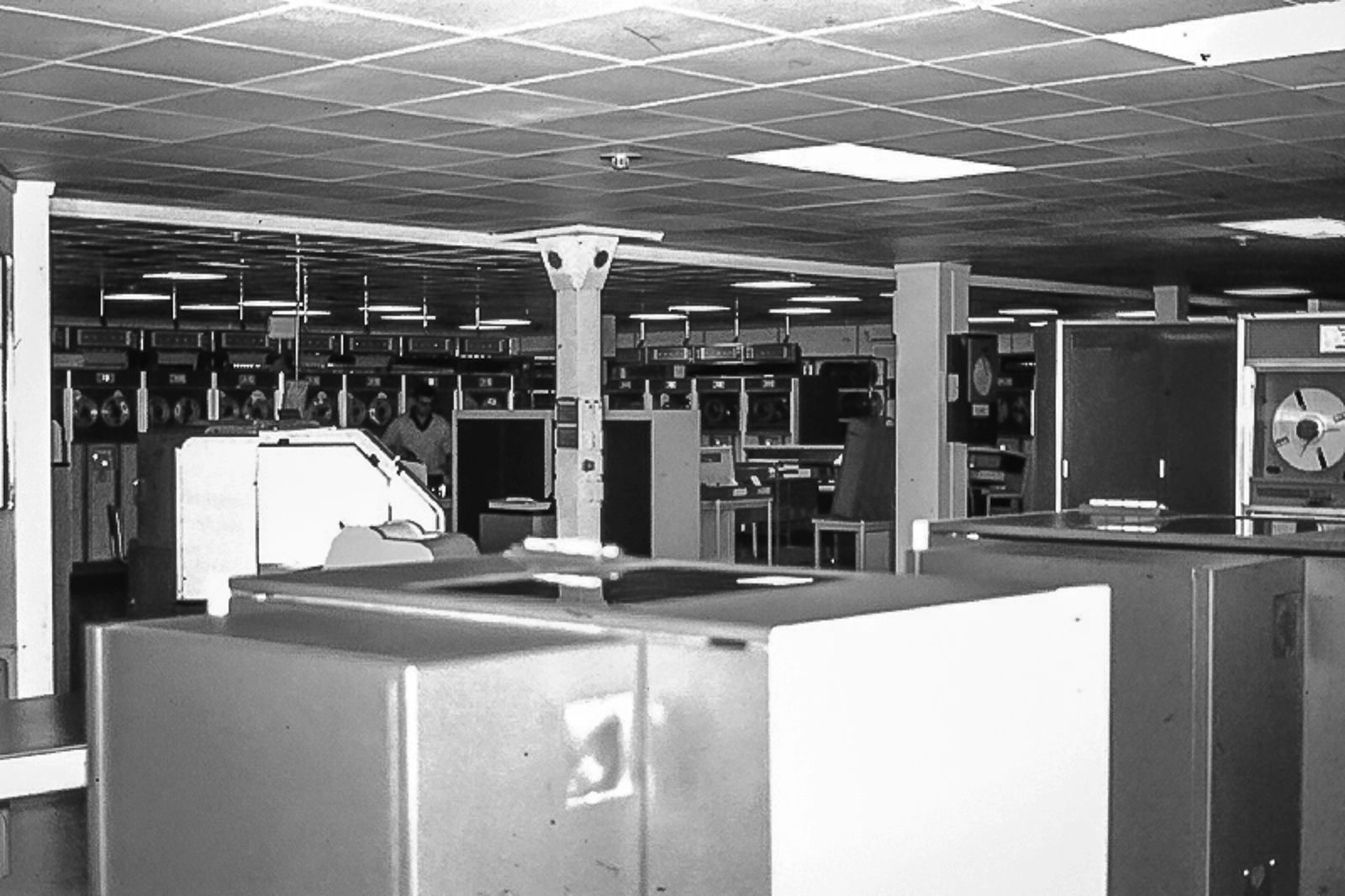
Operating some of the world’s most advanced computers in CERN’s Computer Centre, now Building 501, was a defining experience for Jim. “We worked with a newly delivered CDC 6600 and an older IBM 1401, and later machines like CDC 3400, CDC 3800 and CDC 6400”. Jim also operated digitisers such as the Luciole and HPD (Hough-Powell Digitiser), which analysed photographic data from spark and bubble chambers.
Jim’s time at CERN was marked by the international atmosphere: “I met people from all over the world—USA, Russia, Japan, China”. Despite limited French skills upon arrival, he quickly adapted, as many colleagues spoke French during shifts: “At school, I studied French but didn’t see the point—I got 5% on my GCE exam. Six years later, I found myself in a French-speaking country, often the only English speaker on shift. I had to learn quickly.”
Socially, he played football in CERN’s interdepartmental league, helping his team win the championship twice. Evenings were often spent in what is now Restaurant 1, enjoying conversations with colleagues like Wim Klein, CERN’s “computing magician,” who famously held the title of the world’s first full-time human computer. “There could be six or more languages at the table, but Wim kept the conversation going—he was incredible”.
Life outside work offered its own rewards. “Living in Geneva was a big change from my small hometown,” Jim reflects. He joined local clubs, including a folk music group and the “Wednesday Club,” where he mingled with British expatriates from organizations like the UN and WHO. Weekends were spent exploring Switzerland’s mountains and lakes or travelling further afield to the Mediterranean.
Beyond CERN
Jim left CERN in August 1969, after only 3½ years, driven by a desire for career advancement: “At the time, I didn’t see a clear path for progression at CERN,” he explains. His time at CERN had cemented his passion for computing and opened doors in the rapidly evolving IT industry: “Having CERN on my CV was a huge advantage,” he says, “As CERN became more prominent with Tim Berners-Lee’s invention of the World Wide Web and Peter Higgs’ Nobel Prize, its reputation only grew.” Over the years, Jim worked with several major organizations in the UK, including roles in both the public and private sectors: “Computing was still a new and exciting field, and I was fortunate to join companies that were at the forefront of technological innovation.”
Although short, Jim recalls that out of all his jobs, the connections he formed at CERN were the strongest and most enduring, and would go on to play a central role in his life, leading to the creation of a unique alumni group years later.
Lifelong connections and the CODGERS
Jim’s connection to CERN did not end when he left. Over the years, he stayed in touch with former colleagues, leading to the creation of the CODGERS—“CERN’s Old Demented Gentlemen’s Retired Society.” “The name, coined by Denis Bennett, is quite fitting, it reflects our fondness for reminiscing about the past.” The group has celebrated milestones like the 50th anniversary of computing at CERN, reuniting in Geneva and London: “This year, only six of us remain, all over 80, still able to meet for lunch and share memories”.
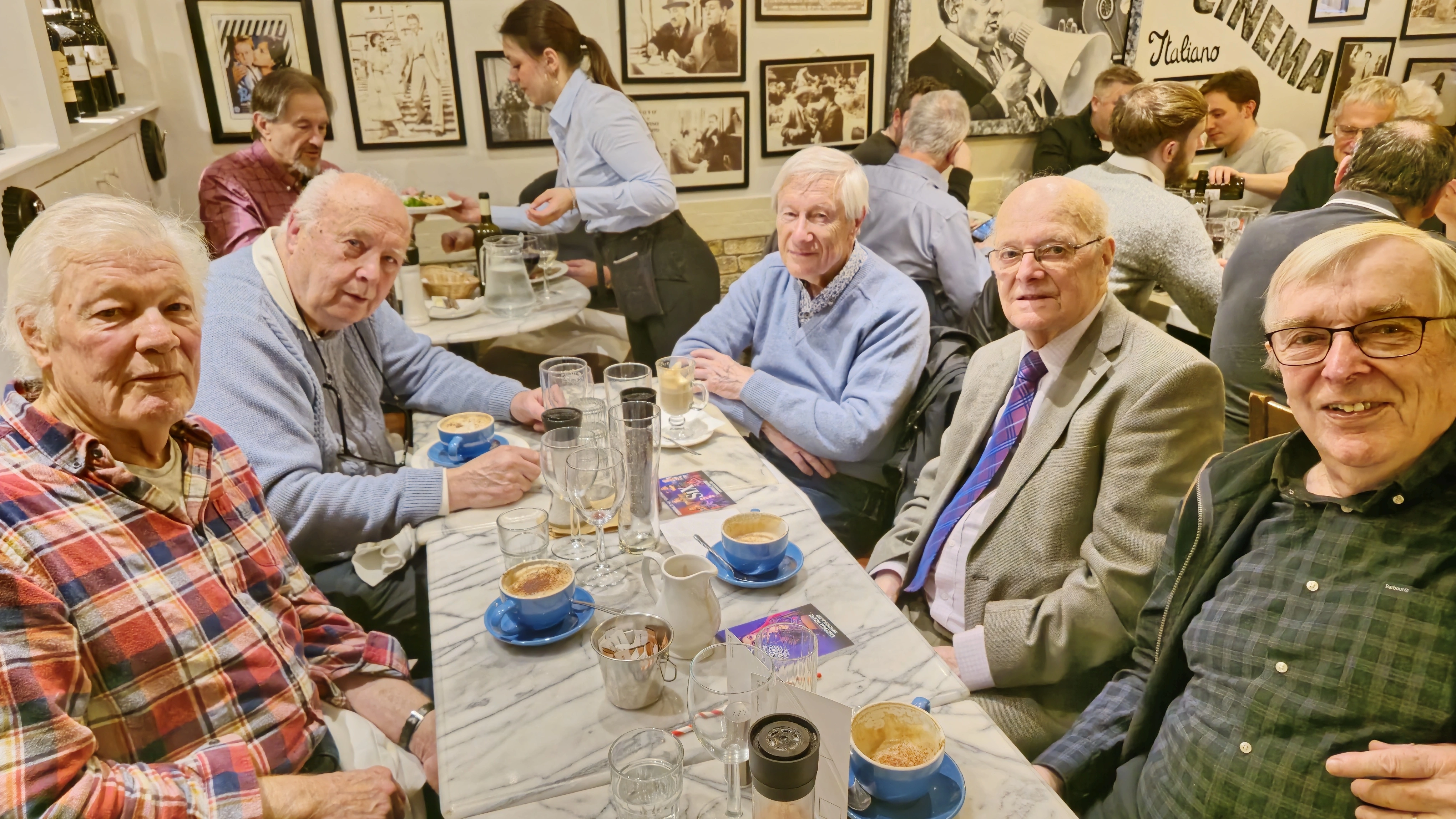
Richard Heslop, Michael (“Dusty”) Miller, Charles Symons, Terry Jackson and Jim Burt
Alumni Network
Reflecting on his CERN experience, Jim emphasises its transformative impact: “Working in such a multicultural environment gave me a broader perspective. It shaped my career and my life.”
He also recognises the importance of staying connected through the CERN alumni network: “It’s wonderful to see how CERN brings people together, even after they’ve left,” Jim says. “The alumni network helps us stay in touch, share experiences, and inspire each other. It’s a testament to the spirit of collaboration that defines CERN.”
For those embarking on a career in science or computing, Jim’s advice to the younger generations is to “grasp the opportunities that working at CERN in an International Organization can offer.”