
Moving Out of Academia to the Environment Industry event - Meet the Speakers
Building on the success of previous events in this series "Moving Out of Academia" we would like to provide CERN Alumni - or soon to be alumni - with the opportunity to learn more about how fellow alumni successfully managed a transition from Academia to the Environmental Industry.
If you are considering moving into this sector of activity, this is your opportunity to come along with your questions and obtain first-hand information from our panelists.
The first part of the event is focused on the nature of the work carried out by our panelists and on other skills they acquired at CERN which have helped them (or not) in the transition . They also explain which additional skills they had to develop after CERN for a successful career move.The second part of the event will provide you with very practical advice on how to prepare for such a transition, how to get started, what errors to avoid, where to look for help and how to promote your assets.
Please register for the event at this link: https://indico.cern.ch/event/998463/
This week we introduce you to the first three of our six panellists; Charlie Cook, Giorgio Cortiana and Giorgio Cortiana and will feature the other three next week!
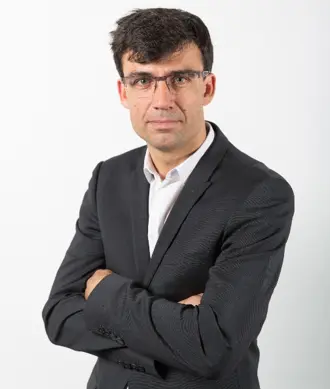 |
Manel is Industrial Engineer in Energy by the Polytechnic University of Catalonia and Master in Technology Enterprise by IMD, Switzerland. He has more than 20 years’ experience leading and participating in national and international R&D projects in the field of energy systems and in large international scientific facilities such as CERN or ITER. He is Director of Corporate Development and Technology Transfer at the Catalonia Institute for Energy Research (IREC) where he leads strategic alliances and projects. He has been CEO and co-founder of ISUNO Energy, and since 2020 he is also co-founder of Bamboo Energy, a spin off from IREC. |
|
 |
Giorgio has a PhD in Particle Physics, several years of experience in the forefront research and data science projects, in-depth analytical thinking, problem-solving and leadership attitudes. |
|
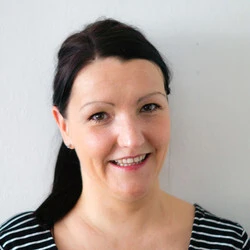 |
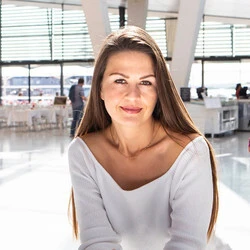
Zofia joined ATLAS in 2004 as a Master student. In 2009 she obtained a PhD from the University of Copenhagen for her work on searches for New Physics using tau lepton signatures in the ATLAS detector. She continued as a postdoctoral researcher at Yale University, working on the ATLAS trigger system and the novel measurement of the Higgs boson decaying to tau leptons. In 2013, she moved to Shell research hub and worked on multiple scattering and seismic imaging. Since 2018 she has been working for NIVA where she is responsible for ingestion, processing and modelling of various environmental data. She is prototyping and automating a novel screening technology based on a non target mass spectrometry data, as well as working with real time data streams from sensors, which may either be installed on (autonomous) vehicles or are static in the field.
|
|
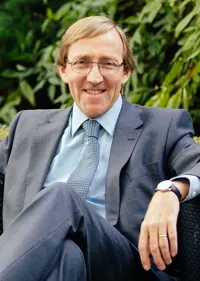 |
James is a member of the Education, Communications and Outreach group at CERN. He holds a doctorate in physics from the University of Oxford and began his research career working at CERN in the mid-1980s. In 1993, he left research to become Head of Science with the British Council in Paris. After managing the Council’s bilateral programme of scientific visits, exchanges, bursaries and cultural events for two years, he returned to CERN in 1995 as a science writer. He was Head of the Organization’s Communications group from 2003 to 2015, before turning his attention to environmental reporting at CERN, while also assisting the SESAME laboratory in Jordan with communications during its start-up phase. He is co-author of ‘How the Web was Born’, a history of the Internet published in 2000 and described by the London Times as being among the year’s ten best books for inquisitive minds. In 2018, his second book, ‘CERN and the Higgs Boson: The Global Quest for the Building Blocks of Reality’, was published.
|