
From underground caverns to touching the sky featuring CERN alumnus Andreas Roth
At CERN: Summer Student in 1982, Fellow from 1989 to 1991
Today: Senior IT Director at Lufthansa Technik AG
While studying physics at the University of Aachen in the 1980s, Andreas learnt about CERN, thanks to the presence of several experimental groups and institutes from his university, which were contributing to CERN experiments. Being familiar with the Organization and interested in particle physics, he decided to submit his application to become a summer student and in 1982 after being accepted, he made his way to CERN.
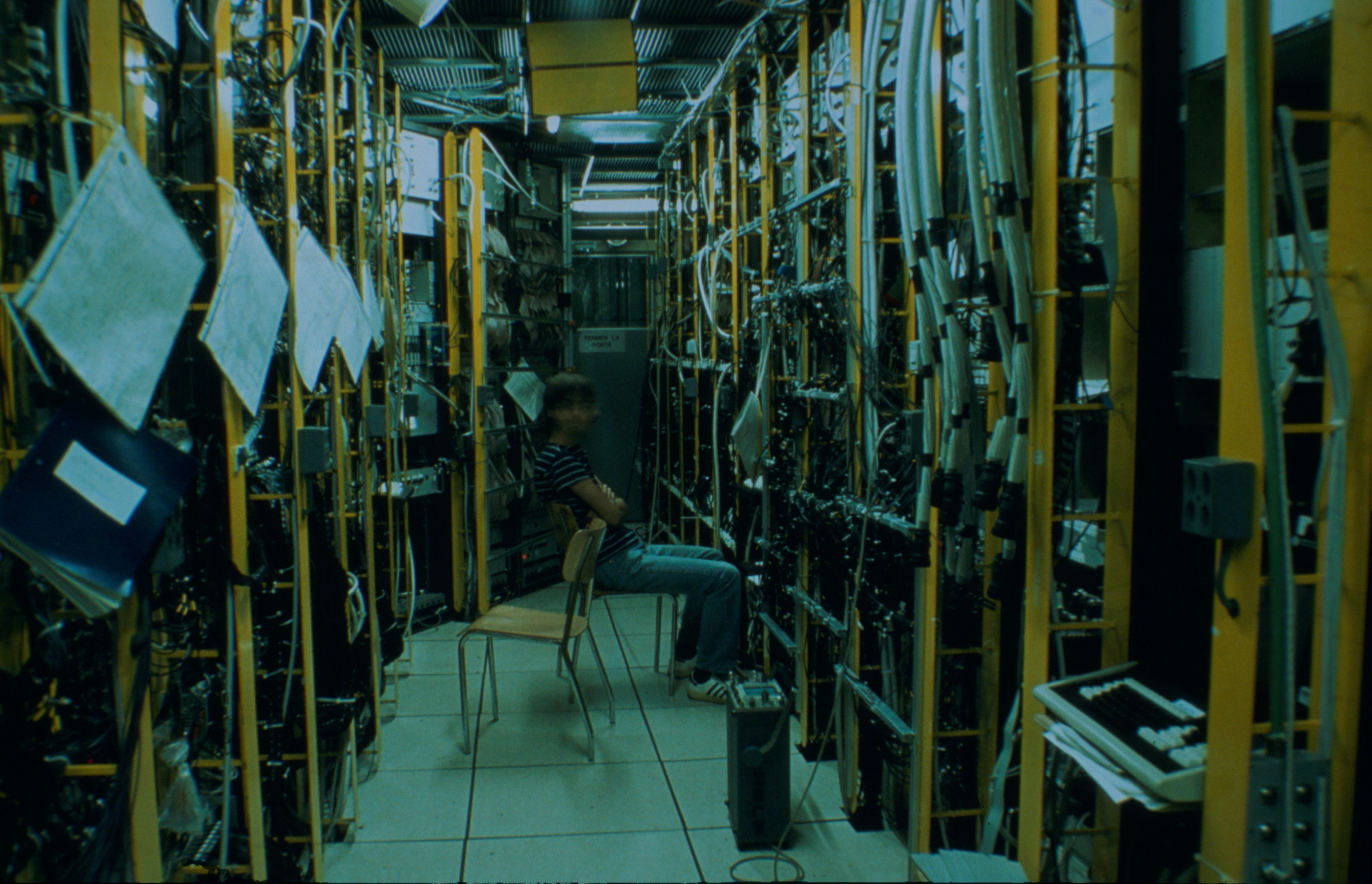
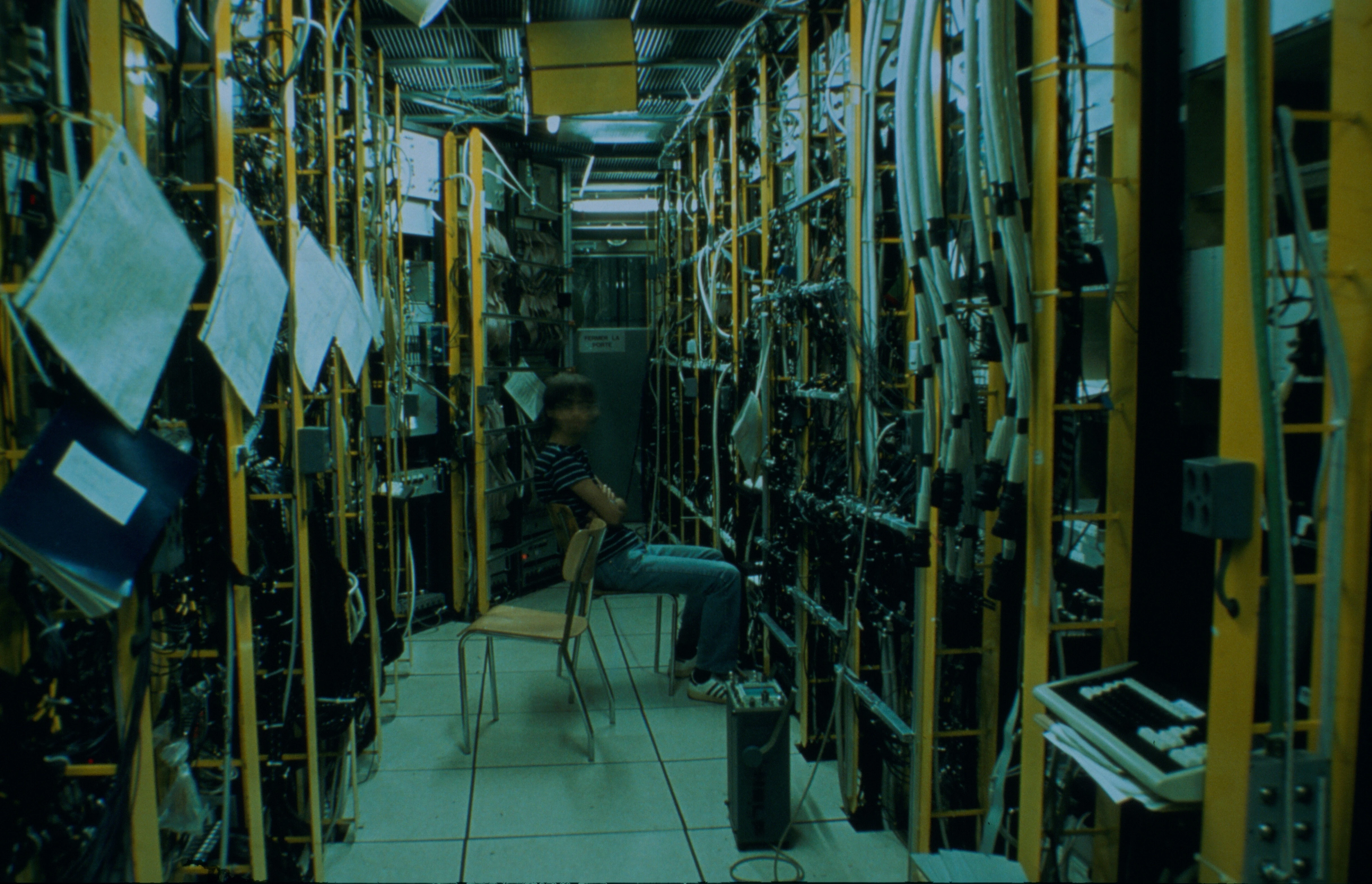
“I spent around eight weeks at CERN that time and I enjoyed the atmosphere, the environment and my work, which was also very interesting a great deal. I was there in the summer time and I remember it was very warm outside and I was going underground every day to do the cabling at the UA1 experiment – and to hide away from the heat unintentionally.
What struck me most was that you could not really distinguish between work and free time, people were so passionate about their work, they lived and breathed physics. Everyone remembers the famous terrace in Restaurant 1 and people sitting out there, it seemed they were relaxing and taking it easy but in reality, I recall them deep in conversation, discussing physics. This was maybe a naïve first impression, but I still remember it.
My CERN experience was very positive. Together with my team, we spent our days in the barracks, at the end of the CERN area (where some CERN Clubs are now housed), we enjoyed our life, making friends with people from other countries, and this made me want to come back. Therefore, when I finished my PhD studies, and there was an opportunity to be a fellow, I took it."
"As a fellow, I worked in the ALEPH experiment, in Dr. Wolf-Dieter Schlatter’s team, in the TPC group of the experiment. It was rather a new environment for me; I had to learn all the basics of electron-positron physics and all the things that were relevant then. In my PhD and before that, I worked on fixed target proton physics, for example NA27 is where I did my diploma thesis and Fermilab E743 for my PhD thesis."
CERN is often described as a unique place like nowhere else on the planet and Andreas agrees to the extent that certain aspects that make CERN one-of-a-kind organization.
“CERN is one of the first European organizations founded after the Second World War explicitly on the border between France and Switzerland with the goal of uniting people from all over the world in physics research for the benefit of all. When I was there during my summer student’s time and fellowship, I could feel that people were very open. Scientist from the other side of the iron curtain came there and there were no secrets, which is an example of how people can collaborate across cultures or ideologies. And in this respect, CERN is already very unique and is for sure in many other aspects as well.”
An interesting story he shared with us from his time as a fellow and which he only discovered after leaving CERN, is that, he was working in the same building, two stories away from Tim Berners-Lee who developed the World Wide Web in the same building at about the same time.
"What I took from that? You never know how far (or close) you are from a big breakthrough, when working at CERN."
Journey from CERN… inner battle between academia and industry
In 1991, Andreas’ fellowship was coming to an end and he was facing the tough decision many physicists face at some point in their career – do I want to pursue my career in academia or should I move to industry? Despite having a chance to prolong his CERN contract for a couple of years, it became more and more clear to him that he wanted to move on towards something else.
“Being at CERN, I saw there were so many bright people and they were rather clear that they couldn’t stay at CERN or at their university forever, many of them had to leave academia. Therefore, for the last half a year of my fellowship I started looking for a job outside of physics, together with others who were in the same situation.
I felt a sense of guilt, because I had learnt so much in the world of physics, so why did I not want to continue, why would I not exploit it further? I had just started a family, my daughter Annika was born in Meyrin, which required time and this is something quite difficult even now for physicists, to have both a family life and time to conduct research. However, my decision was right at the time. I was just not quite prepared for that emotionally. Physics to the degree of being an active scientist could not be really part of my life forever. But I could stay an informal mediator between the science world and the physics layperson."
It is with no doubt that by working at CERN, one has a chance to develop a wide of range of skills, whether technical or interpersonal. And one thing Andreas is sure of, is that no matter which skill-set, it would have probably taken him much longer to develop it elsewhere, outside of CERN.
"Whilst with the Organization I gained the experience of working collaboratively in large teams. I probably would have acquired this experience later in my career, but at the same time, had my career continued immediately in Aachen or other German companies without having been at CERN, perhaps it would not have been so international. In addition, the fact that you have to get along in large teams, you really feel the need to approach others to get things done, if you have questions on specific software or some physics term you are not able to figure out on your own.”
After making his decision to end his fellowship contract, he didn’t spend too much time searching for a job and went straight to Lufthansa where he has remained until today. Working for such a large organization has enabled him to take advantage of moving within departments and exploring a variety of roles at Lufthansa.
“I’m based in Hamburg, where the headquarters of Lufthansa Technik is located, whilst the majority of Lufthansa offices are in Frankfurt. IT was a steady field of my engagement throughout my whole career at Lufthansa. I could follow and make use of many emerging trends in IT, the last of which being the Industrial Internet of Things. Most of the IT related tasks at Lufthansa Technik are accomplished in a network of teams and even with outside companies as service providers.
Lufthansa Technik is responsible for carrying out the maintenance, repair and overhaul work (MRO) for the aircraft, their engines and all related equipment built in. It is work that must be done during the operation of the aircraft, at night-time, or when the aircraft is on the ground, so action can be taken in case something needs to be repaired or looked after in between. Moreover, it is also work on a big scale with 10’000’s of work hours per single aircraft event. After 4-5 years of continuous operation of an aircraft, many of the aircraft parts are dismantled to the point where it is difficult to imagine that the object in question used to be an aircraft. The parts and the aircraft are serviced and reassembled back into the aircraft as if they were new. This process takes several weeks and is what Lufthansa Technik is doing for aircraft (and built-in equipment and aircraft engines) worldwide, not only on a European level. It has business in the Americas and Asia with roughly half of the business contracted for aircraft outside of Lufthansa. With an up to 10% market share overall (before Corona), it is the largest manufacturer-independent MRO provider worldwide.”
Share your story
Thanks to people like Andreas, CERN has a thriving network of proud ambassadors who are happy to share their experience and to support other alumni and the Organization’s mission. The Alumni network is a conduit for alumni to share their experience, reconnect with each other, offer advice and learn from each other’s career journey.
“When people ask me what was I doing before Lufthansa or when they ask me about my profession, I often say physicist and I explain I worked at CERN because I take joy in explaining physics and CERN’s mission to people.
When I left CERN I quickly lost contact with the members of the team and the Organization and discovering the Alumni network made me excited and grateful for the opportunity to get back in touch with people and also to return to CERN and not be treated as a stranger.”
Thanks Andreas for sharing your story with us and we hope to have a chance to welcome you at CERN in person very soon.
If you would like to be featured and share your career journey, talk about your start-up or passion project, we should be delighted to meet you!
Please get in touch with us at [email protected]
Author Simona Kriva (CERN)