
Finding the Benefits in the CERN Alumni Network with David Lee
At CERN: 2017–2018 in HSE-RP-AS and 2018-2019 in HSE-RP-AS as a Research Fellow
Today: Research Scientist
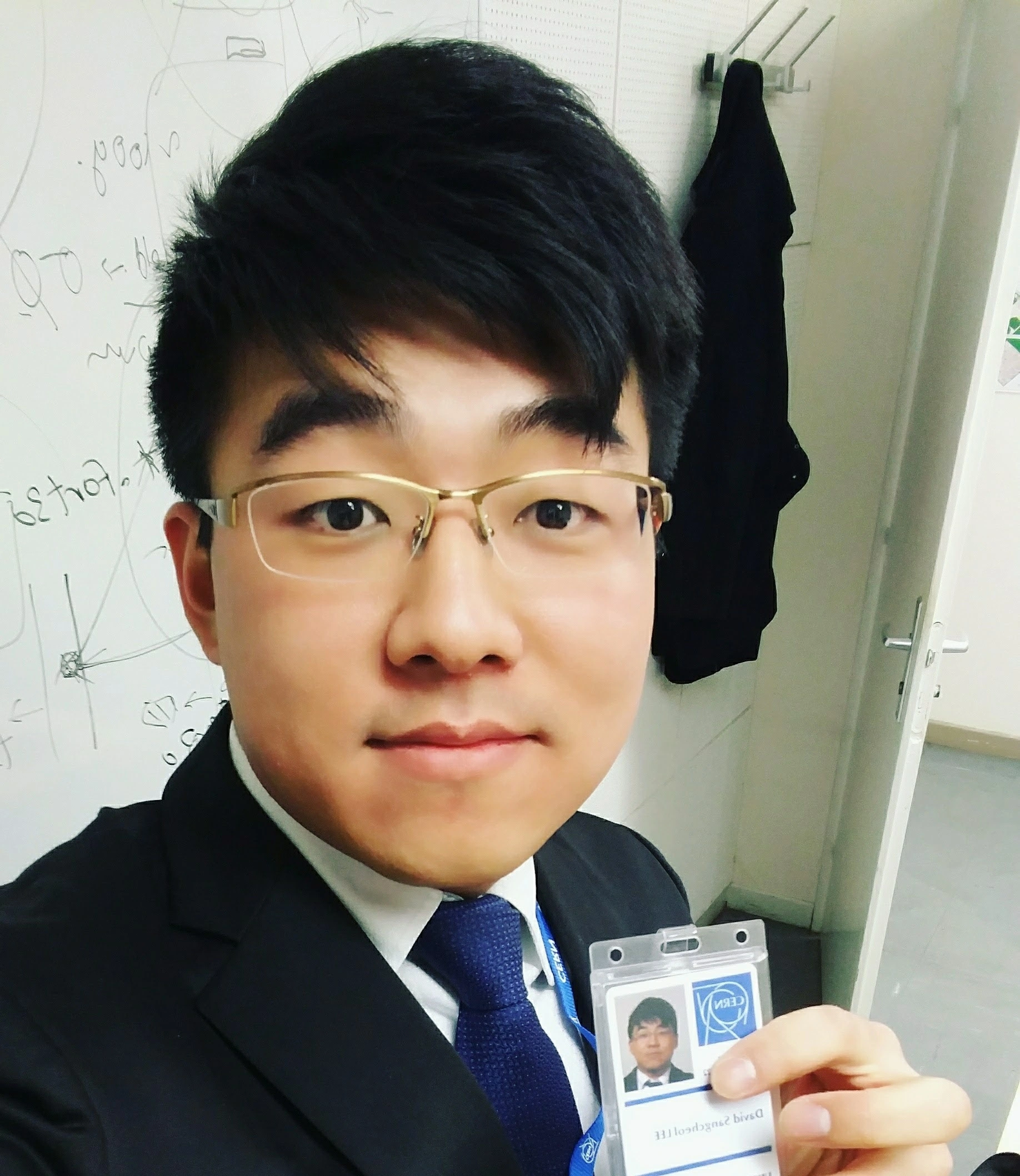
David and CERN
David came to CERN in 2017 as a Research Fellow working in the Radiation Protection team, primarily assessing radiation effects in areas such as NToF and MEDICIS. He subsequently transferred to CERN openlab and worked using Monte Carlo simulations for neutron production. Before coming to CERN, he did his PhD at Huddersfield University specialising in spallation for neutron production.
He recalls his first impressions of CERN: “The first thing that came to my mind was that it is BIG, really big. I knew it was the largest organisation in the world for particle physics research and I recall people telling me that CERN straddles two countries, France and Switzerland. I was struck by the number of people working on so many different projects. I knew little about NToF or MEDICIS, and even though CERN is known for the LHC and the Higgs Boson there are so many other experiments that are incredibly fascinating.”
David believes CERN is a truly unique place as it encompasses a wide range of experiments: “CERN hosts a variety of particle and nuclear physics experiments and provides resources to host other areas, such as NToF (Neutron Time of Flight experiment) and MEDICIS for medical isotope production, and of course the LHC which is mainly high energy physics. Hence, I haven’t seen many particle physics complexes around the world that cover that massive a range of particle experiments, CERN is very unique in that sense.”
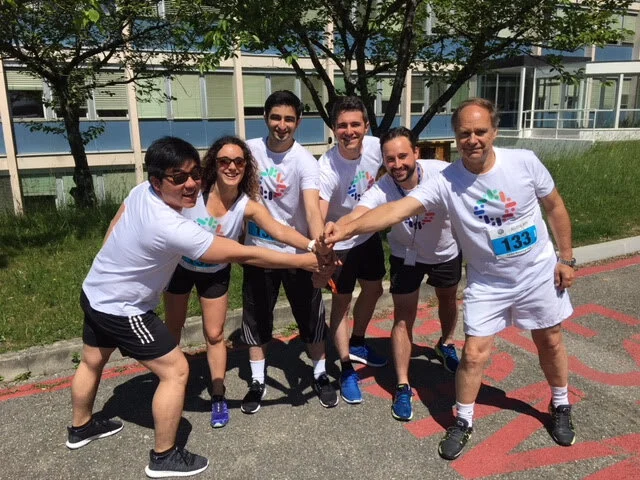
As CERN is a unique place, so are the people working here: “I would say that CERN people are very driven, they focus intently on their work and are real experts in their field. I would also say though that sometimes this drive makes it hard for them to open up to other technologies or techniques which might ultimately be helpful to the original problem that they are trying to solve. CERN is hosting people from all kinds of backgrounds, from engineering to construction, to health and safety and I believe that collaboration is very beneficial.”
Besides his research work, David was involved in outreach activities which became fond memories of his time at CERN: “I trained to be a Guide for CERN and that kept me quite busy, showing people around the IT data centre, the AD (Antiproton decelerator), and giving introductory lectures. Each time, I concluded my introduction by saying ‘the path we follow is of our choosing and all the people who work at CERN chose to dedicate their lives to research for the good of mankind" and this seemed to inspire the visitors. I even had some visitors ask for my email address and advice on how to come to CERN as Summer students. These outreach programs in which I participated were very memorable for me. As well as my actual work of course!"
How the Alumni Network helped David
During David’s time at CERN (2017-2019), the Alumni Programme was launched: “I think it was a big poster that I first saw and learned about some career workshops the programme was offering. I knew that my Fellowship would eventually come to an end, and I’d be looking for a new job so in that sense the Alumni programme was very helpful to me in helping me decide what I should do in the future.”
David participated in many of the events organised by the Office for Alumni Relations, including Moving Out of Academia, which David confirms, has helped him in his subsequent career: “This series of seminars brought alumni back to CERN to share their candid experience about working in a different sector. These events have been extremely useful for me. I remember so many enthusiastic people answering so many questions about how they developed their careers into other domains. It was very inspiring.”
These events are not only good for obtaining useful information and advice but also help participants make valuable connections through networking, as David recalls: “After the event, I connected with a few people on Linkedin and got some feedback. CERN Alumni have their dedicated website through which I contacted several people who provided me with stellar advice, which turned out to be highly beneficial for me. I certainly gained a lot more from the Alumni network than I was expecting.”
David's Advice for Moving out of Academia
At the end of his contract at CERN, David first found a job in the manufacturing sector developing physics simulations in the manufacturing process. Currently, David is working as a research scientist in a national laboratory in the UK. His advice for people reaching the end of their contract is to be clear about the field in which they want to pursue a career: “For example, I was very interested in Data Science but when after attending the Alumni seminar on Moving out of Academia into Data Science, I realised that I did not have enough experience or knowledge to look for a position in that field. Interest does not equate to professional experience. People in industry appreciate enthusiasm but also look for that experience and knowledge. So be realistic and identify your strengths.”
He also advises keeping a good relationship with one's supervisor: “Working at CERN is a challenge that means you are working one step beyond what you are capable of which of course, is useful for your next career. Having good referees is important and valuable. Any future employer will require reference and the best place to get that is from CERN.”
David also suggests that having your CV checked by a few people helps: “People at CERN are so focused on their experiment, so mentioning that in your CV is ok, but even people within academia do not know about all your research and the other experiments going on at CERN. Also having others at CERN check your CV means they may pick up on things you didn’t notice before. I prepared mine 6 months before my fellowship ended and I asked senior staff members on my floor if they could review it. With their help, I wrote a CV that was received feedback from a recruiter as one of the best that they had seen coming from a scientist. Therefore, I think you should dedicate some time to preparing a good CV.”
In terms of moving out of academia to industry, David emphasised the importance of soft skills: “Collaborative skills are important, such as the ability to discuss ideas in a friendly, professional manner. Teamwork is also very much sought. Presentation skill is an important aspect in the industry as you are showing yourself to other people. At CERN presentations seem to be presented for reporting results. The industry is looking for your engagement in a way that you relate with other peoples’ problems and offer a solution that you find.” Furthermore, he highlighted some differences between academia and industry: “The way we describe our findings is through the methodology to the result. Industry tends to focus just on the result. For example, if there are 10 slides, one or two will be about the methodology but the rest about the result, and how this can be beneficial to the customer in solving their problem. This is one of the key differences.
Another thing is time scales. They demand for things be done on time. In academia, we tend to focus on the details. In industry, they want to get the result out as soon as possible, so may require you to work extra hours to complete a project.”
Final Reflections
Although his time at CERN has ended, David still thinks about it: “I miss Restaurant 1 and its café au Lait. I miss conversing freely with people about science. In industry, when you finish one project, you must start working straight on another project, so you don’t get to discuss much. In industry, timescales are rapid, very short, and each stage has a tight schedule so I miss taking the time to talk about new technologies. I keep myself up to date with the CERN websites, and the Alumni website. Even though you move out of academia, it should not mean you sever the relationship with the community. I advise people to stay connected and keep those connections. I hope to see those people I worked with at CERN one day. All those relationships were unique, emotional, and memorable.”
David encourages soon-to-be alumni to be active on the alumni.cern platform and take full advantage of everything it has to offer: “In addition, I think it would be great for alumni members to share the new technologies they are working on, linked to their careers as well if they are presenting on behalf of their company or organisation. Also, I think getting more members and making more contacts would be beneficial. I’d like to meet other alumni members here in the UK, but I haven’t managed to do that. And if we are invited back to CERN to share how we are doing, that would be great.”
Lastly, David shared a very positive message for the Alumni Community and encouraged people to reach out to him on the platform: “I’d like to say something to all those people nearing the end of their time at CERN. All the people who worked at CERN or are working at CERN, are gifted people, very smart and intelligent. I know times are really tough, I’ve felt it myself, it can be depressing and stressful looking for jobs etc., but one thing I learned from speaking with many job recruiters was that they are keen to recruit people coming from CERN. However, it is important that you engage with them in a way that they understand. I hope you get the job you want relating to your profession. And hopefully, we can all meet up one day and have a laugh and see how difficult it was but, in the end, it all worked out. I am on alumni.cern regularly so just message me there”
Authors: Elina Riznic & Rachel Bray