
From CERN to the Vatican. An extraordinary journey of a CERN apprentice and alumnus.
At CERN: Apprentice, 2013 - 2017
Today: Seminarist
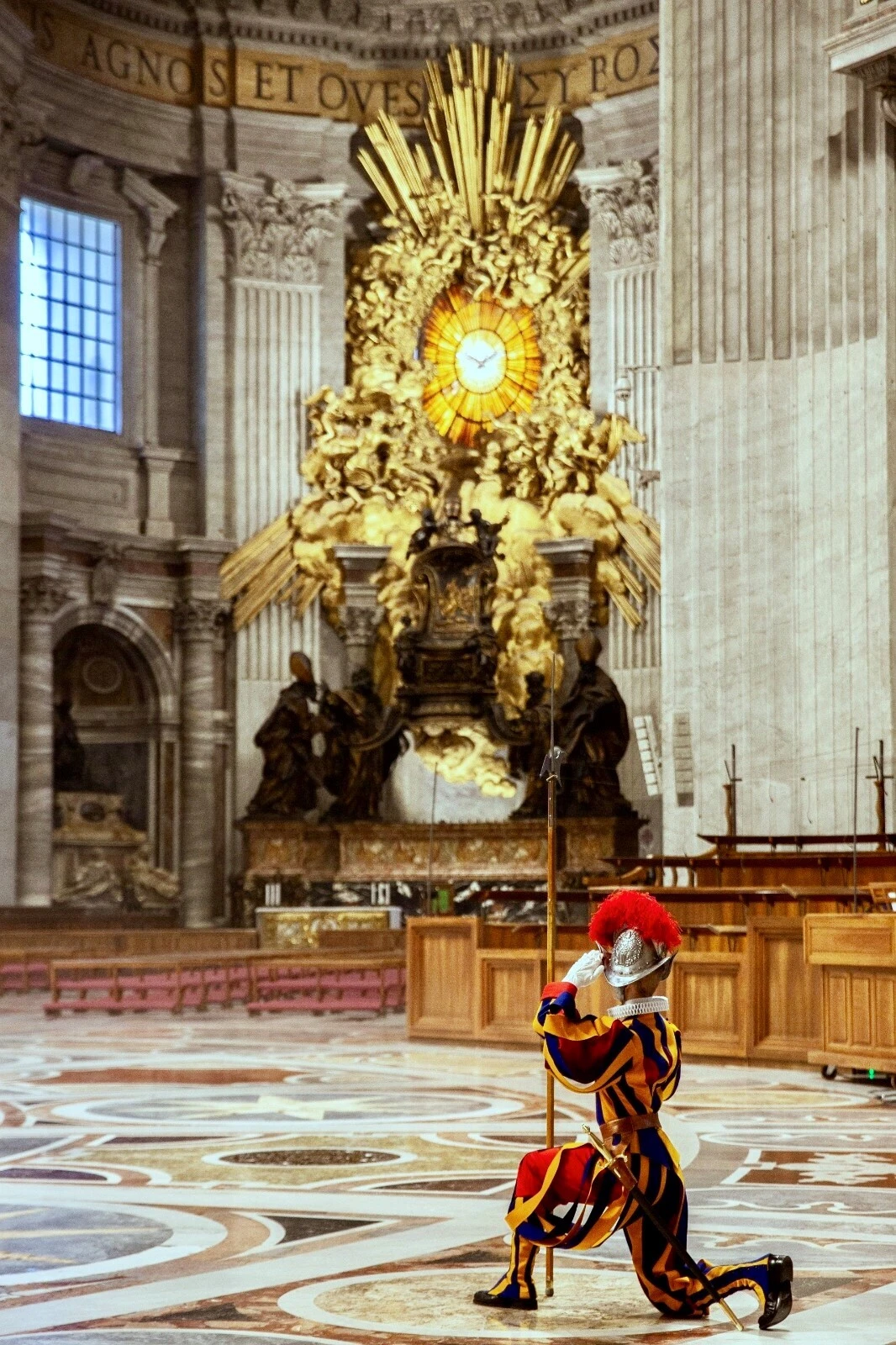 CERN alumni take many different paths in their lives and careers once their CERN adventure is over. Today, we highlight a unique path that led a former CERN trainee to a very prestigious position as Swiss Guard at the Vatican.
Baptiste Teufel, originally from Fribourg (CH) and a lifelong resident of Switzerland, spent 2 years of his life in Canada with his parents. Upon returning to Switzerland in 2012, he resumed his studies, which led him to CERN.
"When I came back from Canada in 2012 I went back to school and I searched, like many Swiss people, for an apprenticeship that could interest me; and physics was a field that really fascinated me. On the website that lists all apprenticeships "orientation.ch", I saw one at CERN and thought this would be an incredible opportunity, so I applied right away."
The apprentices who are accepted, spend their first year of practice in the Geneva training centre (CEP-UIG) a training school with its own laboratories and workshops where they are trained in mechanics and electronics and then they are placed in the company or organisation where they carry out their apprenticeship (from 2nd to 4th year). There is an alternation of two days of classes and three days of work. For example, Baptiste spent his first year in Geneva at Pont-Rouge, and he joined CERN in his second year.
"CERN apprentices, once their first year is over, are placed in different laboratories during their training. My first internships were short and lasted about three months. However, in the last two years, I undertook two long internships lasting one year. This gave me the opportunity to discover the many different laboratories at CERN.
My first short internships took place in a thin film deposition lab, a mechanical lab, a polymer lab and finally in a design office. Then, the two long internships took place in the third year in a cryogenics workshop and in the fourth year in a metallurgy laboratory.
The advantage of this apprenticeship is that you learn a lot of different things. For some, it may have the disadvantage that you don't get to the bottom of all these areas, but I think it allows you to acquire a very broad range of skills and experiences. It's an opportunity to find out which field interests you and then you can get more involved in that area. Also, the fact that my internship was at CERN, in an international environment, was very stimulating."
In his memories of CERN, Baptiste looks back on his favourite moments, including visits to certain experiments, ALICE among others, which made him realise the magnitude of research conducted within the Organization. Furthermore, at the end of his apprenticeship, Baptiste was awarded the Union industrielle genevoise (UIG) prize for his excellent academic results.
In 2017, the time came, after four years, to leave the Organization. Baptiste admits that he felt he still lacked some knowledge of English, a very important language in the scientific community. He, therefore, decided to go to Vancouver for four months to take university courses and improve his English.
But before moving on to his next professional adventure, there was an obligation waiting for him in Switzerland.
"In Switzerland, military service is mandatory and in January 2018, I began mine. In terms of assignment, generally, the colonel decides our assignment, but we can give our opinion and usually it is taken into account. In total, the service lasts one year, and it was during my military service that I decided to apply for the Swiss Guard."
The idea of joining the Swiss Guard had been in Baptiste's mind since he visited Rome with a friend who knew two Swiss Guards. They gave them a tour of the guard quarters and the seeds of interest in applying to become a Swiss guard were planted. According to the official web page, the troop only has 135 men. So we were reasonably curious about the admission requirements.
"There are a few criteria to be able to apply - to be male, Swiss, single, to have done military service, to be of a certain height (174 cm), to be Catholic, baptised and confirmed. You have to send your application to a recruiter in Switzerland who puts potential candidates in contact with Rome. In my opinion, it is not very difficult to get in. However, the service is demanding and requires a lot of personal investment. If the candidate has the will and a strong conviction, if the person is very motivated, he is sure to make a good Guard."
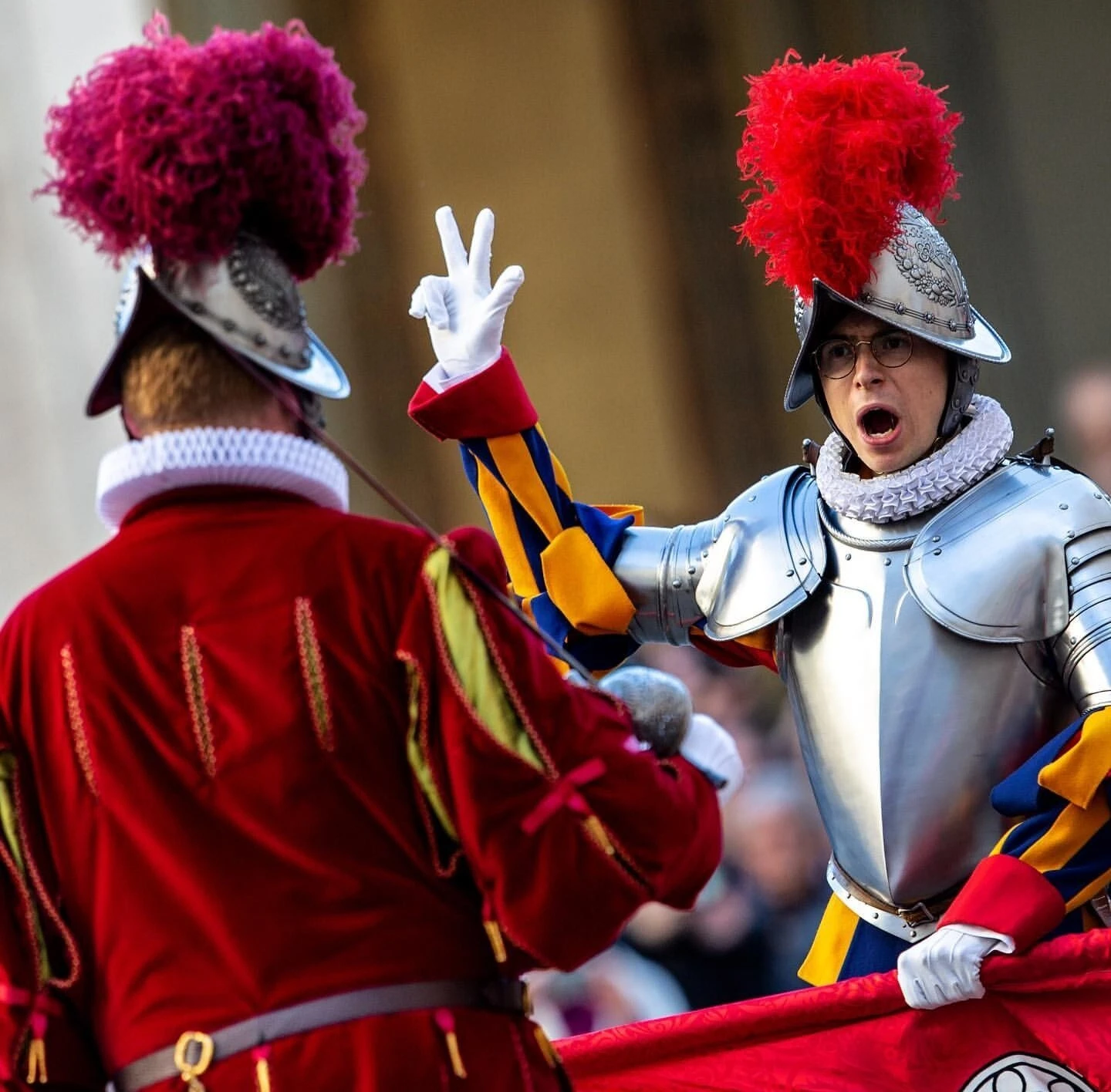 The Swiss Guard has been serving the Pope and watching over the Vatican for over 500 years. The recruits of the Guard receive specific training in order to perform their service.
"In fact, initially in the 16th century, the Swiss Guard was called to the Vatican by Pope Julius II as his personal guard. This was the case until 1929. There, at the time of the Lateran Treaty, a new mission was entrusted to the Swiss Guard. Control at the entrances to the Vatican, the mission of border guards, was added in addition to the personal security of the Pope and his security during his travels.
The first month is spent in the Vatican, where we are trained on the basic knowledge of the places and people of the Vatican, basic knowledge of the Italian language, the military formalities specific to the Guard and the study of the various service posts that will be entrusted to us. The second month is spent in Switzerland, with the Ticino Cantonal Police. The topics covered included psychology and law, firefighting, first aid and emergency care, shooting and personal safety training.
I have to say that when I joined the Guard, it was a very difficult time because we were understaffed. The superiors began to realize that we needed to get the word out about this multi-century old corps. So, they shot several presentation videos and fortunately it worked out pretty well. In the beginning, we had to work a lot, we had a lot of services, but thanks to the recruitment campaign, the last year was more relaxed. The Covid-19 pandemic, of course, also played a big role in the decrease in service."
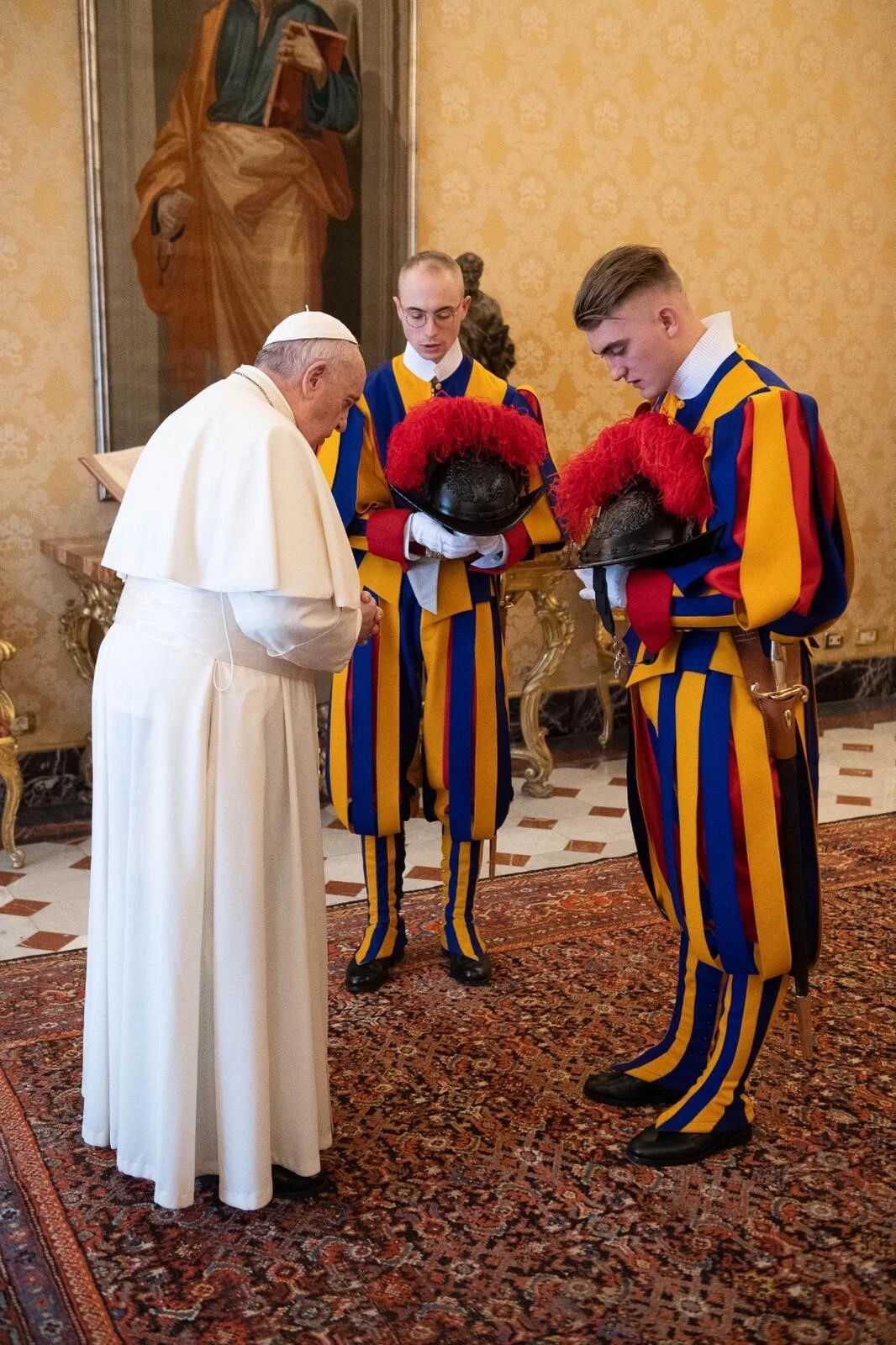
Being at the Vatican, Baptiste had the opportunity to meet and interact with the Pope.
"There are many things that have changed since the election of Pope Francis. Before, given the size of the papal apartments, the guard on duty in front of them rarely encountered him. Today, since Pope Francis wanted to change apartments, the guards have more opportunities to meet the Pope. But I must say that Pope Francis is rather friendly, and he wants to greet each guard he meets personally .
At the end of our service, we have a personal audience with the Pope, at which time we are alone with him. We have the opportunity to talk with him, it is a privileged moment. Since the audience takes place in the antechambers of the Apostolic Palace, the setting is impressive. But once the audience began and thanks to the personality of Pope Francis, I quickly felt at ease."
At the end of December 2020, Baptiste left the Pontifical Swiss Guard to begin a new ecclesiastical adventure.
"It was in September 2021, after a few months of reflection, that I decided to enter the seminary. A seminary is a place where future priests of the Catholic Church are formed. I must say that my stay at the Swiss Guard helped me to come to this choice. But I think that my apprenticeship at CERN was also useful for my understanding of the great philosophical questions. There, as in the seminary, people try to understand and explain the questions that every human being asks: Where do I come from? What is my origin?"
Regarding the CERN Alumni network, Baptiste says he was contacted by the Swiss Guard and the CERN alumni network the same day!
"I received an email invitation to join both networks on the same day - perhaps this is a sign that it is worth joining?"
If you have a trajectory that you would like to share with other members of the alumni network, let us know of your interest by contacting us at [email protected].
If you know someone who is interested in doing a technical apprenticeship at CERN, contact Virginia Prieto at [email protected] or visit https://apprentissage-technique.web.cern.ch/
Author: Simona Kriva & Rachel Bray