
Summer Students: where are they now? The story of Adrian Navarro Perez
Adrian Navarro Perez came to CERN in 2019 as a Summer Student in the Beams Department, Beam Instrumentation group (BI). Currently, he is a Level Designer at Rovio Entertainment Corporation, the company that created Angry Birds. Adrian shared with us more about his current role, how his CERN experience helped him in his career, his memories of CERN and which skills developed at CERN were useful in his subsequent career trajectory.
"At CERN, as part of the Summer Student programme, I was a member of the Beam Instrumentation (BI) group, which designs and takes care of the instrumentation that measures the characteristics of the particles beam during its trip in the accelerator complex. Although the group is mainly composed of engineers, computer scientists and applied physicists, I was assigned to this group to do a completely different job from what one might expect: Developing a video game! My CERN project was to develop a video game where I had to illustrate in a simple, interactive and entertaining way, the role and the importance of beam monitoring instruments in a particle collider as the Large Hadron Collider (LHC). The video game was part of the BI group CERN Open Days 2019 tent between September 14 and 15.
I would not change my experience at CERN for anything else. Every time I tell my colleagues that I've worked there and made a game, they don't believe me! And that always makes me smile. It's definitely an experience I'm very proud of carrying around the world and describe to everyone when I have a chance!"
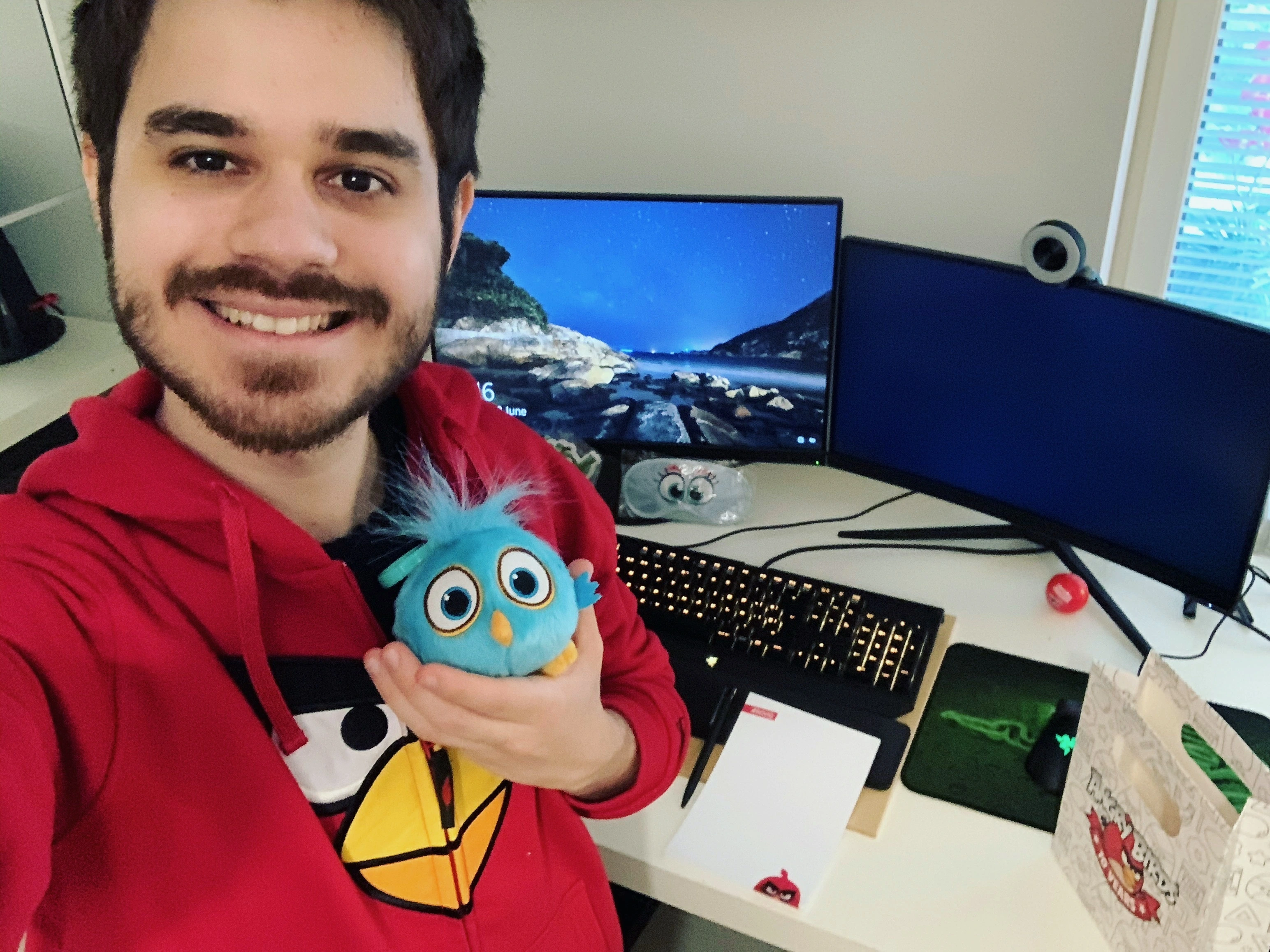
"After my experience at CERN I went on to finish my Master's Degree in Game Design & Technology in Sweden. Currently I'm a Level Designer at Rovio Entertainment Corporation, the company that created Angry Birds. Thus, I spend most of my work days designing new levels for Angry Birds Friends, the game I currently work for. In the last two years, I've designed more than 600 levels! But I also do plenty of game design here and there besides levels. In the professional field, CERN equipped me with a certain set of skills that I ended up using every day at my workplace here."
When asked what skills developed as a CERN Summer Student have been particularly useful in his subsequent career trajectory, Adrian said: " Although I learned many things at CERN, both from my colleagues and friends, there is one skill which stands out, even if CERN is a place far from my field of study. When designing games, game designers need to understand the world that surrounds them and how it works. This includes fields of study where they have no proficiency. In my case, understanding how particle physics, particle beams and particle accelerators work was really tough to grasp.
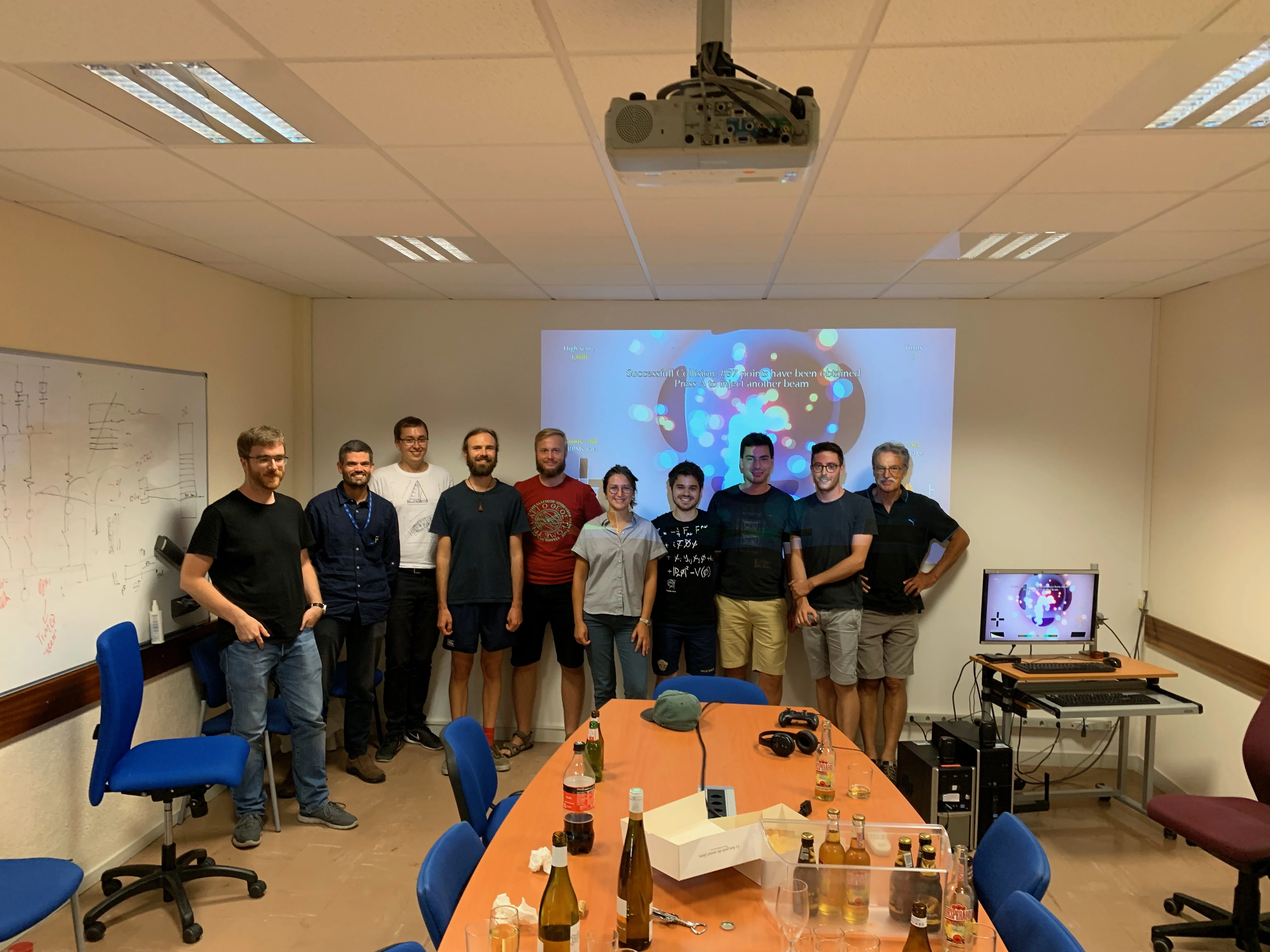
Learning a large amount of theoretical and practical concepts and applying them correctly into the game so it would represent reality with a certain degree of accuracy, was the true challenge of my Summer Student experience. Luckily, I had a wonderful group of colleagues next to me who helped me out in this regard. By the end of the summer, I was able to finish the game, which would help people understand the process behind colliding particle beams, rather than only just having fun with yet another game. Therefore, I honed the skill of facing the unknown when designing a new game, and this experience proved to be priceless for my near future."
As for his favourite CERN memory, Adrian shared his volunteering experience for the CERN Open Days: "Spending three months in a place like CERN, tons of good memories worth remembering are guaranteed. Nevertheless, there is one memory, which stands out. Once I finished my Summer Student programme by the end of August, I had to resume my studies in Sweden. However, the CERN Open Days 2019 event was being held between September 14 and 15, a couple of weeks after the termination of my CERN contract. Because I had worked hard all summer to develop the video game, I decided to fly back to Switzerland to volunteer as an activity host for my own video game during the event.
Spending two days in a row next to my game’s booth, after a long flight and almost without taking any break was
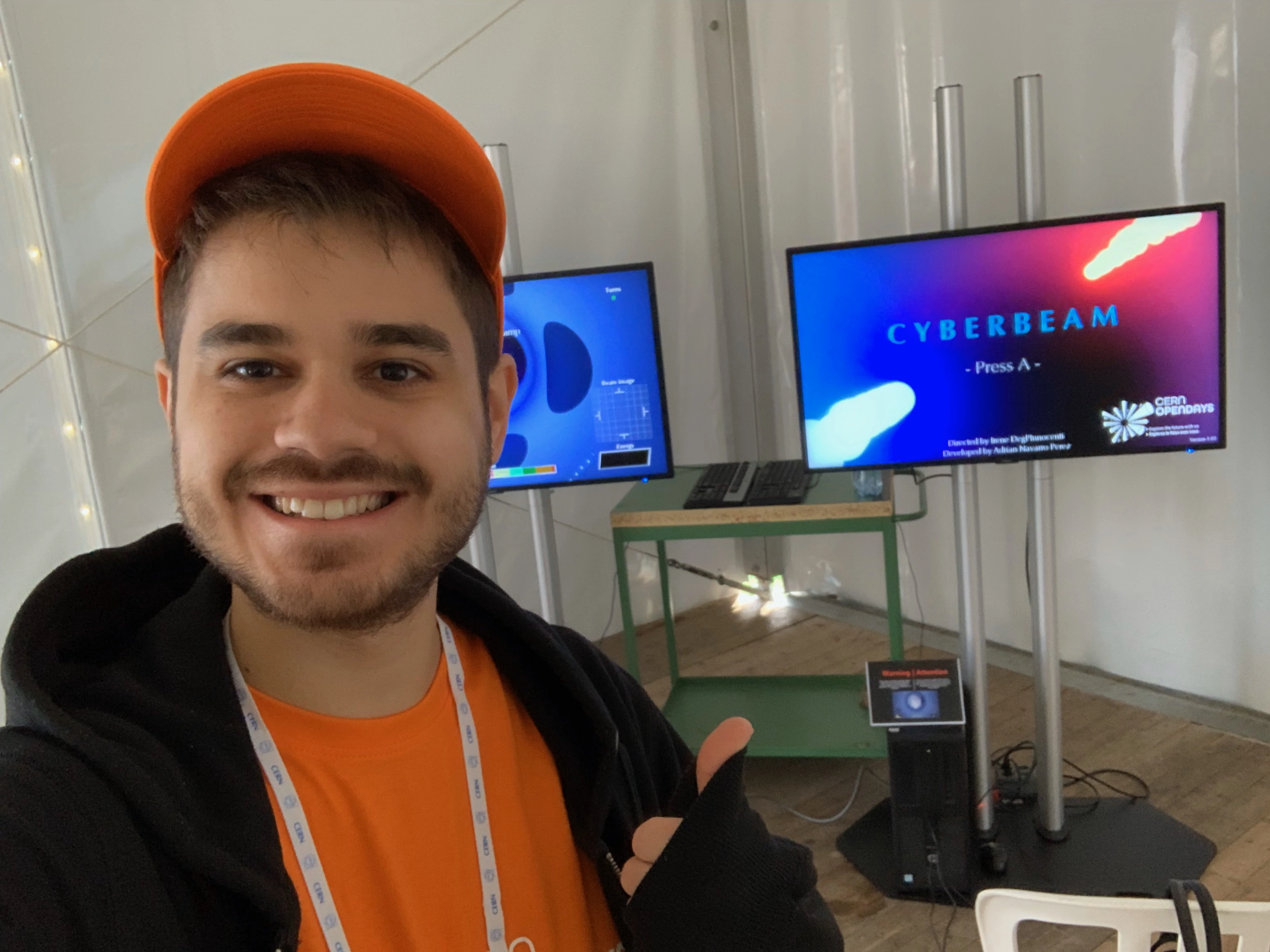
hard and exhausting. However, watching how people of all ages were playing and enjoying my game, and observing how a feeling of learning science was awakening inside each player, was extremely rewarding for me both personally and professionally. Some people were staying in the booth for one hour straight, just playing or fooling around. Other people asked me many questions regarding the process, which is showcased in the game. In addition, some others, mostly children, would come back twice and even three times to play the game in a single day."
Lastly, we talked about what advice he would give to his younger self: "To my younger self I would definitely give the advice of taking advantage of every single opportunity that is presented. When I was younger, while studying my bachelor’s, I did not attend any extracurricular activities or whatsoever and I did not complete any internship. I was lacking interest. This was obviously a mistake as I discovered later on, because I had no professional experience and I did not participate in any projects out of class. It was not until I participated in the Erasmus+ Studies Programme at the age of 20, when I realized how important is both for your personal and professional growth to be proactive and giving it all at all times. Luckily, when an opportunity like CERN came up, my attitude did change and I gave it all, producing a set of results I am proud of and which have helped me to get more opportunities, some of which are yet to come."