
Reflections on a CERN Career
CERN Alumnus: Jean-Pierre Vialle
At CERN: Visiting Scientist 1969. Staff Member from 1975 - 2020
Today: Physicist, Retired
Jean Pierre Vialle first came to CERN in January 1969 as a visiting scientist, then worked as a Staff Member from 1975 in the experimental physics division.
He remembers CERN when he first joined the Organization: “At the beginning in the 70s, CERN was like a big family. There was a lot of freedom. For instance, when I went into CERN with my car for the first time I drove down from Paris and on entering the site, nobody asked me for identification. The gate was open, and I was able to make my way directly to the main building. Everybody knew everyone else. The cafeteria, which was much smaller than it is today, was really the focal point at CERN because everybody was passing through there. If we had a problem or some work matters to discuss, we would generally meet at the cafeteria and discuss this with somebody who could help us solve the problem. This collaborative atmosphere was very nice.”
Jean-Pierre reflects further on his memories of R1: “Back in those days, R1 was open 24 hours a day. You could go there at three o'clock in the morning and have a coffee. We used to do shifts for the experiments and very often, those shifts ended at midnight. Typically, I would go to the cafeteria after my shift, arriving there around one o'clock where there were always plenty of people. We would sit together and discuss work and the like, but all that has completely changed now.”
Parisian roots branch out
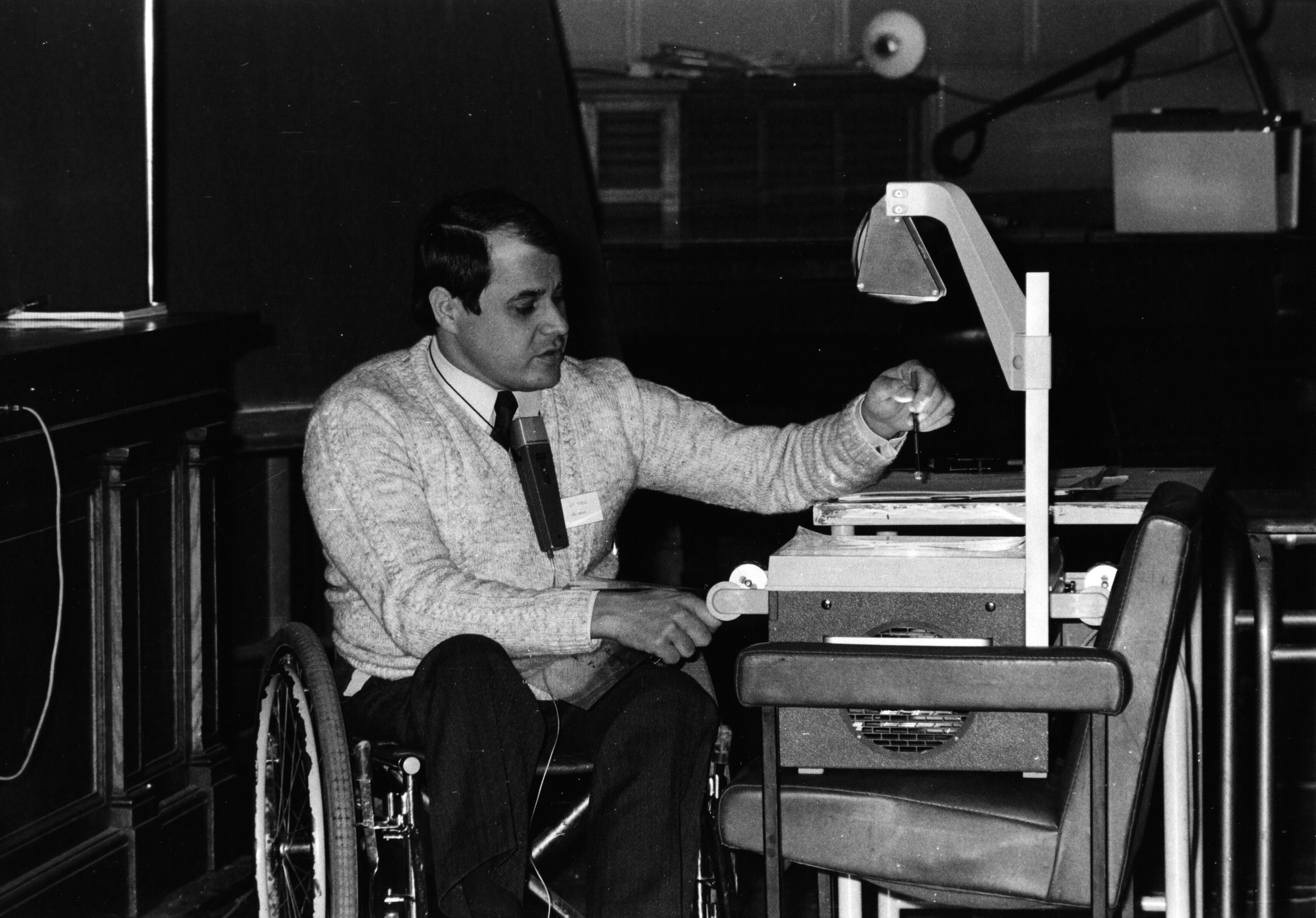
Originally from Paris, he worked in the “accélérateur linéaire d'Orsay” in the bubble chamber team and he also contributed to building the Gargamelle bubble chamber at CERN designed to study neutrino interactions. Jean-Pierre was deeply involved in the discovery of weak neutral currents with Gargamelle, the first major discovery at CERN which paved the way to the standard model.
Whilst at CERN, Jean-Pierre worked on many different experiments and projects, including in DG-PR-ME, under the Directorate: “Indeed, I worked in that unit because I was contributing to the design of the Microcosm exhibition. In UA1 I had invented and designed the 3D graphic system for the analysis of data, and following this, I was invited by Harvard to spend a few weeks in the physics division to install a similar system there. Since it was excellent for outreach, I developed a special version for Microcosm. With some friends, and a contribution from Digital Equipment company, we put in a lot of effort into making Microcosm attractive and accessible for people.”
Jean-Pierre travelled to the United States multiple times over the course of his career: “I think I have been to the US almost a hundred times to attend conferences, collaborations meeting, or working groups on new projects. But also, I travelled there to work on AMS1 . We built part of the AMS-01 and AMS-02 detectors at CERN and then transported the detector to Florida and I was fortunate enough to go too. That year I went to the US for periods of two to three weeks to work on the detector.”
Prior to joining the AMS team, Jean-Pierre had been a member of the CMS Collaboration, where he was working on the design of the electromagnetic calorimeter, but an exciting new proposal came knocking on his door: “At the same time I was involved in CMS, Nobel Prize winner, Sam Ting delivered a seminar in LAPP (Laboratoire d’Annecy de Physique des Particules), describing the AMS experiment. It was on this occasion that he proposed I join him to work on AMS. I took a week to think it over and consult my LAPP colleagues. Finally, my colleagues and I formed a small team of three and I said “yes” to Sam Ting.”
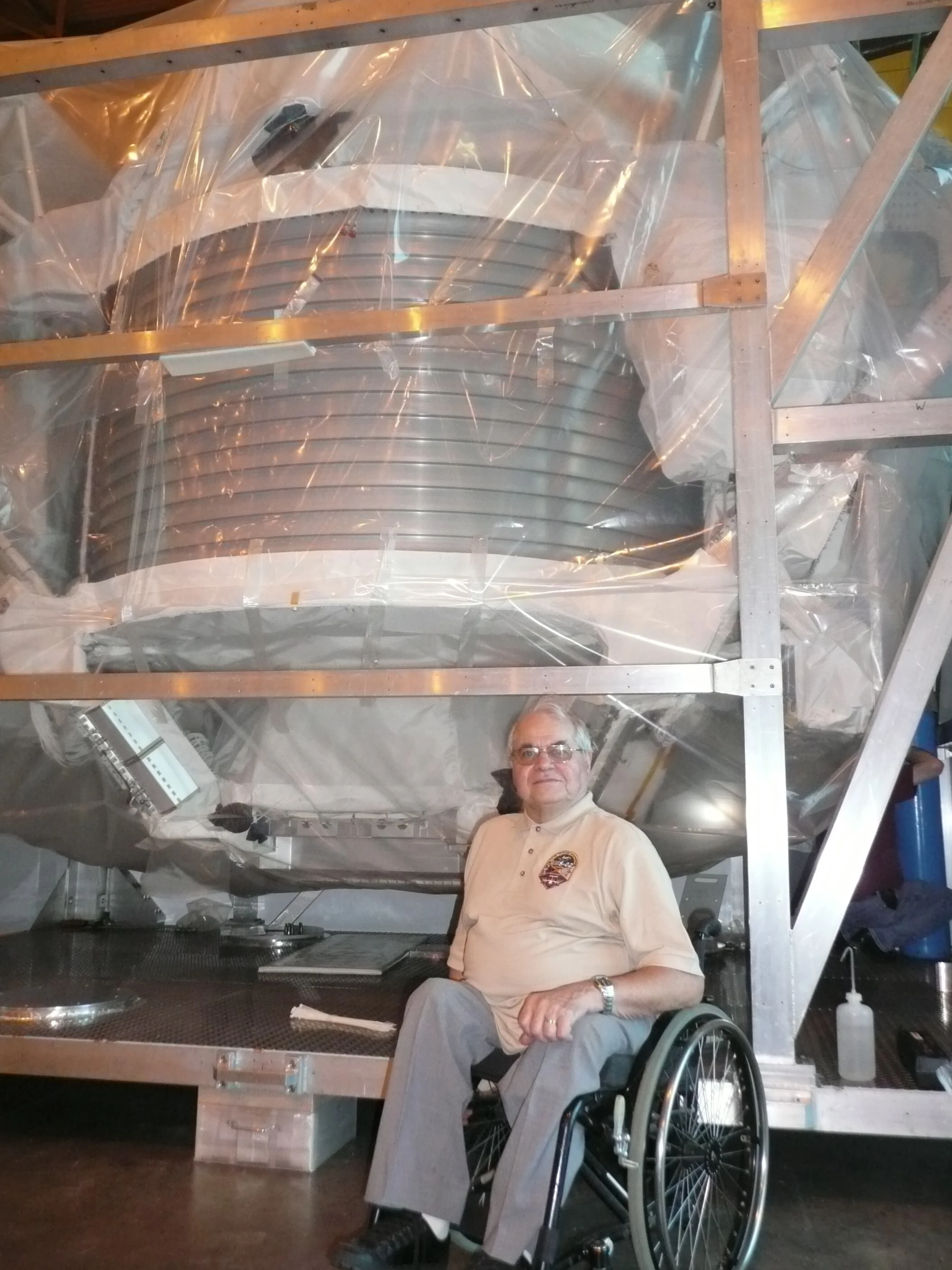
Over the course of his career, Jean- Pierre has contributed to multiple large-scale experiments, both terrestrial and outer space. He reflects on the challenges particularly related to experiments which function in outer space: “This can be highly challenging for a variety of different reasons. One needs to develop specific skills related to space. Thrust, acceleration and strong vibration during the launch, then operating in vacuum with solar radiation, huge variation of temperature, and cosmic debris, all that need appropriate choice of materials which can cope with this harsh environment and very sophisticated design. Once you have designed your detector and identified those materials, the subsequent challenge is to convince the scientific institutions and teams you are working with that what you propose can be put in space.”
The thrill of a career in particle physics
With so much experience in multiple fields, Jean-Pierre highlighted his pride and the excitement of working in particle physics; “For me, starting out as a young guy doing my thesis, I was thrilled to be part of something new and unexpected, even contribute to a scientific breakthrough or discovery.” Furthermore, he expands on why he feels CERN was a special place for him to spend much of his career: “First, there is the international aspect. Within any given team, there are usually several, different nationalities. This gives a fabulous mix of cultures. Then, exploring the unknown and potentially discovering new science is extremely exciting. Finally, I was quite visible at CERN because I am in a wheelchair. There used to be wooden ramps installed around the main building, but they were quite unstable. It was John Ellis who pushed to have proper ramps installed so that it would be easier for me to get around.”
Staying connected
Jean-Pierre’s closing thoughts turned to the CERN Alumni Network and how it benefits him, in particular: “After a fruitful and satisfying career, I think it is very important to continue being aware of what is going on at CERN and this is where the Alumni network really benefits me. There are a variety of helpful resources on the network, such as the jobs board, which are more targeted at those in their early careers. I appreciate that the network keeps me informed and allows me to come back to CERN and attend reunion events. It helps me stay connected.”
[1]AMS (Alpha Magnetic Spectrometer (AMS-02) is a particle-physics detector that looks for dark matter, antimatter and missing matter from a module attached to the International Space Station.