Skip to content
Toggle main navigation
CERN Alumni – The High-Energy Network  logo
  • BENEFITS
  • CAREER
    • Post a job
    • Hire CERN Alumni
  • BE INVOLVED
  • EVENTS
  • ABOUT US
    • What we offer alumni
    • What we offer companies
    • Meet the team
    • Meet our Advisory Board
    • FAQs
  • NEWS
MoreOpen dropdown to see remaining menu items
    Log in
    Join Now!
    Select an available language
    EN
    Contact
    CERN Office of Alumni Relations
    Espl. des Particules 1, CH-1211

    Geneva

    Switzerland

    [email protected]
    +41 22 767 4037
    Links
    CERN home page
    CERN Courier
    How to Reach Us
    CERN & Society
    End User Licence Agreement (EULA)
    Terms and conditions
    Data Privacy Notice
    Cookies
    Reselect cookie settings
    Community engagement platform by Hivebrite.

    NEWS

    All
    Alumni stories
    CERN Alumni Advent
    CERN in the media
    CERN Updates
    Community Messages
    Did You Know?
    Diversité
    Diversity
    From other labs
    Higgs@10
    Histoires d'Alumni
    Knowledge transfer
    Mémoires d'Étudiant d'été
    News from the Lab
    News from the World of Physics
    See all

    Highlighted News

    Results (874)

    Newest
    CERN’s Medipix3 technology on track to help more patients

    CERN’s Medipix3 technology on track to help more patients

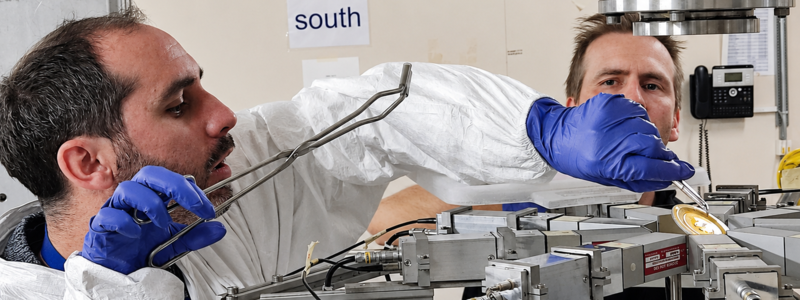
    Originally derived from a technology developed to explore the fundamental nature of the Universe, Medipix3 technology now powers a medical scanner that is on track to benefit an increased number of patients. MARS Bioimaging Ltd has received 510(k) clearance from the US Food and Drug Administration (FDA) for its portable photon-counting CT scanner for upper-limb imaging, allowing the system to ente
    May 18, 2026
    Cloudy with a chance of muons

    Cloudy with a chance of muons

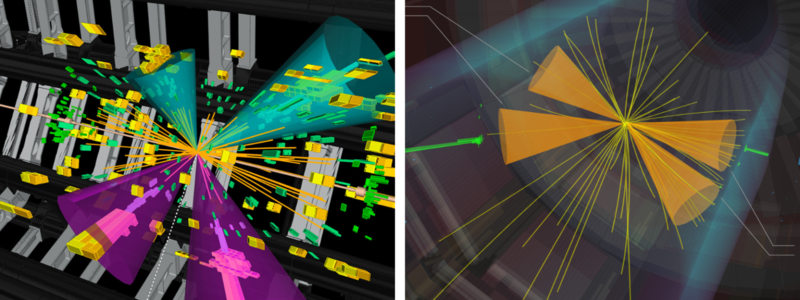
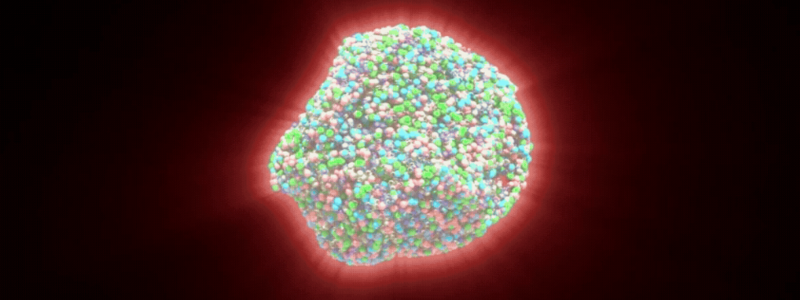
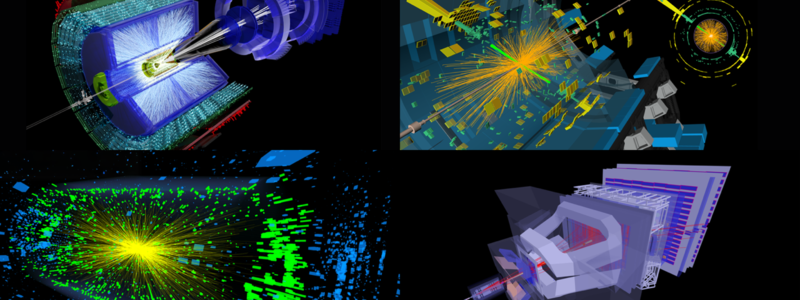
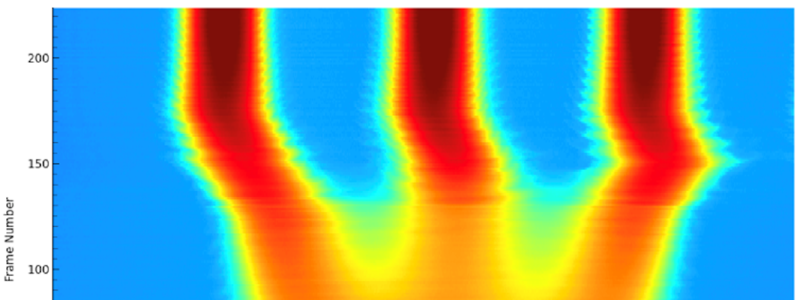
    View the video hereWhen you want to capture an important moment in your life, you often take a photo. You could write down the key details instead – who you were with, where you were, the time of day – but this information might not be as impactful as a picture of the event. Physicists like to record particle collisions in a similar way using so-called “event displays”, but producing these is a li
    May 18, 2026
    First steel beams for DUNE start to be lowered underground

    First steel beams for DUNE start to be lowered underground

    In a major milestone for the Deep Underground Neutrino Experiment (DUNE) in the US, approximately 4500 tonnes of steel beams will soon be moved 1.5 km underground to build the structural elements of two enormous detectors. CERN is playing a key role in DUNE, an international endeavour to explore the mysterious properties of neutrinos.On 7 May, CERN Director-General Mark Thomson attended an event a
    May 15, 2026
    Smarter decisions at the speed of collisions

    Smarter decisions at the speed of collisions

    Smart and fast decision making is key when dealing with the onslaught of collisions at the LHC. At the High-Luminosity LHC (HiLumi LHC), the ATLAS and CMS experiments are expected to process detector data at rates corresponding to roughly a quarter of the 2025 global internet traffic. All in real time, as part of the first stages of event selection.Each second, billions of protons crash into one a
    May 15, 2026
    HiLumi LHC: CERN’s full-scale test stand enters the powering phase

    HiLumi LHC: CERN’s full-scale test stand enters the powering phase

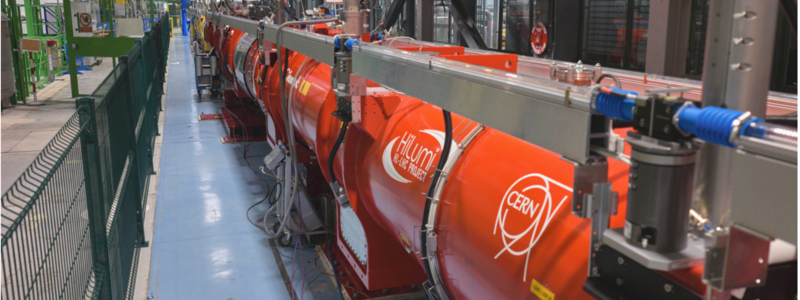
    On 20 April 2026, another important milestone was reached for the High-Luminosity Large Hadron Collider (HiLumi LHC) project, with the start of the electrical powering of the 95-metre-long test stand called the Inner Triplet String (IT String). Following its successful cryogenic cooldown to 1.9 K (‑271.3 °C) a few weeks ago, it will be powered up progressively, circuit by circuit, over the next fe
    May 15, 2026
    ATLAS sets record limits on Higgs boson’s self-interaction

    ATLAS sets record limits on Higgs boson’s self-interaction

    One of the biggest open questions in particle physics today is how the Higgs boson interacts with itself. This “self-coupling” could help explain the evolution of the early Universe and the mechanism that gives mass to elementary particles. To try to shed light on this fundamental interaction, the ATLAS Collaboration has recently studied one of the “golden” decay channels of a pair of Higgs bosons
    May 15, 2026
    ATLAS acts as a cosmic-ray laboratory

    ATLAS acts as a cosmic-ray laboratory

    Tens of kilometres above Earth’s surface, high-energy particles from outer space constantly strike the atmosphere, creating showers of energetic secondary particles that rain down from the sky. Approximately one of these particles passes through your head every second, but the “cosmic rays” that produce them are still not fully understood. In a recent paper , the ATLAS Collaboration describes how
    May 15, 2026
    Muon g-2 Experiment Pioneers Win Breakthrough Prize in Fundamental Physics

    Muon g-2 Experiment Pioneers Win Breakthrough Prize in Fundamental Physics

    GENEVA, UPTON, N.Y., and BATAVIA, Ill. — The Muon g-2 Collaborations at CERN — the European Organization for Nuclear Research — and two U.S. Department of Energy National Laboratories — Brookhaven National Laboratory and Fermi National Accelerator Laboratory (Fermilab) — are the recipients of this year’s Breakthrough Prize in Fundamental Physics . Over a period of more than 60 years, experiments a
    May 15, 2026
    CMS looks deep inside quarks

    CMS looks deep inside quarks

    The CMS Collaboration has probed deep inside quarks to search for potential building blocks within themAccording to our current understanding of the Universe, quarks are fundamental, point-like particles: basic building blocks that are not made up of smaller particles. A recent paper from the CMS Collaboration describes how it probed quarks to the scale of 10-20 metres to test this premise.At this
    May 15, 2026
    Accelerator Report: Excellent performance at the LHC

    Accelerator Report: Excellent performance at the LHC

    The LHC has successfully reached its nominal Run 3 performance, marking an important milestone in the 2026 physics programme. The intensity ramp-up phase was completed at the end of March, with the machine routinely operating at 1.8×10¹¹ protons per bunch in each beam. Following this achievement, the LHC entered a period of stable physics production for about a week, during which the machine deliv
    May 15, 2026
    A New Era for CERN Management and International Relations

    A New Era for CERN Management and International Relations

    After a decade of dedicated service and collaboration, we are closing the door on the current CERN management. The International Relations sector will be transitioning to a new structure and name, reflecting the evolving priorities and ambitions of the organization. As new leadership takes office from 1 January, these changes mark the start of an exciting chapter—one to watch closely in the months
    December 27, 2025
    Ion recycling to illuminate the heaviest elements

    Ion recycling to illuminate the heaviest elements

    Ion recycling to illuminate the heaviest elementsA sophisticated electrostatic trap at CERN’s ISOLDE facility could help researchers probe the chemical reactivity of the rarest and least understood elements3 November, 2025Illustration of the ion trap used by the ISOLDE team to measure the electron affinity of chlorine. In the trap, chlorine anions are reflected back and forth between two electrost
    November 18, 2025
    CMS observe la production d’un top isolé avec bosons W et Z

    CMS observe la production d’un top isolé avec bosons W et Z

    CMS observe la production d’un top isolé avec bosons W et ZCe phénomène extrêmement rare, observé à l’expérience CMS, pourrait aider à sonder les forces fondamentales de la nature3 novembre, 2025 | Par CMS collaborationDétecter des événements rares, c’est le quotidien des expériences menées au Grand collisionneur de hadrons (LHC). Mais, dans le cas des derniers résultats obtenus par la collaborati
    November 18, 2025
    CERN Council reviews feasibility study for a next-generation collider

    CERN Council reviews feasibility study for a next-generation collider

    CERN Council reviews feasibility study for a next-generation colliderAt a dedicated meeting of the CERN Council on 6-7 November, delegates from CERN’s Member and Associate Member States reviewed the outcome of the Feasibility Study for the proposed Future Circular Collider10 November, 2025Particle colliders are unique instruments that allow the smallest constituents of matter and the laws of the u
    November 18, 2025
    CERN reaffirms its commitment to environmentally responsible research with the release of its 4th Environment report

    CERN reaffirms its commitment to environmentally responsible research with the release of its 4th Environment report

    CERN reaffirms its commitment to environmentally responsible research with the release of its 4th Environment reportCERN releases its 4th Environment report and sets updated environmental goals for 203013 November, 2025CERN publishes its 4th Environment Report, which showcases concrete steps towards a sustainable future in scientific research.Covering 2023 and 2024, the report details how CERN is
    November 18, 2025
    CERN showcases projects with environmental applications

    CERN showcases projects with environmental applications

    CERN showcases projects with environmental applicationsThe CERN Innovation Programme for Environmental Applications (CIPEA) supports over 25 projects seeking technological solutions for the benefit of the environment13 November, 2025 | By Thomas BrentCERN researchers contribute to many projects that aim to find technological solutions to environmental problems, from fusion power to detecting marin
    November 18, 2025
    When failure is good news

    When failure is good news

    When failure is good newsThe software managing CERN’s compute workload has handled a massive stress test, far beyond normal operating conditions, designed to simulate the needs of the future14 November, 2025 | By Antonella Del Rosso “We tried to break it – and failed.” For several hours, the IT teams subjected the software managing CERN’s IT workload to a stress test, sending a huge number of task
    November 18, 2025
    Novel beam sensors built to last

    Novel beam sensors built to last

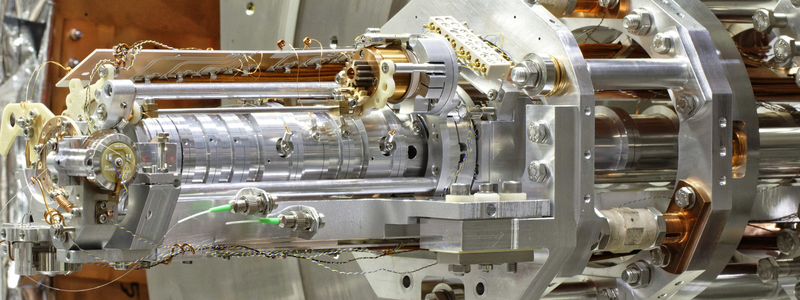
    Novel beam sensors built to lastA team of accelerator scientists is testing the use of new, more resistant sensors based on hollow glass fibres to measure particle beams18 November, 2025 | By Kristiane Bernhard-NovotnyA slender glass fibre no thicker than a human hair placed across a particle beam could improve accelerator monitoring. A team is testing the use of hollow-core optical fibres to meas
    November 18, 2025
    ATLAS closes in on rare Higgs decays

    ATLAS closes in on rare Higgs decays

    Studies of the properties of the Higgs boson featured prominently in the programme of the major annual physics conference, the 2025 European Physical Society Conference on High Energy Physics (EPS-HEP), held this week in Marseille, France. Among the results, the ATLAS collaboration presented two analyses narrowing in on two exceptionally rare Higgs-boson decays.The first process under study was th
    November 7, 2025
    Ireland becomes an Associate Member State of CERN

    Ireland becomes an Associate Member State of CERN

    Ireland has officially become an Associate Member State of CERN, following confirmation that it has taken all the necessary steps to ratify the Associate Membership Agreement and accede to the protocol on CERN’s privileges and immunities. The starting date of Ireland’s status as an Associate Member State is 22 October 2025.The ratification of the agreement, which was signed in May 2025 by the CERN
    October 29, 2025