
CERN Alumni Weekly News | 10 000 active members on platform, CERN Alumni MiTo meet-up, Webinar CERN Innovation Partnership with Adrian Pol, energy-efficient electromagnets from SHIP experiment
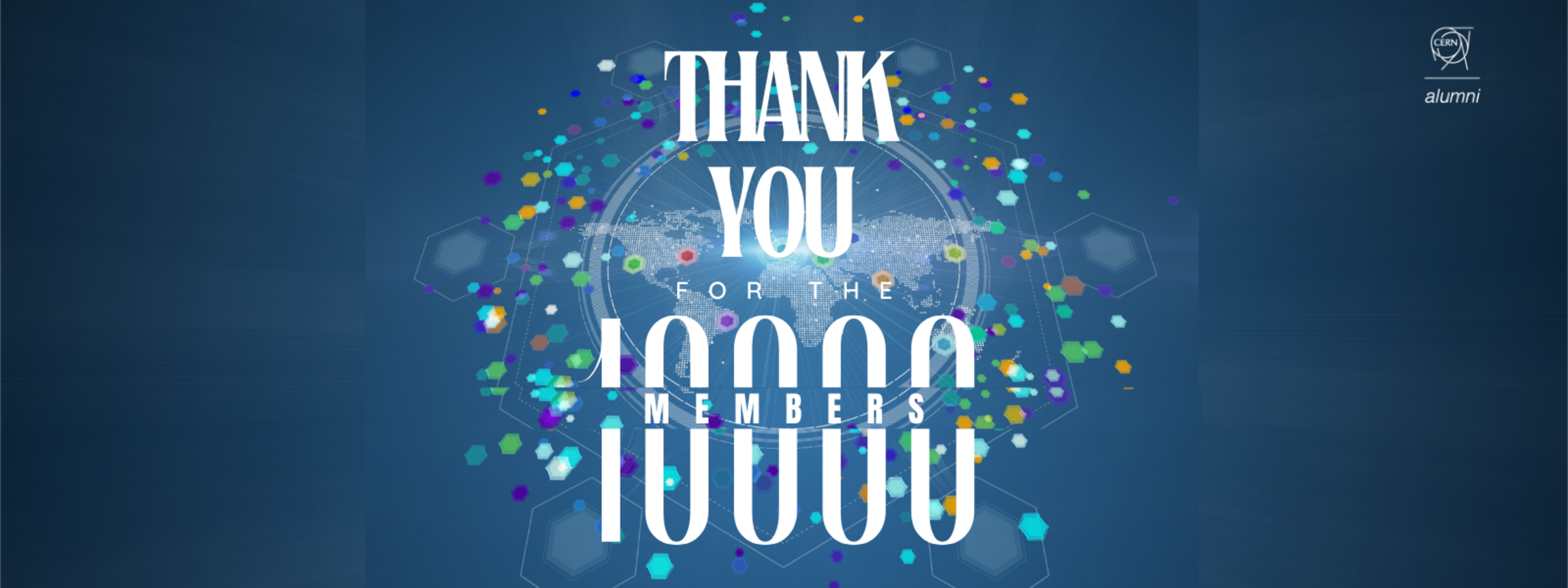
This week, we are celebrating a huge milestone with you. The CERN Alumni Network reached 10,000 active members after just over seven years of existence. Congratulations to Giorgia Pittau, our 10,000th member! https://alumni.cern/news/2074006
CERN Alumnus, Adrian Pol recently participated in the CERN Innovation Partnership's webinar: “AI and Computing Challenges: Harnessing Large Language Models at Thomson Reuters”,
Watch the seminar to discover how LLMs are reshaping industries, and gain valuable insights from Adrian’s experience. https://videos.cern.ch/record/2300275
There are still some places left for the CERN Alumni MiTo group organised event for a guided tour of the Human Technopole laboratories, 24 July from 17:30. Register here: https://alumni.cern/events/150392
In 1983, CERN reached the end of the alphabet when the Laboratory announced the discovery of the long-sought W and Z particles. The announcement was so momentous that, the following year, the two scientists behind the discovery received the Nobel Prize in Physics: https://home.cern/news/series/cern70/cern70-end-alphabet
Re-analysing LHC Run 2 data with cutting-edge analysis techniques allowed CMS physicists to address an old discrepancy: https://home.cern/news/news/physics/going-extra-mile-squeeze-supersymmetry-out-cms-data
A prototype superconducting coil developed for the SHiP experiment opens the way for more energy-efficient electromagnets for certain applications: https://home.cern/news/news/engineering/less-hungry-magnets-experiments-future
And finally from the CERN Courier, "only 10% of patients in low-income countries have access to radiation therapy. Manjit Dosanjh and Steinar Stapnes tell the Courier about the need to disrupt the market for a technology that is indispensable when treating cancer": https://cerncourier.com/a/how-to-democratise-radiation-therapy/