
10 Questions with Apostolos Theodoridis
At CERN: FELLOW
Now: Procurement Data Analyst & BI Specialist at MSC Mediterranean Shipping Company
1) When did you work at CERN (including its Scientific Collaborations) and what did you work on?
"I started working at CERN initially as a trainee at the Experimental Physics Department in 2020 during my master degree in University of Geneva. My first job role was on Web Development & Web Data Architecture for the Experimental & Theoretical Physics Safety Office and the Departmental Safety Officers Committee.
In 2021, I received a nice proposal to join the IT Department as a Data Scientist where I focused on the research of the usage and the necessity of commercial cloud providers at CERN. My team and I focused on the on-premise deployment and design of the Cloudbank EU project. CloudBank EU provides a set of managed services to access the public cloud for research, supporting specialised cost management and optimisation."
2) What is your best memory of working at CERN?
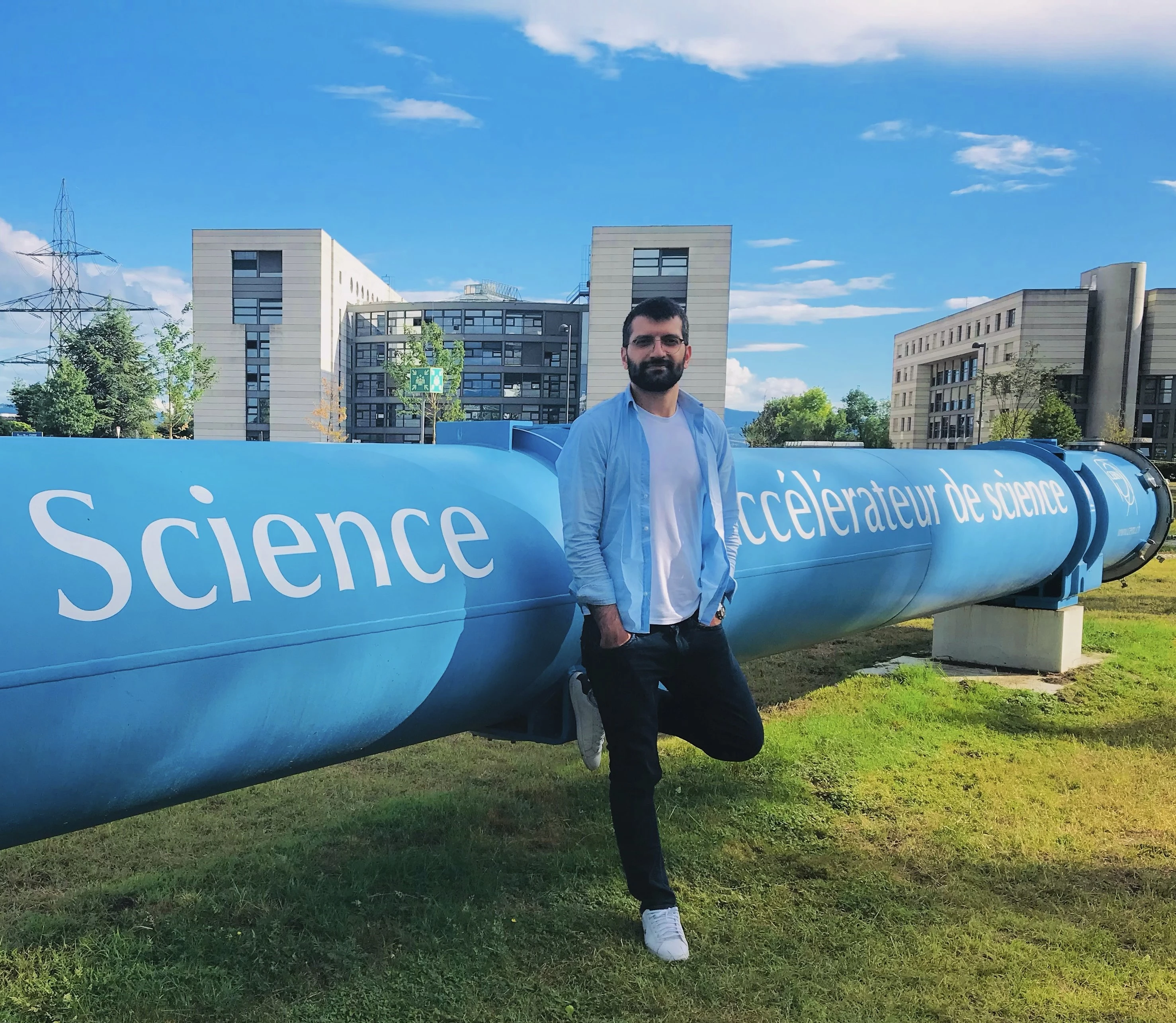
"Besides the announcement of my hiring at CERN, my best memory remains the weekly meetings with my team in the IT garden. During these meetings a tremendous amount of knowledge-sharing took place. It felt like opening the doors of new worlds as senior CERN members and scientists were sharing their knowledge and views on scientific but also social topics. Moreover, visiting for the first time the underground experiments was a truly unique experience."
3) What is your current job and where is it located?
"I am currently working as a Data Analyst & Business Intelligence Specialist at MSC HQ in Geneva."
4) What skills did you develop during your CERN work experience which have been particularly useful in your subsequent career trajectory?
"I developed several technical skills during my employment at CERN on the development of data pipelines for optimal data flow to collect, analyse, present, visualise and monitor financial data using several tools like Python, Prometheus, Grafana, Infuxdb and Docker. I also learnt more about the technologies and the data infrastructure of commercial cloud providers.
However, apart from the hard skills and the analytical thinking, I gained a lot of soft skills as well. I learnt the importance of seeing the big picture and being patient. Converting raw data to information is a long process that involves many different skills and stakeholders and requires maturity and continuous multiple control checks.
MOST IMPORTANT: It is not only about buying and deploying, it is about creating technological knowledge and developing skills!"
5) Which skills (if any) did you need to develop further when you left CERN to face your next professional challenges?
"Understanding the business sector and the related market stakeholders is always a challenge when you enter to a new business. However, to be frank, apart from some minor hard skills that were easy to develop, as the private sector focuses more on mainstream solutions and tools for analytics, the hardest part was the development of marketing skills to "sell" the knowledge and my achievements. Most people in the industry do not belong or come from a scientific environment. Hence, analytics consulting processes should be as smooth and comprehensive as possible. Sometimes you need to explain complicated things in a very simple way. When they trust you to find an answer to a problem you cannot create confusion but you should provide a straightforward explanation. Moreover, I tried to develop soft skills related to human interactivity on how to communicate effectively but also and most importantly establishing trust and collaborations with people from different cultural backgrounds."
6) What tips would you give to someone who is considering a career transition from academia to industry?
- "Be bold: Industry needs more scientists to enhance their businesses as they are struggling with old-fashioned mindsets and outdated technologies. However, most of them deeply appreciate fresh ideas and in-depth knowledge. The new generation of leaders needs people from academia.
- Be patient: It takes some time to establish trust and appreciation within a non-academic/non-scientific environment. As I mentioned before, it is not only about buying and deploying, it is about creating technological knowledge and developing skills!
- Think twice about your ideals and the impact you want to make: Working for a scientific organisation is different from working to enhance a business, and different from serving a humanitarian organisation.
- It is ok to change your mind."
7) What advice would you give your younger self?
"It is possible to do different things equally well. You have time, do everything!"
8) Do you still keep a close eye on what’s going on at CERN?
"Definitely, I am always updated on the technological breakthroughs at CERN. I find the CERN scientific community really interesting and I love participating in the events organised at CERN, such as CERN Alumni Third Collisions."
9) In your opinion, what is the unique value of the CERN Alumni Network?
"Connecting people empowers the knowledge and experience sharing between the CERN Alumni members. It is the foundation of new ideas to flourish and the place to establish an interactive environment for proposing solutions and different approaches to challenges that different members are facing."
10) Imagine you are stranded on a desert island. You can have one piece of music, one book and one luxury item. Which music, book and luxury item would you choose and why?
"For music I would choose Chopin Nocturnes because it expresses the psychology of the man who was far away from his family and his beloved ones.
For book I would choose the one from Bear Grylls "How to Stay Alive" for obvious reasons.
For a luxury item I would choose a leather coat to facilitate my survival."