
Alumni Spotlight: Elias Noschis- Physicist, Marketing Manager and Published Author
At CERN: 2002-2007 USER and Doctoral Student with TOTEM
Today: Marketing Manager at True Wealth
Sowing the seeds at CERN
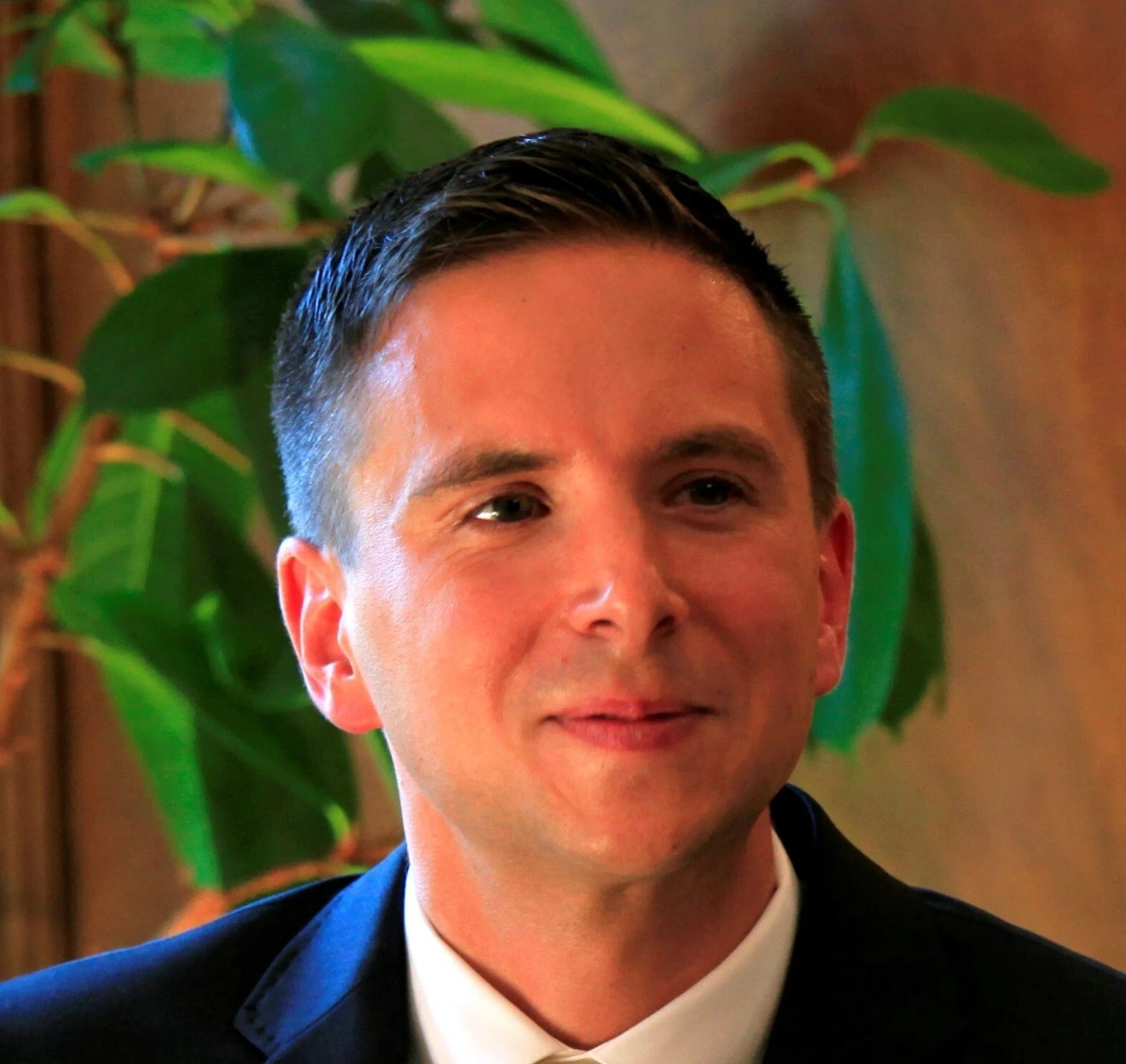
Elias Noschis graduated from the Technical Institute of Zurich and holds a PhD in Physics from the University of Helsinki. When at CERN doing his PhD, Elias worked as part of the TOTEM (TOTal cross section, Elastic scattering and diffraction dissociation Measurement at the LHC experiment. His research was focused on Planar edgeless silicon detectors for the TOTEM experiment at the Large Hadron Collider.
After his PhD, Elias left CERN and moved to industry. He worked for several companies in various roles such as quality engineer, supplier quality control and CEO. Currently, Elias is a Marketing Manager at True Wealth, an online wealth managing company – sometimes called a robo-advisor – based in Zurich.
Leaving academia to work in industry
Many of those who complete their PhD at CERN are faced with the difficult decision of remaining in academia or taking an alternative trajectory. We were keen to understand the thought process behind Elias’ decision to move to industry:
“I am motivated if I have a clear goal to work towards. I felt that leaving academia would offer me a more concrete job, but the drawback was that it could be perceived as potentially less intellectually challenging. Overall, I am happy with this choice. I believe that it is much more motivating to work for something more concrete and less abstract. If I reflect on my studies, probably the most intellectually challenging were my physics studies in Zurich but even at that time I was thinking whether staying in academia was something I could do for the rest of my life, if there is a career path in this? For me the conclusion was that there isn’t.”
Even if he decided to leave academia, Elias thinks that his time at CERN equipped him with some very valuable skills for his subsequent roles in industry:
“What I really enjoyed at CERN was that I was able to connect all these dots; all the mathematical parts of physics with something very concrete. I found it very stimulating, the fact that you have very different disciplines interconnecting. So, I really think that working at CERN brought me useful ways of thinking, analytical skills so to say, which can really be applied to industry.”
He also shared some valuable advice for people who are thinking about moving out of academia to industry:
“I really tried to leverage my CERN contacts in my job search for advice and information. I think I applied to approximately 80 different organisations, which resulted in 3 interviews and then 2 offers. This is how I found my position with SENSIRION AG. I consider it also very important to start thinking early on about the CERN skills you have developed which are the most marketable, try to work on something that is widely used outside CERN so you develop those skills further. For example working on string theory has few industrial applications, while working on data analysis of particle collisions may be translatable into the financial or insurance industry. In my case my work on silicon-based detectors was perceived as relevant by Sensirion, which produces microsensors based on semiconductor technology.”
Pursuing an MBA
Despite moving out of academia into industry in 2007, Elias maintained an interest in his professional development and a thirst for continuous learning. One of the companies where he was employed supported him in obtaining an MBA. In the course of our discussion, Elias revealed his motivation behind pursuing an MBA:
“Embarking on an MBA was one way to help me develop my career. That was my main motivation. It also helped that the company I worked for at that time supported my studies and I found a program which enabled me to accommodate my MBA studies, without dedicating too much worktime to this endeavour. Of course, it meant I had plenty of work in the evenings but because I enjoyed it, this was not problematic. My initial aim was to use the MBA to progress to the next stage of my career, however, the outcome proved to be different. I think that the MBA did not contribute a great deal to helping me progress in my career, but it definitely helped me learn more about investments. It aroused the curiosity I now have in this domain.
From the outset of my studies, I realised that I was very interested in the content and how I could combine the commercial aspects with my technical understanding. In my opinion, the MBA content is not rocket science, much of the information can be retrieved from reading books. However, tackling an MBA forces you to be disciplined and deliver work within a given timeframe. An MBA student is confronted to quite a bit of financial jargon. I did not pay attention to that part. I did however retrieve a lot of share price data from the past 20-30 years with which I tested various algorithms. I then started investing small sums of real money in the most promising algorithm and gradually grew the investment while refining the algorithm.
I also believe that as a pure scientist or physicist, an MBA does give you a bit more commercial awareness. When I was at CERN, I thought that an annual budget of 1 billion Swiss francs is huge. I only later realised that Apple makes that much profit in less than a week. It also reflects society, in which smart phones occur somewhat more frequently than particle accelerators. My CERN background and my analytical background really helped me when writing my thesis in investing strategy which I then also implemented using my own funds. I am delighted that even now, the knowledge I acquired from my MBA is still very useful.”
Writing a book
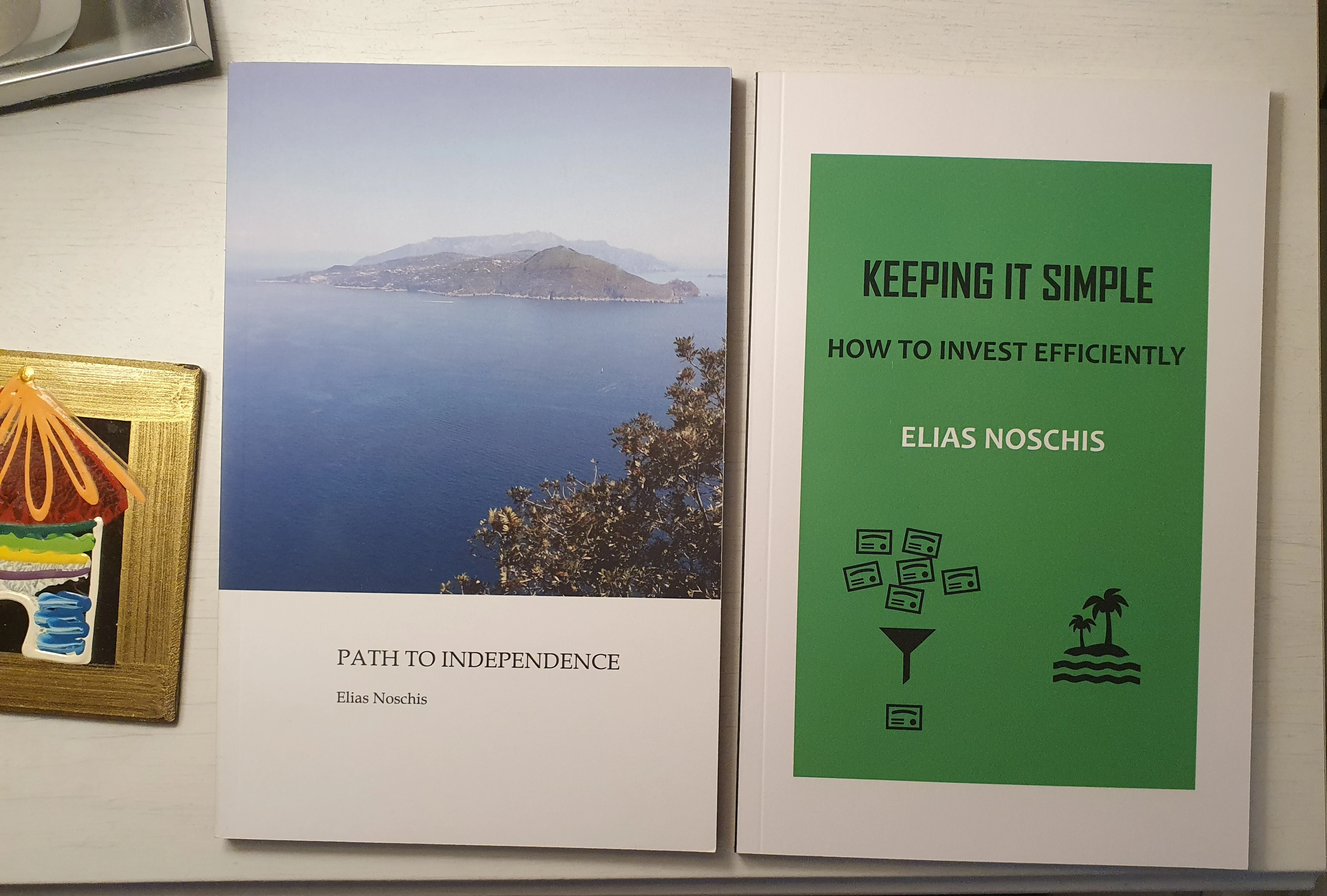
The interest in finance sparked by his MBA drove Elias to write his books: “Path to Independence” and “Keeping it Simple: How to Invest Efficiently”, which he then self-published on Amazon. As the books did not go through a publishing house, and therefore did not benefit from an editor, Elias realised how, thanks to his PhD studies, he was able to self-assess and ensure the style was appropriate: “Having gone through my PhD, I think I am able to self-assess. Everything was clear in my head, and I felt that I was already at the stage where I was able to do everything myself. Was it right or wrong? Well, as is often the case, the market decides.“
The book saw many positive reviews, one of which stating, “financial advisors won’t be happy”.
Elias commented on this point: “Yes, in my books the basic message is that you should cut out the middleman. Such advice can be found in many different sources, but I believe, my books are compact, simply and clearly written and enable novice investors to get a foot on the ladder, a position from which one can build on. I think that if you have a long-term view, you are already well ahead of many other people who don’t know what to do with their money. Somebody working or who has been working in projects at CERN definitely owns the analytical tools to understand how investing works. It is not difficult but the financial industry has a big incentive to make it sound complicated in order for you to seek their advice and afterwards buy their overpriced products.“
To date, Elias has written two books, both focused on financial strategy, which he believes are as relevant today as they will be in many years from now:
“The books are based on extensive research, as I reviewed data from the past 150 years of the US economy from which I draw my conclusions. In my opinion, these are very reliable data. Furthermore, having a scientific background, if I see that something has been going on for the past 150 years, I believe it is safe to assume it will still go on in the next 30 years or so. I do believe it will still be relevant in the future.”
Final thoughts
As a final thought, we sought some recommendations on books and movies that can help people strengthen their knowledge in finance and investments: “What motivated me to invest, besides the MBA, was the book called “The Big Short” by Michael Lewis, they also made a movie out of it, and I found it very good. Then there is this podcast called “Financial Independence Europe”, they interview people from throughout Europe about their experiences.”
If you are interested in managing your finances better, why not read Elias’ book and start a discussion with him on alumni.cern? Additionally, you can reach out to a pool of other alumni working in finance by visiting the Community Map.
Authors: Elina Riznic & Rachel Bray