
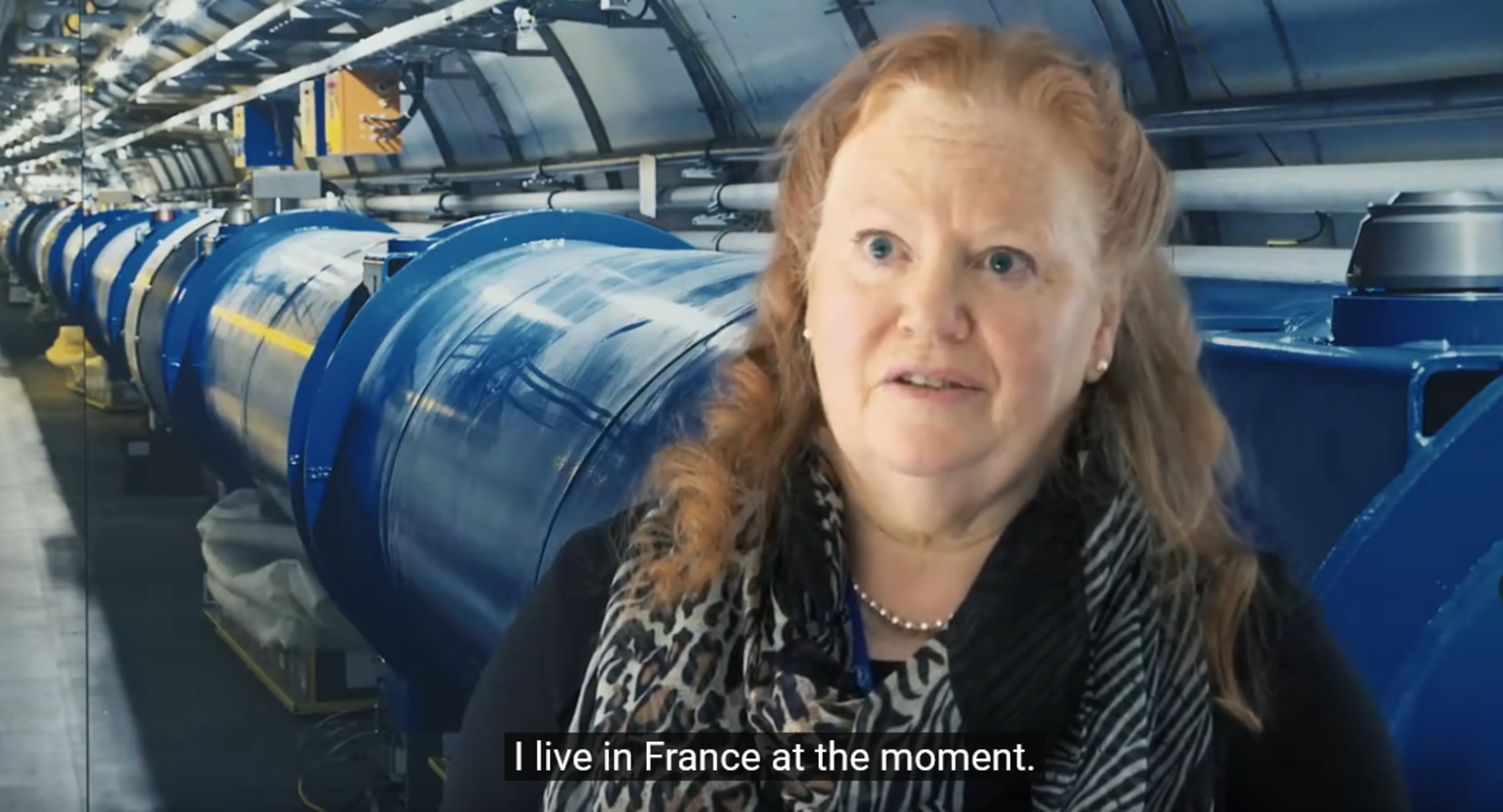
Does CERN make the people or do the people make CERN - reflections from a CERN Alumna.
Many of you will have taken part in this year's CERN Alumni Second Collisons, some of you were kind enough to share your feedback with us, which we appreciate very much. We particularly enjoyed CERN Alumna, Deborah Nicklen-Daggon's message following the event and would like to share her words with all of you.
"It feels such a long time since we first met back at First Collisions – the world has changed a lot since then. What remains the same is the amazing work of the alumni relations team to produce a wonderful conference, (which coincidentally being virtual meant I was able to attend), and the wonderful selection of topics and presenters.
One talk that particularly resonated with me was Grzegorz Wrochna’s and the soft skills that are transferable to later employment and life. So, I thought I’d give you my path after CERN, which looking back now, I can see the influences even though I didn’t follow a career in science.
For my dissertation on my year in CERN I spent a considerable time in the library putting together a bibliography which firstly helped with my final year dissertation on anodising. It also inspired me to look at information science and in effect become a human computer.
My first job was as an information officer at the Steel Casting Research And Trade Association. This was before the days of cheap computer storage so we read and abstracted articles and then catalogued into card files! (goodness that makes me feel ancient!) This work required the communication and teamwork skills I enjoyed at CERN as we often had to call across the office to find out if anyone had recently catalogued anything about the query that had just been phoned in and then find the relevant article(s) from the card file.
That work led me to move onto mainframe computing in a manufacturing company.
The laboratory skills, and no doubt CERN on my CV, led to a job helping characterise cholesteric liquid crystals with the team from the Ministry of Defence in Malvern.
In many ways I was a child of my age, so I didn’t have a career as I followed my then husband’s jobs and obviously childcare, for many years. I then dabbled with other computing and teaching jobs before finally running away to become an alpaca owner and grain farmer on a smallholding in France – now retired and without alpacas!
The other main influence of my CERN year is something much harder to quantify. Part is having been in such a stimulating scientific environment which I believe has fuelled my continuing interest in science for all the years after, even though my only contribution to science these days is to let my computer be used as part of the computing network – LHC@home.
Another legacy is having been in a multi-lingual and multi-cultural environment at a young age. This again was very noticeable as back then people didn’t really travel and of course there were no home computers to enable virtual travel – even the BBC Acorn or the Atari didn’t come until later. But I think that as we’ve found with Covid, nothing really can replace face-to-face interactions.
So thank you all again for what was an extremely enjoyable and stimulating weekend. It made me wonder; does CERN make the people or do the people make CERN? I think that the answer to that lies squarely in the wave-particle duality concept!
Here’s to Third Collisions – 2024
Author: Deborah Nicklen-Daggon