

The Power of Communities with Bedangadas Mohanty
At CERN: USER, 1999- present
Today: Physics professor, National Institute of Science, Education and Research (NISER)
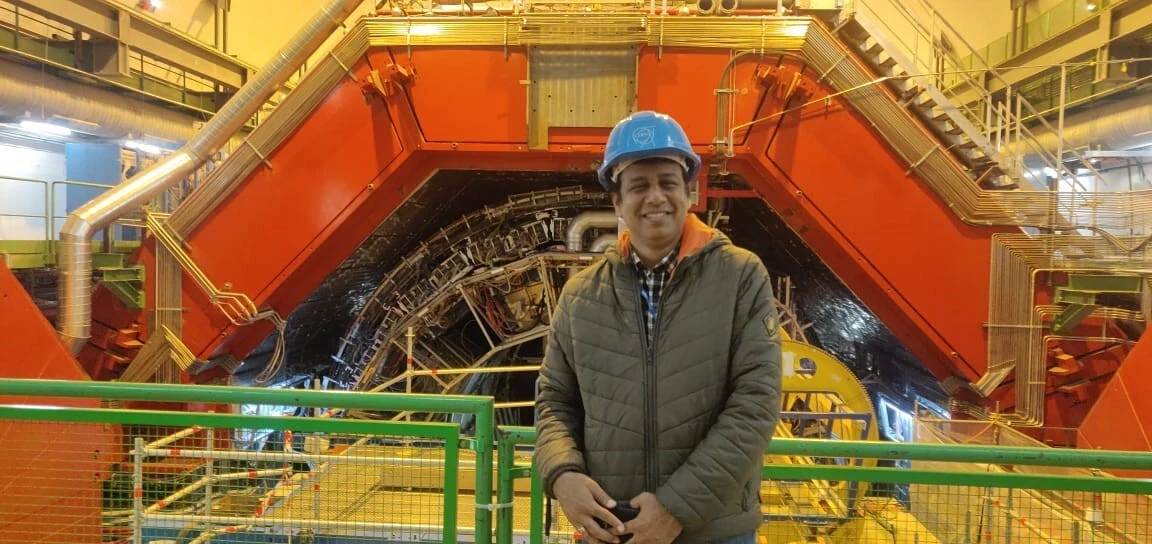 Bedangadas Mohanty is a physics professor at the National Institute of Science, Education and Research (NISER), an institute with a mandate to educate people and train future research scientists. Besides being a professor, he happens to be the spokesperson of the India ALICE group, which consists of Indian institutes that have been participating in ALICE since the beginning of the experiment/collaboration.
“I was always interested in coming to CERN, thanks to the multitude of people visiting our physics department giving talks on high energy physics while I was doing my Master’s studies. During those two years, I gained a deep fascination and desire to pursue my studies in high-energy physics.
I was thrilled to have the opportunity to do my PhD in the Institute of Physics Bhubaneswar and then I joined the WA98 (West area experiment N° 98) which was at the SPS (Super Proton Synchrotron) at CERN. The data from those experiments formed my thesis.
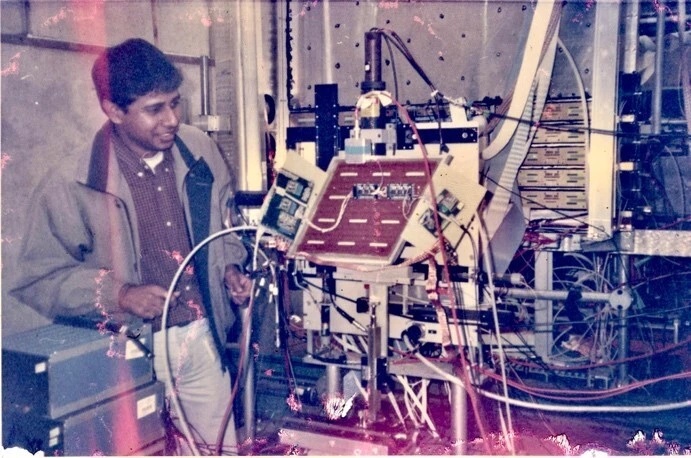 One of the first things that I did during my PhD when I visited CERN in the late nineties and early two thousand was to participate in a prototype detector, which was supposed to be a part of ALICE. We were using the PS and SPS facilities and we tested our Indian prototype detector, which eventually became a detector at ALICE. I was taken aback by the scope and the setting that CERN provided during that time, the facilities, the professionalism of the personnel, the opportunity to meet so many scientists in one place …it was a very different experience for someone who had left his country for the first time.”
Bedangadas explains that he benefitted both from the freedom to choose his vocation accorded to him by his parents and the benevolent guidance given by his teachers.
“My parents have always given me a free hand. While there was a societal pressure to take up more traditional career paths, such as engineering or medicine, my parents allowed me to pursue whatever I liked. It took a little bit of time to understand what I wanted to do, and it actually crystallized with the very good science teaching in my undergraduate and postgraduate time.
The teachers showed us this angle of a career in science; they motivated us by saying that we can pursue our passion and be our own boss, introduce our own ideas. Now that I am a teacher, I can understand you can influence young minds, spark talents, and encourage them to take up science.
So in fact it was a culmination of many factors, which led to my decision of choosing science as a career.”
Bedanga holds several positions, one of which is a spokesperson for the India ALICE group and further outlines the related responsibilities and duties linked to this role.
“There are about 16 institutes and universities in the India ALICE group. The role of the spokesperson is to guide this collaboration in its scientific pursuits, manage the funds and work on getting the project approved by the funding agencies.
The spokesperson is also the contact point between the ALICE management and the Indian groups because there are collaboration works such as service work or shift- taking, contribution to detectors, computing and a variety of roles, which collaborators have to perform - so I am the contact point to help with that.
We have also a role to play in India, being one of the CERN associate member states. Responsibilities cover the organisation of CERN visits from the Indian delegation, for example. We also assist in CERN recruitment and from time to time, we are requested to provide reports to CERN colleagues, our funding agencies, and the government.”
India’s relationship with the Organization dates back to 1960s during which time their physicists have been actively participating in experiments at CERN. In 1996, the Indian Atomic Energy Commission agreed to take part in the construction of the LHC and to contribute to the CMS and ALICE experiments and to the LHC Computing Grid.
In recognition of these substantial contributions, India was granted Observer status to the CERN Council in 2002 and in 2017 it became an Associate Member of CERN. Bedanga underlines the progress made and the importance of India being a CERN associate member state.
“There were certain goals set for this associateship program; those are being monitored by various task forces. I have been involved at CERN when India was a non-Member State so I can see the difference now.
For example, the number of positions of scientific associates, CERN fellows or CERN summer students, has increased. Since the time we did our PhD, things have moved in such a way that now our colleagues and students are participating in multiple activities at CERN, not just the ALICE experiment. I can count at least six-seven people working on their PhDs on CERN- related experiments from my institute alone today.
Indian industry also has an opportunity to participate in CERN procurement procedures.
Additionally, thanks to this membership, young people in India now have the means to voice their physics ideas at relevant fora. In my opinion, these are the three main advantages. Plus, as you know, India is growing and wants to make a mark globally in different areas, and what better place than CERN to help us grow in science.”
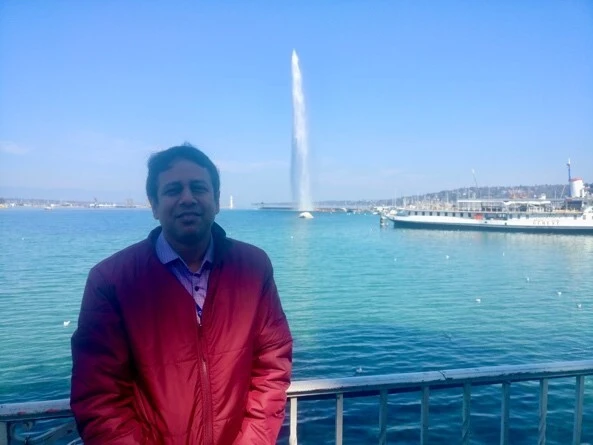 The discussion turns to Bedanga’s memories of his time at CERN and those he cherishes the most.
“I remember, while working on the WA98 experiment, all the analysis was done in a programming structure called Fortran. ALICE was completely object-oriented, C or C++. When I was doing my PhD, I used a different programming language and I had to switch very quickly, in, three to four weeks, and I was somewhat anxious about how to do it.
But then the CERN library provided me with a unique opportunity to learn how to analyse the data and understand object-oriented programming and submit my work on time. The work was related to the technical design report of Indian contribution, the Photon Multiplicity Detector at ALICE. This gives me immense confidence that, even if I do not know a particular thing, thanks to the training that I got at CERN, I can always learn and execute. This is the confidence that CERN gives you.
CERN is very close to the city of Geneva, where one can go to the lake or the flower clock and simply relax; it is such a peaceful environment. Or one can go to the United Nations European Headquarters and the Ariana park where there is a statue of Mahatma Gandhi, or even the Bastion park where one can play chess. This is an environment where one can spend some quality time exploring, relaxing and then return to work, refreshed.
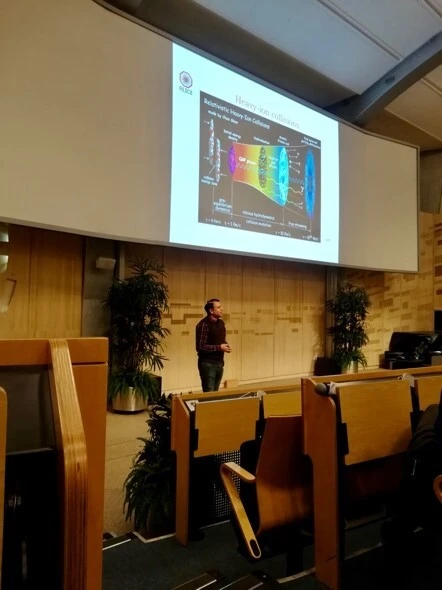 One memory that I’d like to share would be about the time, towards the end of my tenure, when I finally got to present my work at CERN during an LHC seminar. Soon after we submitted our paper, I was asked to give a seminar at the CERN auditorium.
It had always been one of my dreams when I was a PhD student, to have the opportunity to speak in the main auditorium. And after seeing so many great people doing so, I put my heart and mind into my work and it finally culminated in an interesting result, which led to the seminar in the auditorium.”
The openness and close collaboration Bedanga experienced whilst he was at CERN is something he appreciated greatly and tries to emulate in his subsequent career.
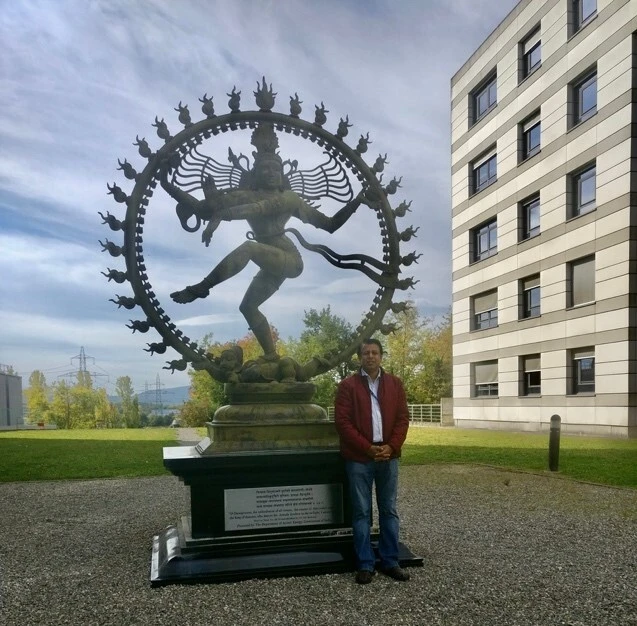 “CERN is not a closed house, where nobody knows what's going inside, instead, there is this openness, and people know what we are doing. Many of us have gathered what we learned and observed at CERN and brought it back to our institutes. We also added the Indian culture to the diversity that exists at CERN.
At CERN we all live together, borders and nationalities are erased, it is like being part of a global family. We are all scientists.”
Finally, Bedanga’s reflections turn to the CERN Alumni Network, how he first discovered it and how it can be beneficial for its members and the Organization, amongst others.
“I received an email invitation from the CERN Alumni team to join, just when my contract was about to finish, and I immediately filled out my application. I think the CERN Alumni program has a great role to play and I fully support CERN’s DG when she initiated this program because that is the source of a lot of strength and support for CERN.
The network is composed of members who have careers, in both science and non-academic fields, and it facilitates maintaining connections between CERN Alumni members. CERN alumni could also help in CERN’s outreach program because outreach is important from many perspectives, by promoting career opportunities or helping guide people in different stages of their careers through mentoring.
Now I very religiously circulate the information about the technical students, summer students, junior research fellows in the community because the more it is circulated the greater pool of talent you have to choose from. There are many industries that may not be fully aware of these opportunities, so I think there is a scope of improvement, from our side. We have to just sign-up, be active and we will learn more features and ways on how to go leverage the network.”
Authors: Simona Kriva & Rachel Bray