
Siddha Ganju: Finding contentment in AI and Mentoring
At CERN: Summer student in 2015
Today: Data Scientist at Nvidia
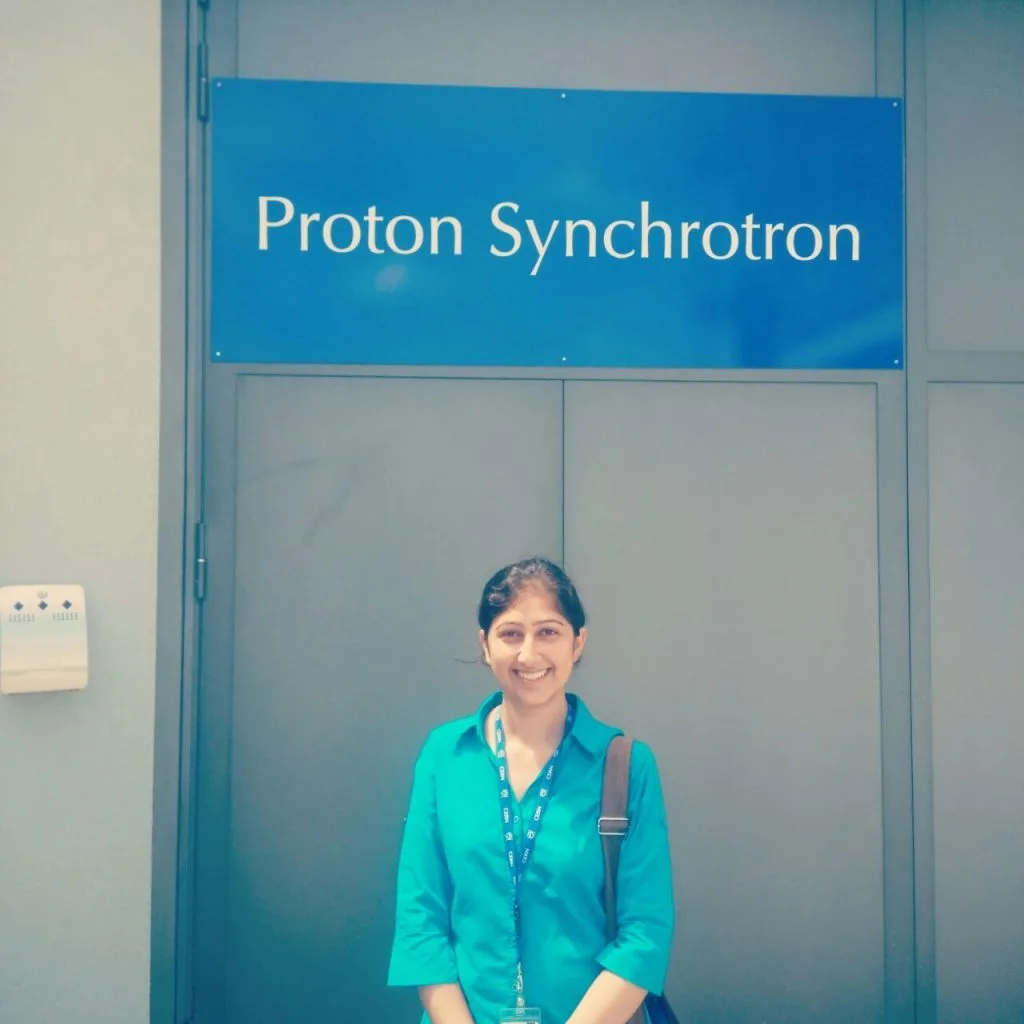 Siddha Ganju is a Data Scientist at Nvidia where she works on medical instruments and self-driving cars and she conveyed her excitement about her job optimising different kinds of AI on neural networks. She first came to CERN as a summer student in 2015 and explained the journey that led to her sending an application.
“I was always very interested in physics, not high-energy physics in particular, but physics in general and as CERN had been appearing in the news regularly, I began reading all the related articles and kept up with the latest discoveries.
When I was in the final year of my bachelor’s, I was confronted with the decision to either find a job or pursue my studies and enrol in a master’s degree. I decided to continue my master’s education and so during that free summer, I thought I might as well do something fun. Thanks to social media, I found out about the CERN openlab program and I applied for the intern position.
Coming to CERN was an amazing experience. I got to learn about what CERN is doing in machine learning and AI; it was a pretty exciting start to my machine learning career seeing the role I could play in AI.”
CERN alumni have an incredibly strong bond with the Organization, Siddha is no exception and she shared a couple of her favourite moments of her time at CERN.
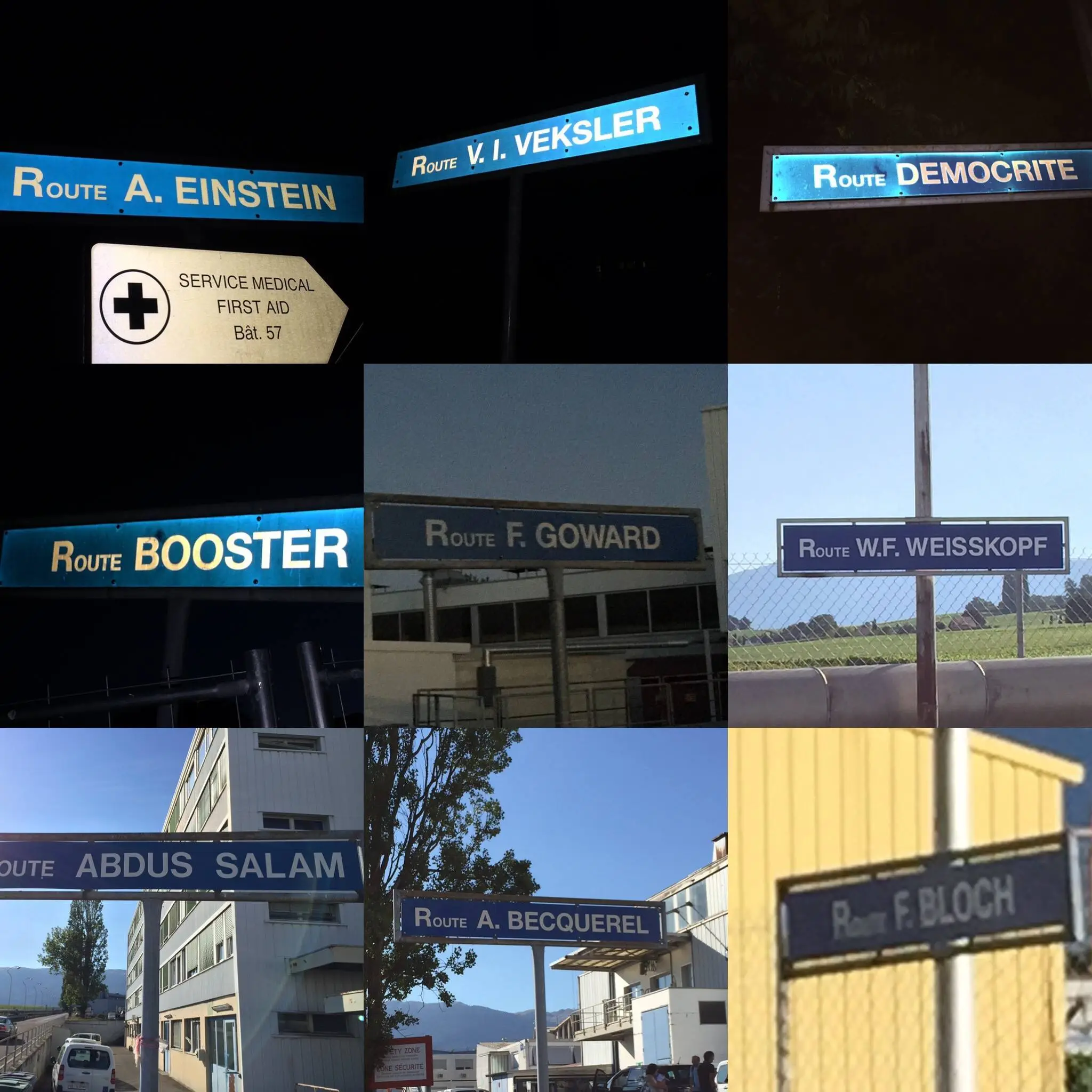 “I really liked how the streets at CERN were named after scientists, it’s something very unique and it pays homage to all the scientists who paved the way for CERN to be built and do the amazing research that it is doing today.
Other than that, I remember participating in a few hackathons, or as they were called at CERN - web fests, and as part of one web fest we were doing some research, which required us to talk to very notable scientists. We simply went to their door, knocked and asked questions. I thought it was such an open way to exchange ideas. It is not something you find every day, even in academia or industry.“
Siddha recalls that the interdisciplinary nature of work being done at CERN, enabled her to interact with people from many different domains and it significantly helped her in developing her communication skills.
“As a computer scientist, I really need to understand the data before I do any work with that data. And in order to understand what the data is about, I have to ask people the right questions and CERN helped me thanks to its open culture – that is something I haven’t found anywhere else.
As a result of a web fest, our team had the opportunity to present at the Mozilla ScienceLab and within this Lab, we asked how to make research more open, especially in some newer fields. The reproduction of these experiments can be very expensive, so having these “pre-baked” options publicly available and easily accessible makes all the difference.
This openness in research is something I have been trying to emulate ever since and I try to stay true to that in everything I do. In Nvidia, there are obviously some projects that are IP or trademarked and we cannot do open source there. However, there are other areas where we can – one example is my work on a very exciting use case of improving flood detection with semi-supervised learning. That got turned into a self-paced course that Nvidia sponsored.”
After finishing her master’s degree in 2016, Siddha joined a start-up called Deep Vision, where she was working in a very small team of only 3 people including her.
“As the only person who worked on AI training and deployment, I was given the very cool job of optimising these neural networks on resource-constraint devices - video cameras, smartwatches, phones. We wanted to run different types of algorithms- detection, segmentation, and classification and when having such resource-constraint devices, we really wanted to make these networks very performant – and that was my task.
After one and a half years, I moved to Nvidia because I wanted to see and learn how larger companies function. In Nvidia, as I mentioned, I work on optimising AI and neural networks for medical instruments and self-driving cars and each of these has its own uniqueness, which makes me feel like I’m always learning.”
Searching and interviewing for your first job after graduation can be stressful. As Siddha mentioned, when she started looking for jobs, she focused on what type of work she wanted to have, and identified the specific problems she wanted to work on.
“When I was interviewing (and sometimes there were 6-7 interviews for one position), I realised that many roles were very generic. Therefore, when I was interviewing for the start-up where I was eventually hired, I realised this was the place where I could start working on the problems from day one and I could easily make an impact much early on.
Because it was a start-up, I got to see not only the technical part of things, but also how companies invest in smaller start-ups, and how funding works, and that fed my interest. I gained insights into how the business side works while keeping a technical role because I did not want to lose that edge.
When I eventually started to think about changing jobs, I specifically looked for the roles that were technical, but that would give me some insights into how businesses work at a much larger scale. And this particular role in Nvidia appealed to me because it offered these insights.”
The interviewing process can be tough; besides meeting the company’s long “must-have” list, it is equally important that you determine what your expectations of the company are, what your non-negotiable expectations are, and where you are willing to compromise.
“Interviewing is a very long and arduous process and companies may reject you without sometimes telling you why. It can be tough when it is your first interview. I have done between 50 to 60 interviews, my advice is not to feel disheartened.
During the interview process, a company is interviewing you, but make sure that at some point you also interview the company, because if you are going to be spending your time there, you need to make sure that this is what you actually want to be doing. Ask questions when you get an opportunity, such as what are the challenges of a particular role, what are the exciting things, what does an ordinary day of an employee look like. These are simple things that are necessary to ask but from my experience interviewing others, many people waste this opportunity and do not ask any questions.
Nowadays, getting a reply to a CV you sent is next to impossible from my experience. Sometimes you just need to find someone who is working for that organization, learn what the organization is doing, what the day-to-day life of someone working there look like, see if that really fits well with what you want to be doing, and whether you can see yourself there. The CERN Alumni Network is spread globally and is full of people with shared experience, so reach out to them and someone will respond.”
And what does the future hold for Siddha and her career?
“We are seeing some incredible challenges, and with the knowledge that I have in AI, I see that we are capable of creating a considerable impact in healthcare and medicine and I would like to contribute as much as I can.
Nvidia is such a multidisciplinary team, the people I work with are physicians and doctors and I do not think I would get that opportunity anywhere else. The learning opportunity in Nvidia is also amazing because you are tapping into the knowledge of people who studied for so long to become doctors and practising physicians –it is as if you are standing on the shoulders of giants.”
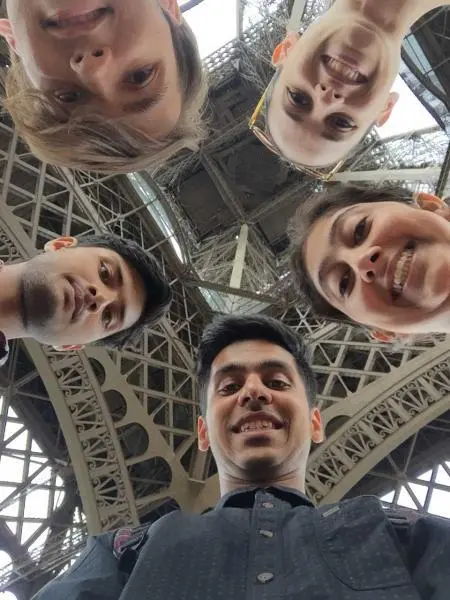 Being a strong supporter of the CERN Alumni programme, Siddha explained why it is important for her to maintain links with other alumni.
“As we progress in our careers we realise that we might have already had the chance to take the elevator up and perhaps now it’s our chance to send it back down and help someone on their career journey.
There is a mentoring module on the alumni platform, and I want to highlight how important it is to have a mentor. I benefitted greatly from mentors at CERN, partly because CERN has such an open culture and thanks to people who were willing to give their time and help me learn about new things.”
Siddha has decided to share her time, knowledge and experience as a CERN Alumni mentor and you can find out more and/or get in touch with her via our mentoring module on alumni.cern
If you have been inspired reading this interview and would like to join our mentors’ pool, fill out your alumni.cern profile and register to be a mentor – we look forward to welcoming you!
Author: Simona Kriva