
10 Questions with Charles Symons
At CERN: 1964 - 1970
Now: Co-founder & Past President, The Common Software Measurement International Consortium (UK)
1) When did you work at CERN (including its Scientific Collaborations) and what did you work on?
"1964 - 70. Scientific Programmer, then Computer Operations Manager."
2) What is your best memory of working at CERN?
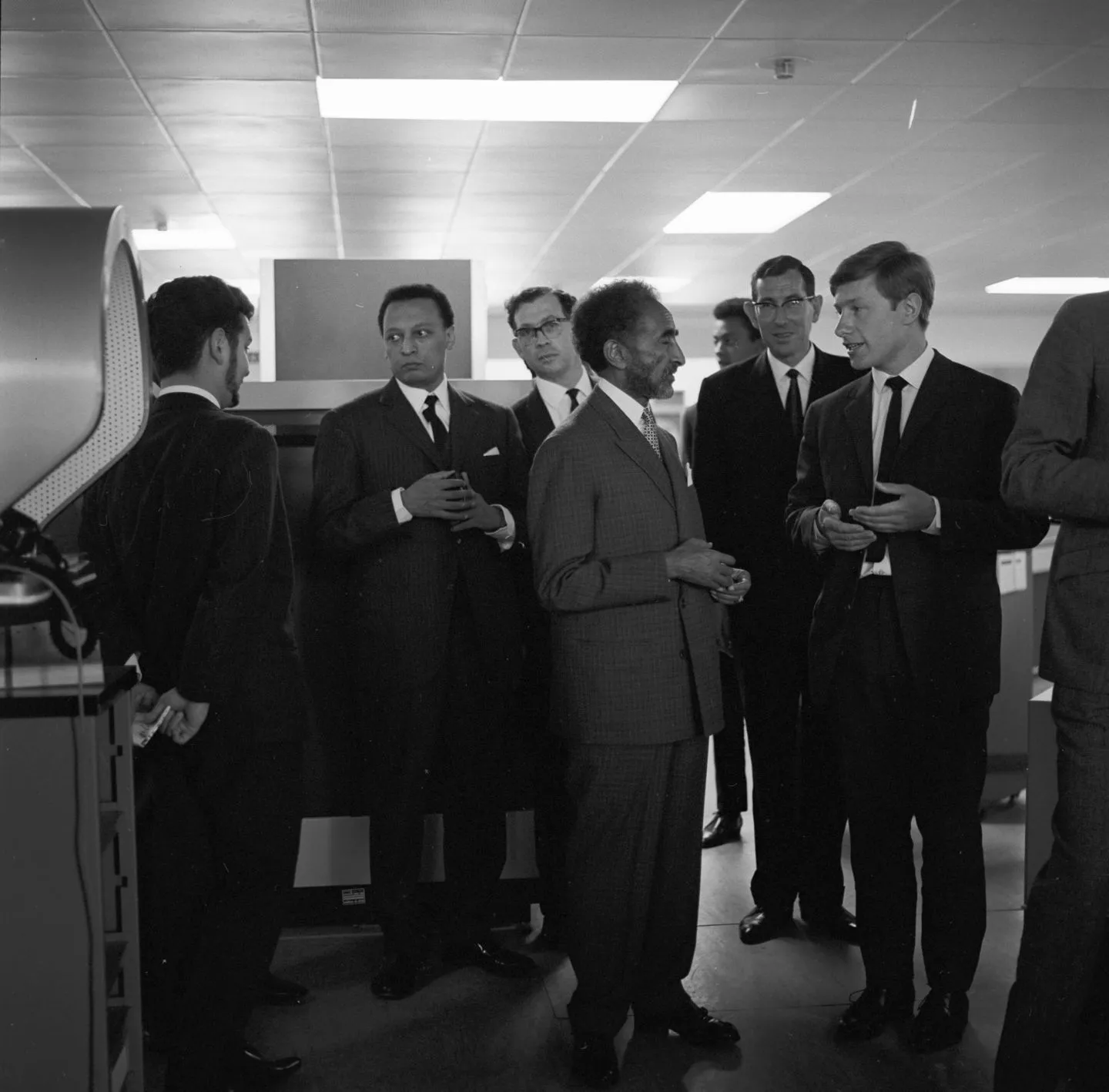
"In general living in Geneva and working in a highly stimulating environment at CERN. There is also one rather unique experience I recall; The background is this. Many notables and diplomats who came to Geneva included a visit to CERN, probably the same today, Normally, they were shown round by a senior CERN person but on this occasion the hierarchy above me was away and at short notice I was asked to show the Emperor of Ethiopia, Haïlé Selassié around the computer room, where I was the Computer Operations Manager.
This was long before the days of Google and all I knew about him was that I had seen the famous film of this tiny figure addressing the League of Nations in the 1930's appealing (in vain) for the world's help to repel the Italian invasion of Ethiopia, that he was supposedly a descendent of King Solomon and the Queen of Sheba, and that he was a God (to the Rastafarians). So it was a bit daunting, especially as I had to speak to him in French, address him as 'votre Majeste' and was not clear if I should lead the way or point to him to lead the way on our short tour.
But it turned out he was very easy to talk to, saying how impressive the CDC computers were, etc. He is still the only God I have ever met."
More photos of H. M. Haïlé Selassié's CERN visit (09/05/67) here: https://cds.cern.ch/record/763657
3) What is your current job and where is it located?
" Retired IT Consultant, in the UK."
4) What skills did you develop during your CERN work experience which have been particularly useful in your subsequent career trajectory?
"Confidence in speaking foreign languages and of working in an international environment ."
5) Which skills (if any) did you need to develop further when you left CERN to face your next professional challenges?
"Learning how to earn my budget, rather than to spend my budget and working in a commercial environment."
6) What tips would you give to someone who is considering a career transition from academia to industry?
"See 5 above, Earning a budget is much harder than spending your budget. Company cultures vary enormously. Adapt to survive."
7) What advice would you give your younger self?
" Being able to present and sell a solution to a problem is harder than developing the solution. (Inventing a better mousetrap is no use unless you can persuade the world that it wants a better mousetrap.) Marketing and selling skills are not to be sneered at."
8) Do you still keep a close eye on what’s going on at CERN?
"Sort of. To an ex-physicist, the engineering and physics is extraordinary but totally incomprehensible to the taxpayers who supply the funding. That concerns me."
9) In your opinion, what is the unique value of the CERN Alumni Network?
" Not much to me, long-time retired. Much more use to alumni who have recently left CERN. Although I had a permanent contract, was effectively unsackable, and could have stayed at CERN for the rest of my working life, I chose not to for various reasons. However, like many other younger people a period of working at CERN was one of the most formative and valuable periods in my career and my six years there are full of unforgettable memories."
10) Imagine you are stranded on a desert island. You can have one piece of music, one book and one luxury item. Which music, book and luxury item would you choose and why?
" Beethoven's Ninth Symphony, the complete works of Shakespeare, and a wine-cellar and a corkscrew. "